UP at a Glance


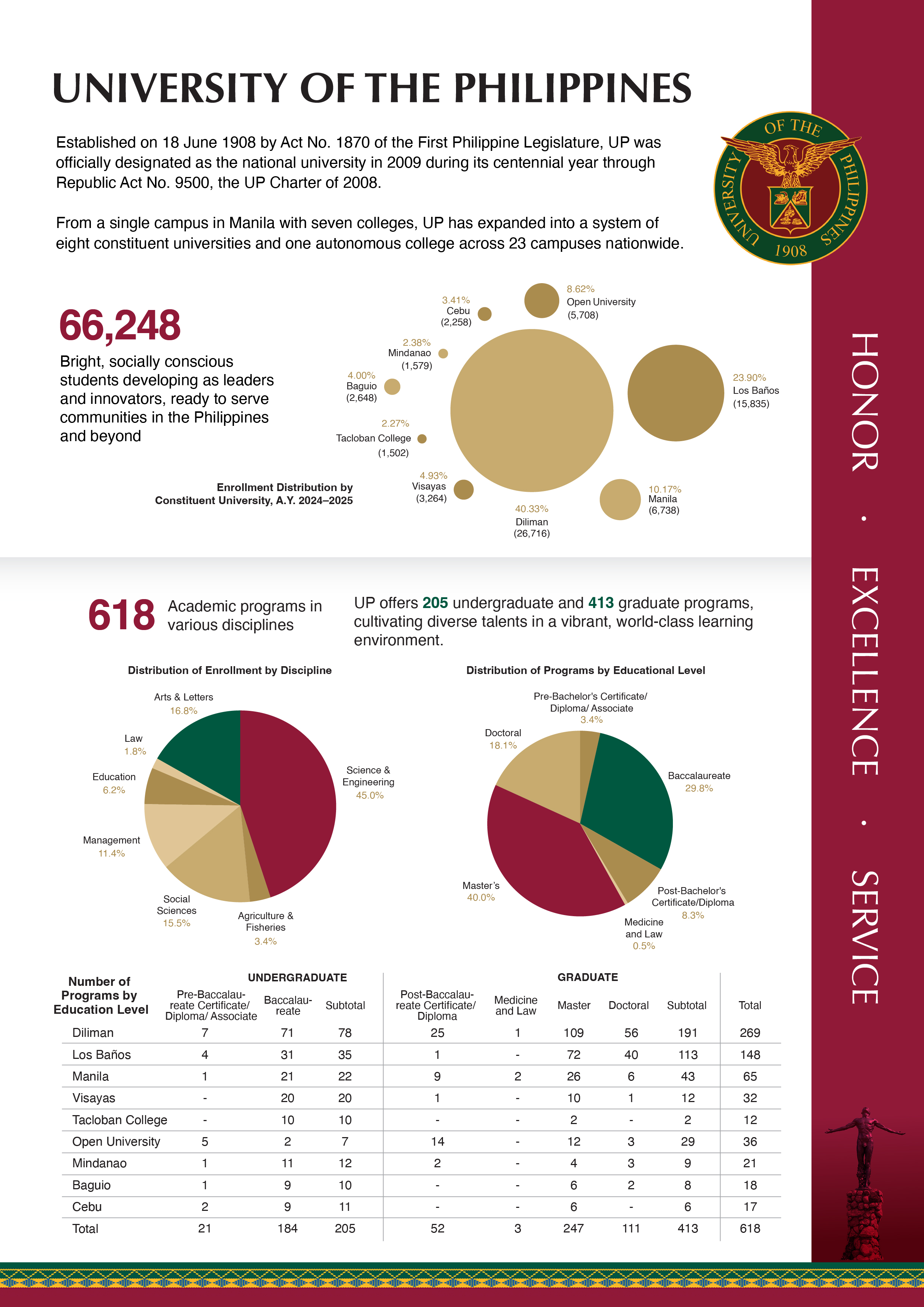
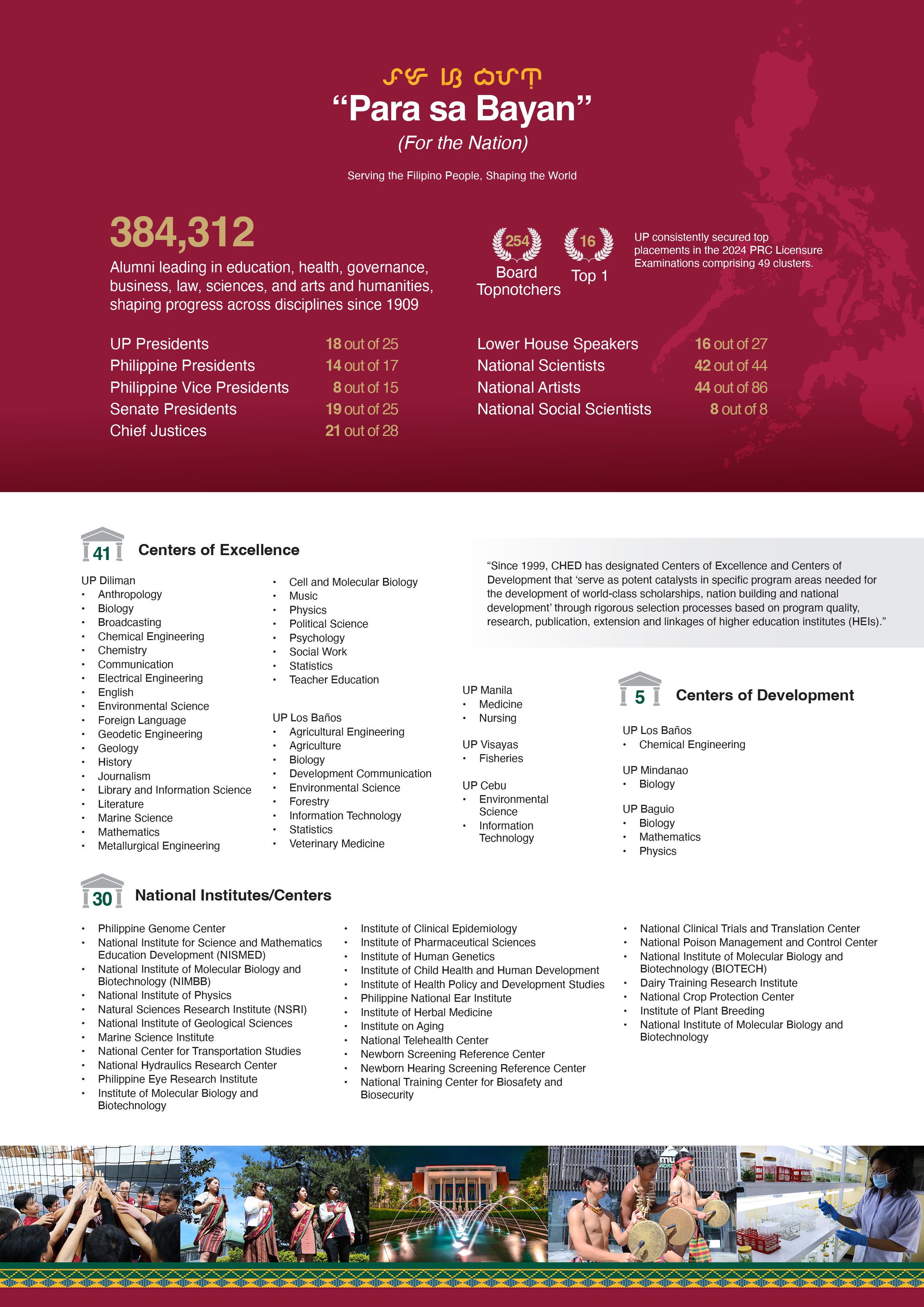
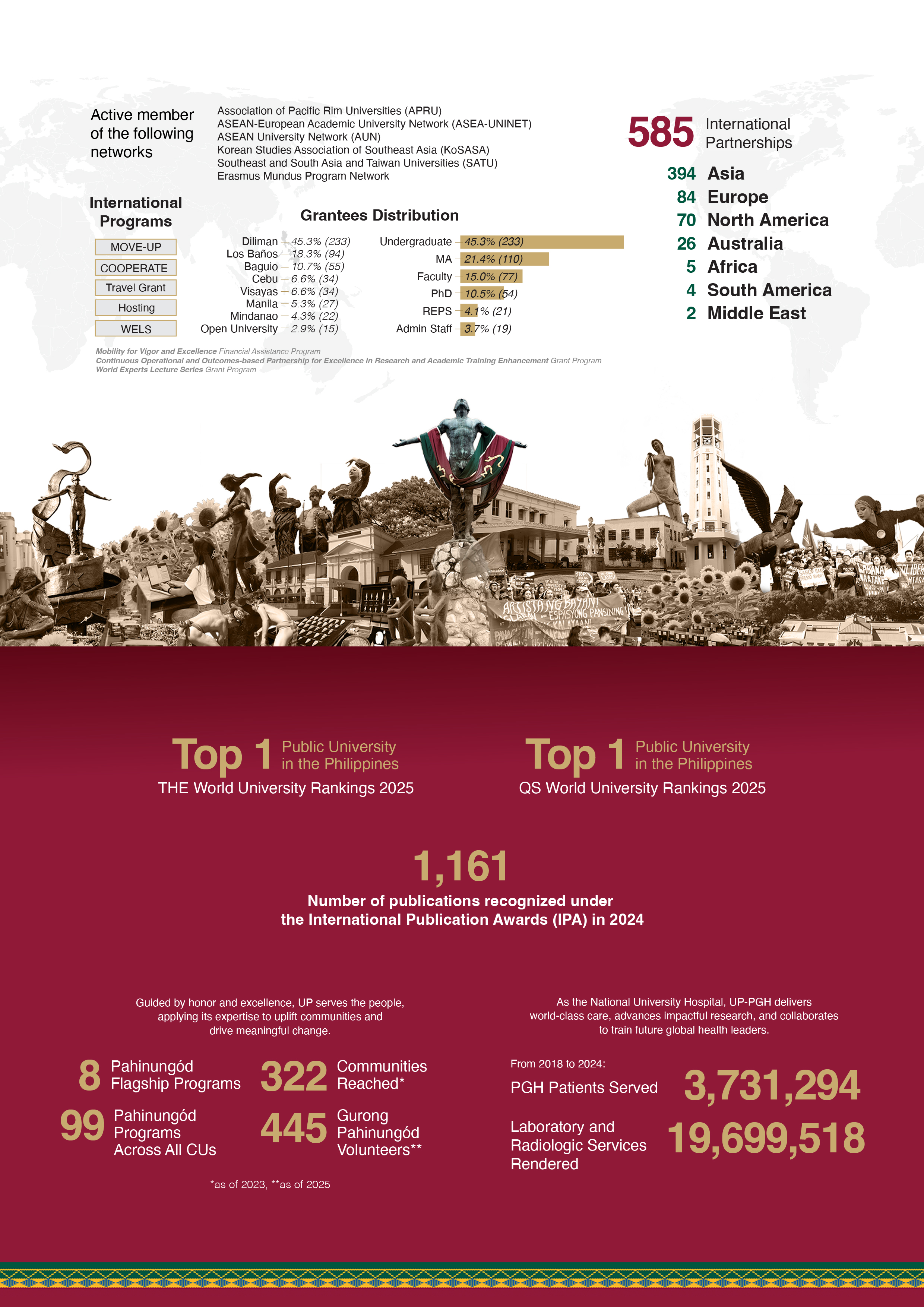

This midterm report provides a comprehensive account of the institutional developments, reforms, and accomplishments of the University of the Philippines (UP) under the leadership of Angelo A. Jimenez, the 22nd president of the University. Covering roughly the first half of his term, from February 2023 to December 2025, the report documents the University’s progress toward strengthening its role as the country’s premier institution of higher learning and as a global research university in the service of the Filipino people.
More than a record of achievements, the report serves as a progress marker for the UP Strategic Plan 2023–2029, highlighting key gains, emerging directions, and priority areas for the remainder of the administration’s term.

Purpose and Scope
This report aims to:
- Present a comprehensive summary of institutional accomplishments across teaching, research, and public service;
- Assess progress in implementing the UP Strategic Plan 2023–2029;
- Highlight key reforms, systems, and innovations introduced during the first three years of the administration; and
- Identify strategic directions for the second half of the President’s term.
The report covers system-wide initiatives across UP’s constituent universities and offices, including developments in academic programs, research and innovation, digital transformation, public service, governance, and institutional capacity.
Timeframe: February 2023–December 2025
The report covers the period from February 2023 to December 2025, which roughly corresponds to the first half of President Jimenez’s term. This period is characterized as a phase of foundational work, focused on strengthening systems, expanding capacity, and aligning institutional priorities with the University’s long-term vision of becoming a globally competitive research university.
Alignment with UP Strategic Plan 2023–2029
All initiatives documented in this report are anchored in the UP Strategic Plan 2023–2029, which is structured around three core pillars:
- Teaching, Research, Innovation, and Creative Leadership Work for a Sustainable Society
- Public Service for the Common Good
- Consultative and Accountable Governance for the Well-being of University Constituents
These pillars are operationalized through ten flagship programs that guide system-wide implementation. Across these programs, a central strategic shift is evident: positioning research and innovation as the foundation of teaching excellence, public service, and institutional development.
Key Accomplishments and Gains
From 2023 to 2025, UP undertook significant reforms and initiatives that strengthened its academic, research, and public service functions.
In teaching and learning, the University advanced curricular reforms, expanded academic programs, and promoted interdisciplinary and globally relevant education. New degree programs and curriculum enhancements were introduced across constituent universities, while faculty development was supported through research collaborations, international partnerships, and merit-based promotion systems. Lifelong learning initiatives, including microcredentials and online courses, expanded access to education beyond traditional pathways.
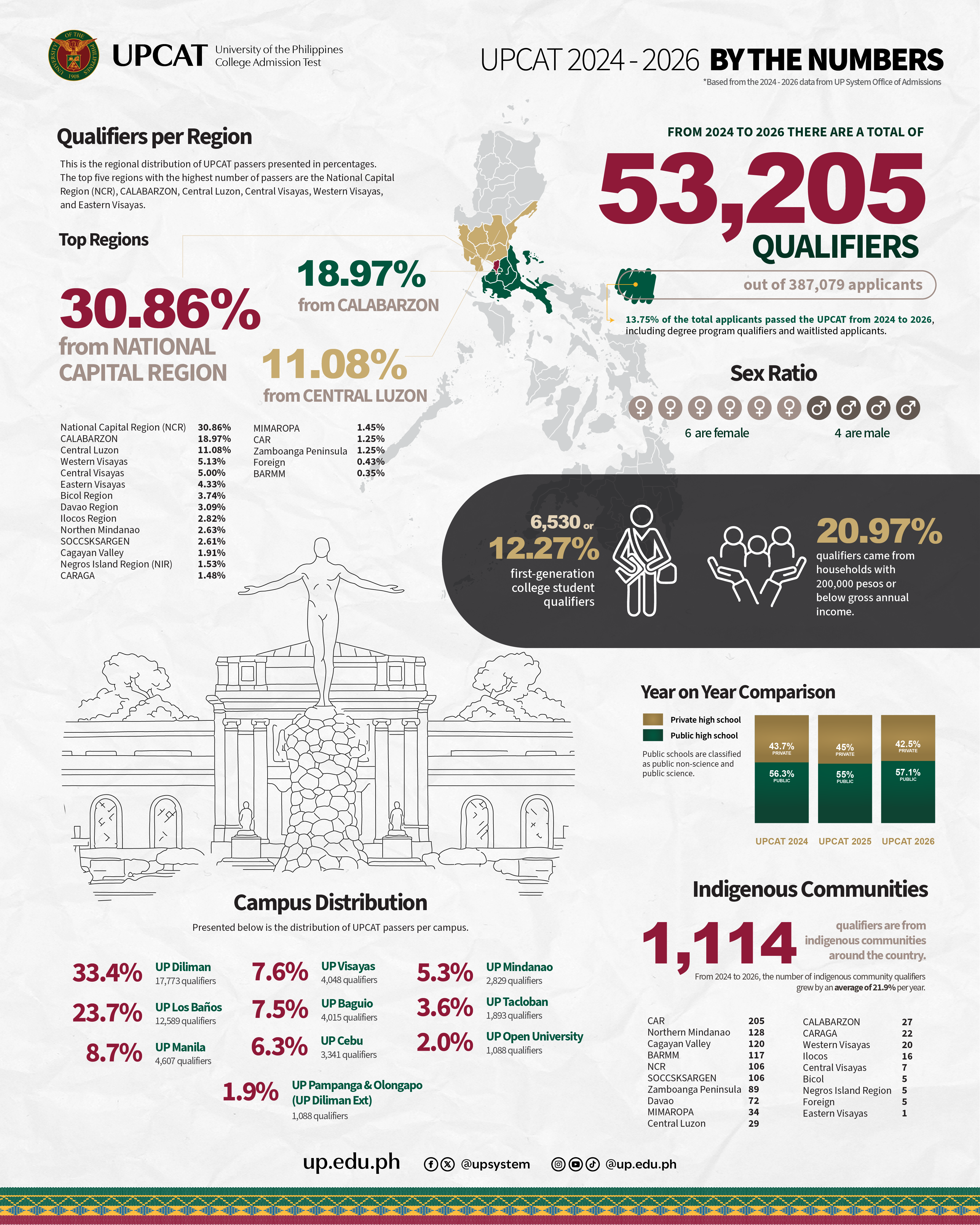
Inclusive admissions reforms sought to broaden access to UP education, particularly for students from underserved communities. The reintroduction of the UP College Admission Test (UPCAT), alongside expanded testing centers nationwide and abroad, improved accessibility. While efforts to make admissions more inclusive started before the current administration, it was during the term of President Jimenez that qualifiers from public schools first outnumbered those from private schools, and this trend was sustained in the past two years (UPCAT 2025 and 2026). Complementary programs such as the Lingap Iskolar initiative helped address barriers to enrollment and retention by providing financial and logistical support to around 200 scholars in 2024, with funding earmarked for scholarships for 300 recipients in 2025.
Public service initiatives were strengthened through the expansion of institutional platforms such as Ugnayan ng Pahinungód, Padayon, and the National Service Training Program (NSTP). These programs enabled sustained engagement with communities, delivering services in education, health, disaster response, and environmental protection. Service-learning and volunteerism were further integrated into academic life, reinforcing UP’s role as an active partner in national development. From 2023 to 2025, Pahinungód programs at the UP System and CU levels have partnered with and benefited 955 schools and 1,102 communities.
Project NOAH, the country’s largest open hazard-information platform managed by the University though the UP Resilience Institute and the UP NOAH Center, has also been expanding for more accessibility through integration with the eGovPH app, with its own platform reaching 3.2 million users within the reporting period, while its integrated web and mobile services recorded approximately 10 million location searches in 2024, and 12.9 million searches in 2025.
Across these areas, UP’s efforts reflect a growing emphasis on inclusion, accessibility, and societal impact, while maintaining academic rigor and excellence.
Research and Innovation Milestones
A defining feature of the first half of the administration is the strengthening of UP’s research and innovation ecosystem.
Institutionally, the creation of the Office of the Vice President for Research and Innovation (OVPRI) provided strategic direction for research initiatives. On the other hand, the UP Center for Intelligent Systems was established by the BOR during its 1374th meeting on September 29, 2022 — and renamed the UP Intelligent Systems Center (UP ISC) during the 1386th BOR meeting on January 25, 2024 — to advance interdisciplinary work in artificial intelligence, data science, and complex systems. These units enhanced coordination, funding, and collaboration across the UP System.
Research output remained robust across priority areas such as health, agriculture, environment, and information and communications technology. Notable contributions include advancements in disease diagnostics, environmental monitoring, sustainable agriculture, and marine science. Policy-oriented research generated by the UP Center for Integrative and Development Studies (CIDS) continued to inform national decision-making.
The University also strengthened its technology transfer and innovation frameworks through revised intellectual property policies and expanded support for commercialization and startup development. Innovation hubs such as UPSCALE and UP SikLab supported research translation into products, services, and enterprises.
Internationalization further expanded UP’s research reach, with partnerships spanning Asia, Europe, and North America. Collaborative initiatives enabled joint research, academic exchanges, and participation in global knowledge networks.
These efforts collectively reinforce UP’s role as a hub of knowledge creation, innovation, and policy engagement.
Institutional Capacity Built
Significant investments were made in institutional capacity to support UP’s transformation into a research-driven university.
Digital transformation emerged as a key enabler, with the establishment of the Office of the Vice President for Digital Transformation (OVPDx) and the expansion of digital infrastructure through platforms such as the UP Data Commons. These systems support data-intensive research, enhance operational efficiency, and enable secure, scalable digital services across the University.
Quality assurance mechanisms were strengthened through system-wide implementation of internal and external assessment frameworks aligned with international standards. The development of integrated QA systems and capacity-building initiatives ensured continuous improvement in academic programs and institutional processes.
Administrative and operational systems were likewise enhanced through the institutionalization of quality management systems, including ISO 9001:2015 certification across multiple units. Programs such as LINANG further supported workforce development and organizational effectiveness.
Infrastructure development, including research hubs, laboratories, and science and technology parks, expanded the University’s capacity for innovation and collaboration.
From Gains to National Impact
As UP moves into the second half of President Jimenez’s term, the focus shifts from laying foundations to scaling impact.
Key priorities include strengthening research productivity and graduate education, deepening partnerships, expanding inclusive access, and ensuring that knowledge generated within the University translates into meaningful outcomes for Filipino communities.
The progress documented in this report underscores a clear trajectory: a University increasingly defined not only by academic excellence, but by its capacity to generate knowledge, drive innovation, and serve the nation.