
Strengthening UP’s Research and Innovation Ecosystem
The University of the Philippines (UP) sustains its role as a leader in research and innovation by upholding its commitment to academic excellence. In pursuing homegrown innovations, UP has achieved breakthroughs across various fields, providing solutions to the nation’s most pressing challenges. Initiatives to reinforce the foundations of research and creative work have been established to empower UP’s faculty, researchers, and students in driving positive change and in contributing to the country’s economic and social development.
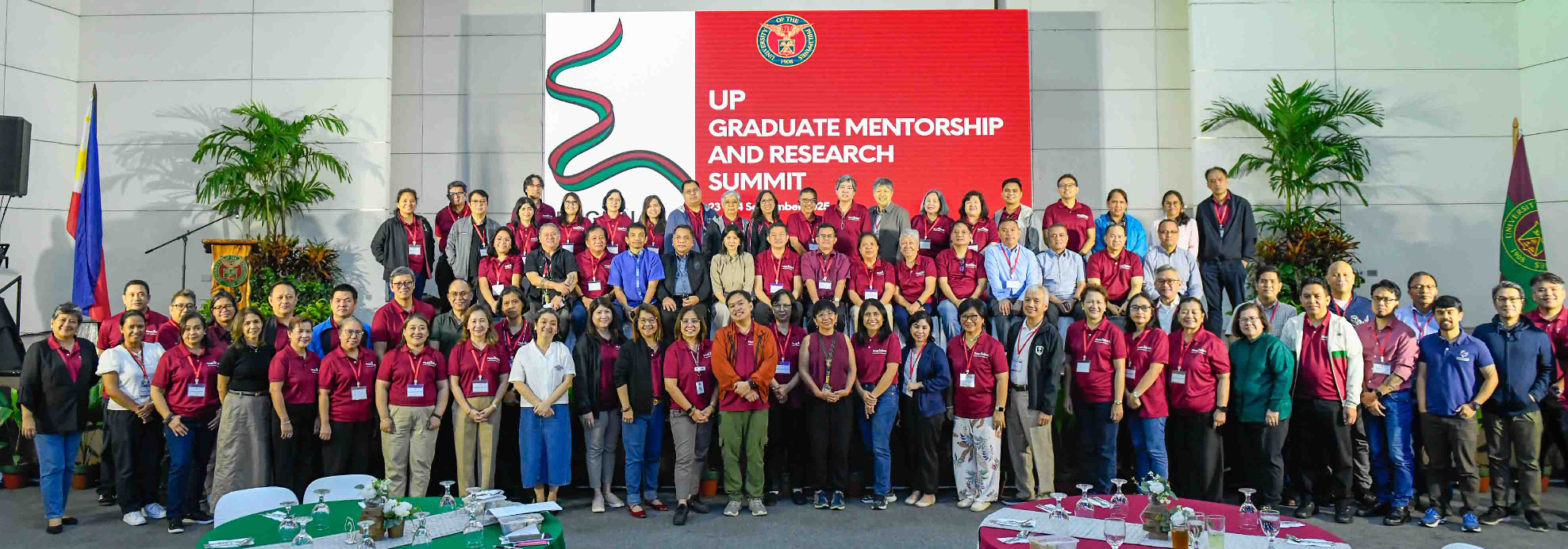
These efforts support the third flagship program in the UP Strategic Plan 2023–2029, which aims to establish UP as a hub of innovation and research. This vision is realized by building strong, collaborative research and creative units across the UP System, accelerating knowledge creation processes, ensuring that scientific discoveries and creative outputs find practical real-world applications for the benefit of the Filipino people.
Technology Transfer and Innovation Policy Frameworks
The university continues to refine its intellectual property (IP) and technology transfer systems. The revised and amended IP Rights Policy, effective as of the 1405th meeting of the Board of Regents held on January 29, 2026, clarified ownership, increased incentives, and supported commercialization—including more equitable royalty-sharing and full creator ownership of initial earnings up to a set threshold. It also mandates that IP generated with university resources must serve academic and public interests.
Technology Transfer and Business Development Offices (TTBDO) across the UP’s constituent units strengthened their capacity through policy workshops and collaborations to enable researchers to convert their outputs to technologies, enterprises, and public solutions.
Furthermore, UP enhanced policy-oriented technology transfer systems through workshops led by the UP Center for Integrative and Development Studies (CIDS), translating research into actionable public policy. Initiatives like artificial intelligence bootcamps promoted the responsible, interdisciplinary use of emerging technologies in governance.
Research and Innovation in Key Priority Areas
The university has maintained robust research productivity, especially in key priority areas such as health, agriculture, environment, energy, and information and communications technology, marked by increased interdisciplinary collaboration and a clear focus on supporting national development objectives.
In health-related research breakthroughs, UP Diliman chemists documented endocrine-disrupting compounds in rivers in Mega Manila, leading to safer water interventions. Scientists from the UP Marine Science Institute have also developed promising marine compounds for potential metastatic breast cancer treatment. UP Manila advanced diagnostics, including molecular tools for predicting severe leptospirosis and portable detectors for toxic substances in clinical settings.
In agriculture and environmental science, UP contributed to sustainable development through biofertilizers, urban farming systems, and data-driven resource management. Collaborations with agencies such as the Department of Health (DOH) and Department of Agriculture (DA) strengthened research impact in biosurveillance, genomics, and disease response.
For hazard monitoring, risk assessment, and resilience infrastructures, UP Resilience Institute (UPRI) leads in. Through the UP NOAH Center, UPRI has significantly advanced disaster resilience by strengthening the country’s largest open hazard-information platform, Project NOAH, developing impact-based forecasting, and supporting local and national agencies with technical expertise and evidence-based planning. Additionally, it has expanded resilience education, led international collaborations, and deployed multidisciplinary Quick Response Teams (QRT) to various disaster-stricken areas in the country between 2024 and 2025 to assess impacts and provide crucial support to affected communities.
Project NOAH has also been expanding for more accessibility through integration with the eGovPH app, with its own platform reaching 3.2 million users within the reporting period, while its integrated web and mobile services recorded approximately 10 million location searches in 2024 and 12.9 million searches in 2025.
Multimedia reach has also been key to translating research and innovation into digestible content for wider audiences. TVUP has continuously produced Health Updates webinars (stemming from the pandemic-era “Stop COVID Deaths” series). To date, more than 280 episodes have been produced; these are accessible via TVUP's YouTube channel and Facebook page.
The Gawad Pangulo para sa Natatanging Inobasyon, which started in 2025 as part of the university’s foundation week celebration, fostered a culture of applied research as it recognized student and faculty innovations that address critical challenges in healthcare, agriculture, environment, and digital systems.
Policy research, primarily led by CIDS, continues to produce papers with evidence-based recommendations on key areas such as food security, environmental governance, public health, and urban sustainability for local and national decision-makers. The UP Open Data Policy, currently under consultation, mandates that university datasets be “open by default,” which is expected to strengthen evidence-based national policymaking.
Strengthening Research and Creatives for Public Impact
The Office of the Vice President for Research and Innovation (OVPRI) was established to focus on the strategic direction centered on research and innovation. Under the OVPRI are sub-offices formerly under the Office of the Vice President for Academic Affairs (OVPAA) dedicated to research: the OVPAA Research section, the UP System TTBDO, the UP Korea Research Center, the Philippine Genome Center, and the Center for Integrative and Development Studies.
Also under the OVPRI is the UP Intelligent Systems Center (UP ISC), which was launched on February 12, 2024. This cross unit center was established to foster collaboration among academic units and tackle challenges in AI, machine learning, and automation.
Research and Innovation Hubs and Programs
UP has been continuously developing innovation ecosystems that support the translation of research into products, services, and enterprises. Through the continuous development of innovation hubs across the UP System, such as UP Diliman UPSCALE Innovation Hub and the professional development center UP Saliksik Lab (UP SikLab), with expanding efforts across constituent universities in UP Los Baños, UP Manila, UP Baguio, and UP Cebu, research and innovative ideas have been more efficiently translated into startups.
In 2024, SikLab ran five national programs supporting 54 research teams from over 20 HEIs, securing ₱10.93 million and offering training in customer discovery, business modeling, design thinking, and technology transfer. UPSCALE mapped local and ASEAN investors/Venture Capital, conducting 15 interviews with firms like Kaya Founders, Foxmont Capital Partners, and Gobi-Core Partners. The hub also benchmarked with top Vietnamese incubators/accelerators and continued sending students to the National University of Singapore Summer Entrepreneurship Programme.
Initiatives led by UPSCALE and UP SikLab such as the UP Acceleration Program, and the developing innovation hubs across UP’s constituent universities, such as the UP Manila Discovery and Innovation Hub, further advanced interdisciplinary collaboration and technology translation in the health sector. Through partnerships, innovation sessions, and participation in national and international expos, these platforms position UP as a key contributor to the country’s innovation landscape.
Establishment and Development of S&T Parks
The UP Manila Science and Technology Park, approved by the Board of Regents on October 26, 2023, will serve as the central hub for Philippine health technology and innovation. Its first meeting was held in January 2024.
UP Mindanao's 12-hectare Knowledge, Innovation, Science, and Technology Park project has obtained funding from the Asian Development Bank through the Department of Trade and Industry’s PRISTINE (Promoting Research and Innovation to Strengthen Transformation of Industries and Enterprises) program, which aims to improve the national innovation ecosystem by establishing more applied research and development and innovation infrastructure in line with the Philippine Development Plan 2023-2028. As of June 2025, UP Mindanao and Palafox and Associates, one of the country’s top urban planning firms, are collaborating on the master plan for the planned UPMin KIST Park, with stakeholders and prospective locators conducting a Focus Group Discussion to highlight the key facility requirements such as exhibit spaces, conference rooms, laboratories, pilot plants, office spaces, commercial areas, accommodations, and waste disposal facilities. During the FGD, participants also underscored the need for a reliable internet connection and an aesthetically pleasing, eco-friendly environment.
On December 5, 2025, UP Los Baños participated in the inauguration of the BioAssets Research and Innovation Center (BRIC); this new facility, dedicated to agriculture and health research, is located at the UPLB Science and Technology Park. Owned by BioAssets Corporation, BRIC is expected to further strengthen multi-sectoral collaboration among academe, industry, and government, with UPLB as one of its key partners in advancing science-based innovations in support of national development.
As the university reinforces its direction toward highlighting research as a driver of innovation, policy, and development, UP reaffirms its role as the nation’s leader for research and creative work in service of inclusive and sustainable development — ensuring that academic excellence translates into tangible benefits for the Filipino people and the global community.
References
Strengthening UP's Research and Innovation Ecosystem
- Marmol, M.A. (2024, March 15). UPD Study Investigates Contaminants of Emerging Concern in Mega Manila Rivers. UP Diliman College of Science.
- UP Marine Scientists Propose Sponge-Powered Combo to Combat Breast Cancer. (2025, March 20). University of the Philippines.
- Encarnacion, A. (2024, July 17). UP Manila Experts Develop Test Kit for High-Risk Leptospirosis Complications. University of the Philippines.
- Gawad Pangulo: Natatanging Inobasyon ng Mag-aaral. (2026). UPOU Office of the Vice Chancellor for Academic Affairs.
- Lingdas, C. (2024, July 01). UP Manila Science and Technology Park: The Pivotal Hub for Philippine Health Tech & Innovation. University of the Philippines Manila.
- Rudolph Alama, R. (2025, January 15). UPMin collabs with Palafox for science park master plan. Philippine Information Agency.
- UPMin's KIST Park Stakeholders Join Master Planning FGD. (n.d.). University of the Philippines Mindanao.
Strengthening UP’s Enabling Environment through QMS

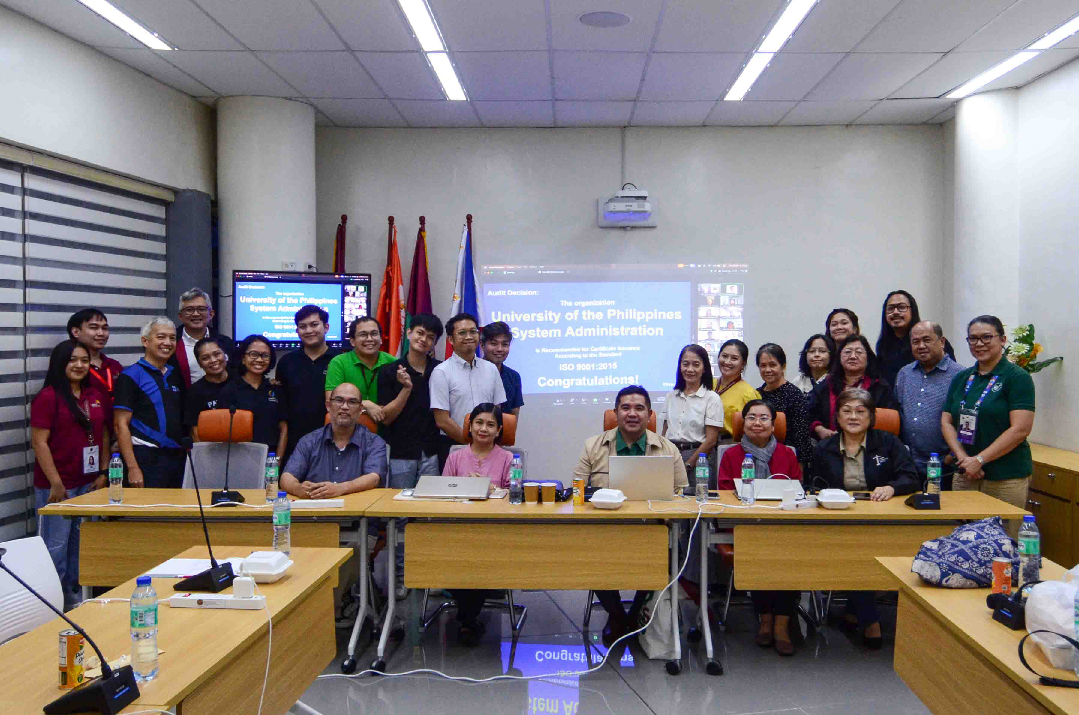
“We cannot be academically excellent if we are struggling administratively. Academic excellence, administrative efficiency, and operational excellence are intertwined that cannot be left behind if we want UP to succeed holistically,”
University of the Philippines President Angelo Jimenez underscored during the first Quality Management System (QMS) Forum for administrative employees of the UP System Administration (UPSA) offices. Following this statement in May 2024, this understanding is the impetus in the rolling out of activities in the 2025 QMS Roadmap of the Office of the Vice President for Administration Quality Management Team.
Certification and Recertifications
The need for a framework for a successful quality management system was addressed through adoption of the global ISO 9001:2015 standard. The intensive seminars and workshops conducted by the Development Academy of the Philippines in 2024 were followed in 2025 by the translation of concepts and expertise into implementation, marking a key phase in the UPSA-level QMS journey.
During the first half of the year, a succession of technical guidance sessions on document enhancement and calibration of document review were conducted. Following through, QMS activities focused on the thorough conduct of internal quality audit and management review in preparation for the UPSA ISO certification by the external auditing body TÜV Nord Philippines.
The audit decision by TÜV Nord Philippines on November 25, 2025 was that UPSA has been recommended for certificate issuance according to the standard ISO 9001:2015. This milestone was a significant achievement, especially given the size and complex structure of UPSA, as well as the need to assess vital documentation pertaining to policies, objectives, measurement and analysis, and the continual improvement of processes. The strength of UPSA’s quality management system was reflected in the assessment findings, which recorded only opportunities for improvement, with no non-conformities. More importantly, the audit report cited two commendable good practices from top management and the UP System Media and Communication Office.
For UP Manila, 2025 was about regaining the certification that was first achieved in 2022. UP Manila takes pride in earning its ISO 9001:2015 certification in 2002 as the first constituent university in the UP System to obtain the international accreditation. The recertification to the International Organization for Standardization (ISO) 9001:2015 was earned after a two-day audit on November 12-13, 2025 by TÜV Nord Philippines. The auditors evaluated UP Manila’s Central Administration offices, Office of the Chancellor, the offices of the Vice Chancellors, National Institutes of Health (NIH), and its different colleges on the basis of effectiveness in meeting and delivering organizational and customer goals while ensuring compliance with the 9001:2015 standards as well as compliance with corrective actions from previous audit results. UP Manila’s compliance to the ISO 9001:2015 standards was revalidated on December 12, 2025. It has received its recertification from TÜV Nord Philippines with a validity date until November 2028.
Meanwhile, UP Mindanao ended 2025 on the same high note as UP Manila with maintaining its ISO 9001:2015 certification which was first earned in December 2024. TÜV-SÜD Asia Pacific, the external certifying body, remained consistent on its recommendation for UP Mindanao’s certification for two consecutive years. The latest findings on the conducted on-site surveillance audit on November 17-19, 2025 revealed that the constituent university has satisfied all of UP’s administrative, academic, research, and extension services requirements and compliance for continual improvement. Preparations are in progress for its second accreditation surveillance in 2026.
Developing Quality-Driven Workforce with LINANG
The Office of the Vice President for Administration (OVPA) has trained and certified successive batches of participants and trainers through LINANG: Mga Serye ng Pagsasanay para sa Pagpapaunlad ng Paglilingkod sa Pamantasan at Bayan. The transformative program is designed to foster a workplace environment that develops high-quality individual skills and, in turn, strengthens organizational performance.


The core principles of LINANG 1.0, which focus on nurturing collaborative relationships and strengthening work values, are anchored in UP’s ideals of honor and excellence. With the expansion to LINANG 2.0, the program aims to broaden its reach and deepen its impact by certifying core participants as trainers. These trainers will help sustain and expand the program until it achieves its goal of transforming the work values, quality of service, and organizational culture of UP employees across the system.
The LINANG program comprises three modules: Unang Serye: Relasyon at Operasyon, or the Relationship Operations and Sensitivity Enhancement Seminar; Ikalawang Serye: Asal sa Paggawa, or the Work Attitude and Values Enhancement Seminar; and Ikatlong Serye: Kalidad ng Trabaho, which introduces Completed Staff Work as an effective decision-making and management tool.
LINANG’s rollout has reached a sizable number of employees of the University in the UPSA level, as well as in the various constituent universities such as UP Diliman, UP Los Baños, UP Cebu, UP Mindanao, and UP Tacloban.
A total of 473 certificates of completion and participation were awarded to LINANG 1.0 participants. As of 2025, LINANG 2.0 has certified 62 trainers - 22 for ROSES, 21 for WAVES, and 19 for CSW. The OVPA LINANG team looks forward to bringing both the LINANG 1.0 and LINANG 2.0 Trainers’ Certification programs to UP Visayas, UP Baguio, and UP Open University in 2026.
By the end of the UP President’s term, at least 20% of the university’s 14,500 employees will have been enriched by the LINANG program.
References
Strengthening UP’s Enabling Environment through QMS
- Audit Report (Stage 2). (2025, November 25). TÜV NORD.
- ISO 9001: 2015 Internal Audit and Management Review Completed. (n.d.). UP Mindanao News.
- LINANG strengthens character and competence in public service across the UP System. (2025, December 20). UP Offices.
- LINANG Training Series Launches in UP Cebu to Strengthen University and Community Service. (2024, November 28). UP Cebu College of Communication Art and Design.
- Next-in-line Personnel, Heads, Complete Linang Training with UPMin Trainers. (n.d.). UP Mindanao News.
- QMS/ISO 9001:2015 Certification Stage 2 Assessment. (2025, November 26). UP Offices.
- Road Map 2025. (n.d.). UPSA QMS Portal.
- TÜV NORD Certifies UP Manila’s Excellence in Education Through ISO 9001:2015. (2025, December 12). UP Manila News.
- UPMin Earns Recommendation for ISO 9001:2015 Certificate Maintenance. (2025, November 24). UP Mindanao News.
- UP LINANG Training Program Reaches UPLB. (2025, May 6). UP Los Baños News.
- UP Manila Recommended for ISO 9001:2015 Recertification. (2025, November 13). UP Manila News.
- UP OVPA launches LINANG 2.0 Trainers’ Certification Program. (2025, July 11). UP Offices.
Partnerships, Collaboration, and Research Networks
The University of the Philippines (UP) facilitates national development by consistently improving its research capabilities through partnerships, collaborations, and networks. By strategically partnering with other higher education institutions (HEIs), government bodies, industries, civil society, and local communities, UP consistently aims to generate valuable knowledge and insights that serve the interests of Filipinos.
Strengthening Research Partnerships with SUCs and Beyond
UP facilitated national and international research collaboration through its robust engagement with academic institutions, non-profit organizations, and foreign institutions.
In early 2025, UP entered into a memorandum of understanding (MOU) with Korea University (KU) to enhance academic collaboration and joint research in artificial intelligence and sustainability. Along with KU, UP has also entered into research partnerships with several universities in East and Southeast Asia, North America, and Europe. In March, researchers from UP Mindanao sought to explore potential joint initiatives with Davao de Oro State College for interventions tackling child malnutrition in the province. Meanwhile, in May, UP solidified a three-year partnership with De La Salle University (DLSU) — setting the stage for collaborative ventures in research, academic programs, and social engagement, particularly in social entrepreneurship and service learning.
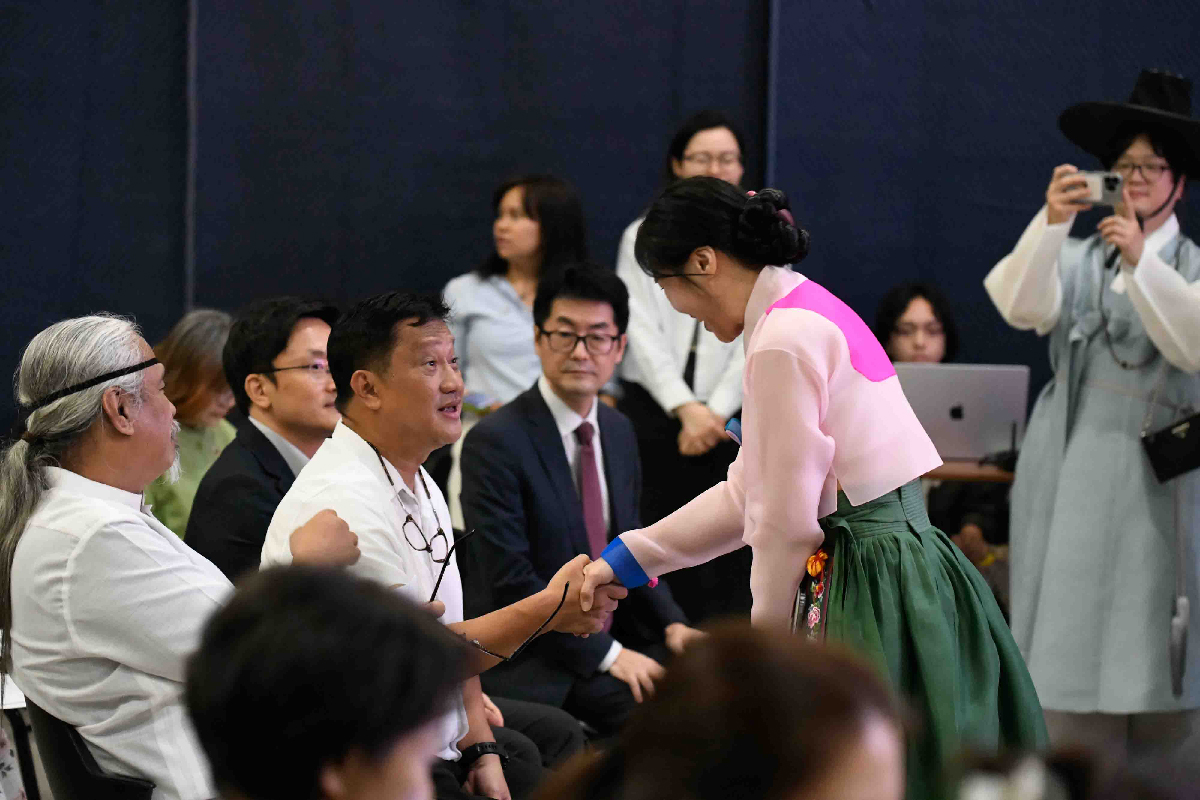
UP Visayas also signed an MOU with the Center for Conservation Innovations Philippines to strengthen collaborative efforts on conservation and research that support ecosystem-based resilience, climate adaptation, evidence-based environmental planning, and capacity building. Academic and research collaborations were also explored during separate visits by foreign dignitaries from East Timor and Romania to UP Open University and UP Manila, respectively.
In collaboration with the United Nations - International Organization for Migration (UN-IOM), the UP Resilience Institute (UPRI) developed the Risk Index for Climate Displacement, focusing on the Philippines, Indonesia, Fiji, and Vanuatu. The initiative expanded the University’s national expertise in hazard and risk assessment to include countries across Southeast Asia and the Pacific region that are confronted with similar climate change challenges, such as rising sea levels and extreme weather events. In light of this work, UN-IOM has once again turned to UPRI to establish an innovation hub in Africa, aimed at promoting the application of Filipino-developed resilience science in other climate-vulnerable regions.
Driving innovation through government and community collaborations
UP also collaborates closely with government agencies, industries, local communities, and civil society organizations to address pertinent social, health, and environmental concerns.
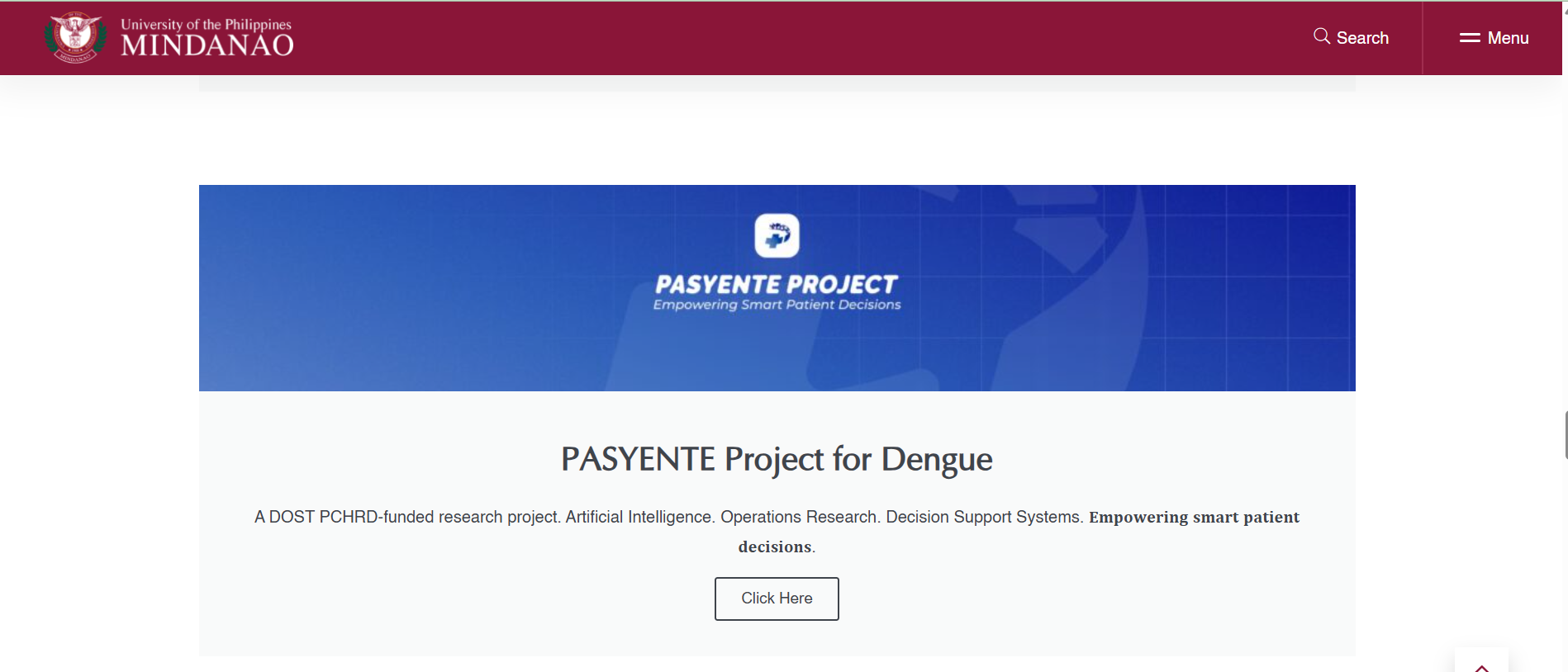
In the health sector, the UP Mindanao PASYENTE-Project for Dengue has organized the first User Training and Testing for its web and mobile applications with the Davao City Health Office after more than two years of research and development. UP Manila also co-hosted a pandemic preparedness workshop with Crowell Global Advisors, providing researchers an avenue to recommend policies to address identified limitations during the COVID-19 pandemic. Meanwhile, UP Cebu signed an MOU with Chong Hua Hospital Mandaue to develop collaborative specialized training programs and research projects.
On environmental protection, the UP Los Baños College of Forestry and Natural Resources signed a Memorandum of Agreement with the provincial government of Bataan for the Enhancement of Implementation Readiness and Integration of the R2R/WEM into the Provincial Development and Physical Framework Plan to support the province’s land use and development planning policy. Concurrently, UP Mindanao collaborated with the Philippine Eagle Foundation and the Czech Republic’s Liberec Zoo for the three-day 2025 Global Biodiversity Conservation Conference, highlighting the value of research and partnerships in empowering communities in global conservation efforts.
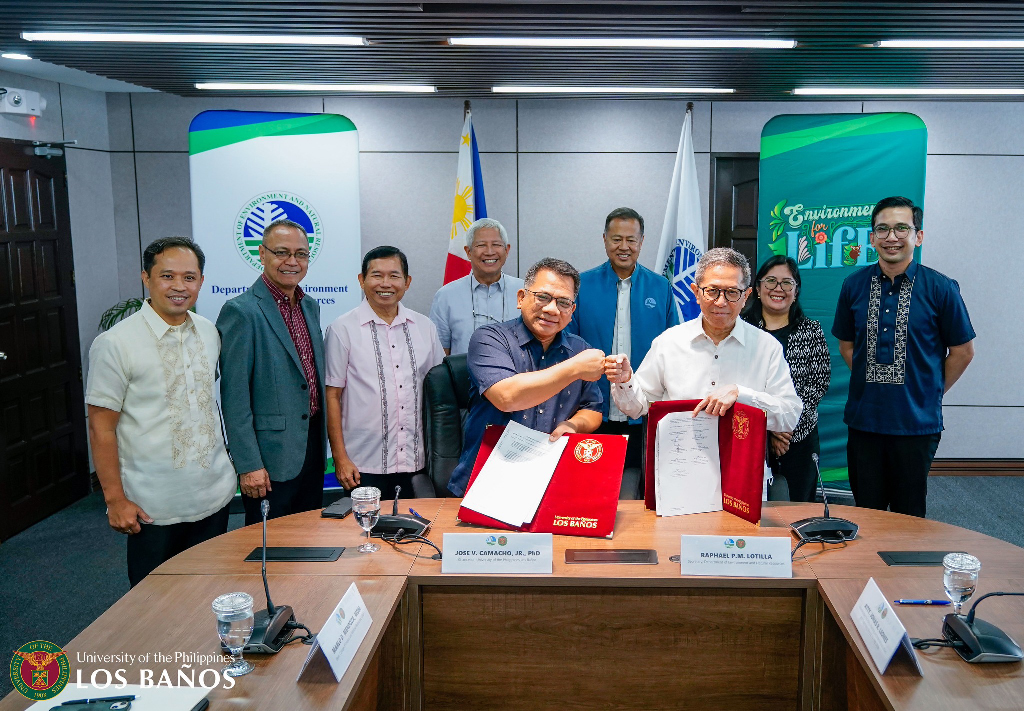
The UP Resilience Institute also continues to serve as a key public service hub for disaster and climate resilience, supporting local governments across the country through scientific risk assessments, capacity-building programs, and evidence-based land-use and development planning. By bringing UP’s resilience science directly to vulnerable communities in the Philippines and beyond, UPRI helps translate research into concrete protections for lives, livelihoods, and local ecosystems.
UPRI has been actively supporting provincial and municipal governments in enhancing community resilience by conducting scientific risk assessments, improving land-use planning, strengthening institutional capacity, and promoting evidence-based decision-making. A prime example of this effort is the implementation of the Asia-Pacific Network-Batanes Project, which significantly improved the province’s capacities for disaster and climate resilience. The project specifically focused on providing intensive training in Geographic Information Systems to personnel from the provincial local government unit, as well as the municipalities of Basco, Itbayat, Ivana, Mahatao, and Sabtang.
Sustaining Excellence through Collaborative Research Ecosystems
Collaborative research initiatives between UP and local and international HEIs have consistently produced groundbreaking discoveries across a range of fields; these advancements have significantly translated into positive outcomes that enhance the lives of Filipinos.
A collaboration among scientists from the UP Philippine Genome Center Visayas, UP Diliman Marine Science Institute, UP Visayas National Institute of Molecular Biology and Biotechnology, and Silliman University has led to a significant breakthrough in conserving the endangered Visayan spotted deer (R. alfredi), resulting in the creation of the very first draft genome map for this unique species.
In another joint effort, researchers from the UP Diliman School of Archaeology, UP Natural Sciences Research Institute (NSRI) DNA Analysis Laboratory, and NSRI’s Biological Research and Services Laboratory, along with colleagues from Mindanao State University-Tawi-Tawi College of Technology and Oceanography and the National Museum of Natural History’s Ornithology Section, have conducted a study of chicken DNA. This research has illuminated the deep prehistoric and historical connections between the Sulu Archipelago and Indonesia.
Additionally, chemists from the UP Diliman College of Science’s Institute of Chemistry have teamed up with Dr. Wen-Shan Li’s team in Taiwan to develop new compounds to inhibit a cancer-related enzyme, helping prevent the spread of breast cancer cells.
Concurrently, the UP Los Baños Department of Agribusiness Management and Entrepreneurship of the College of Economics and Management led the establishment of the Philippine Agribusiness Consortium — bringing together six state universities and colleges (SUCs) that seek to align agribusiness programs through collaborations on curriculum development, research, capacity building, and policy advocacy.
UP and DLSU, in cooperation with the ASEAN University Network (AUN), also co-hosted the 16th AUN Rectors’ Meeting and the 40th AUN Board of Trustees Meeting in Manila from July 23 to 25, 2025. With the theme “From Networks to Impact: The Future of Global Higher Education,” the meetings’ discussions highlighted the shared responsibility of HEIs to address global issues through international and multilateral partnerships.
References
- Davao de Oro State College. (2025, March 13). Researchers from the University of the Philippines Mindanao met with Davao de Oro State College President Dr. Lilybeth M. Matunhay . Facebook.
- Encarnacion, A. (2025, April 8). UP, SU Gene Scientists Share Groundbreaking Draft Genome of Endangered Visayan Spotted Deer . University of the Philippines.
- Encarnacion, A. (2025, September 18). What can chicken DNA reveal about ancient Philippine migration? . University of the Philippines.
- Lingdas, C. (2025, July 8). Romanian Ambassador Visits UP Manila, Explores Academic Collaboration . University of the Philippines Manila.
- Manongdo, J. (2025, April 28). UP Manila, CGA Host Workshop on Pandemic Preparedness . University of the Philippines Manila.
- Patron, E. (2025, December 12). UP Chemists Synthesize New Hybrid Molecules That Limit Cancer Cell Spread . UP Diliman College of Science.
- University of the Philippines. (2025, January 20). UP formalized its partnership with Korea University (KU), one of South Korea’s top three universities . Facebook.
- University of the Philippines Cebu. (2025, April 11). UP Cebu inks MOU with Chong Hua Hospital . University of the Philippines Cebu.
- University of the Philippines Los Baños. (2025, April 7). UPLB, through the College of Forestry and Natural Resources (CFNR), signed a Memorandum of Agreement with the Provincial Government of Bataan . Facebook.
- University of the Philippines Los Baños. (2025, October 4). UPLB leads launch of Philippine Agribusiness Consortium .
- University of the Philippines Mindanao. (2025, February 3). After more than 2 years of research and development, PASYENTE-Project for Dengue were finally able to test the PASYENTE Web and Mobile . Facebook.
- University of the Philippines Mindanao. (2025, October 2). The UP Mindanao Office of Research, in collaboration with the Philippine Eagle Foundation and Liberec Zoo (Czech Republic), officially kicked off the Global Biodiversity Conservation Conference 2025 . Facebook.
- University of the Philippines Resilience Institute. (2026). Advancing UP as a public service university: Mid-term accomplishments in resilience science under President Angelo A. Jimenez [Internal Document].
- University of the Philippines Visayas. (2025, December 10). The Center for Conservation Innovations PH (CCIPH) and the University of the Philippines Visayas (UPV) have officially signed a Memorandum of Understanding . Facebook.
- UP Open University (UPOU). (2025, August 8). Strengthening Regional Ties through Open and Distance Education . Facebook.
- UP System Media and Communications Office. (2025, May 2). UP, DLSU to strengthen academic cooperation . University of the Philippines.