


Making the right click: Institutionalizing UP’s digital transformation
Written by Philip Jamilla
Processing the basic papers of newly hired employees in the University of the Philippines (UP) Diliman used to take three long months; but with the Personnel Unified Systems Outlook (PUSO) human resources system, new members of the workforce can now receive their appointment papers within 28 days.
“There’s still room for improvement,” an analytics and industrial engineering professor, Dr. Eugene Rex Jalao, admitted during the UP System’s recent IT Dx Conference from May 23 to 24. But for PUSO users, the system’s efficiency not only drastically eased their work, it also improved their lives, especially when the first salaries of new employees often depended on the release of their appointment papers.
“76 percent say that they are really happy with the system because it really improved their lives. Wala nang masyadong paper[work] and they can track the real-time status of their documents,” Dr. Jalao continued.
PUSO is just one of the homegrown information technology (IT) systems developed by UP’s industrial engineers. First unveiled in UP Diliman in 2020 during the COVID-19 pandemic, the system has since then processed around 12,000 basic papers, 100,000 leave applications, 4,000 document requests, and 400,000 service records.
Dr. Jalao and his team are now eyeing the rollout of PUSO and the Budget Utilization and Liquidation System Analytics (BULSA) financial management system to other constituent universities (CUs) as a replacement for the old University Information System (UIS), in line with UP President Angelo Jimenez’s flagship program towards the digital transformation of the University’s processes and information systems.
If they succeed, thousands of workers throughout the UP System stand to benefit from the faster processing of their compensation and documents. Nonetheless, institutional challenges linger; and the implementation of this program would need all hands on deck to ensure that the new systems and the services they deliver would not only meaningfully reach the UP community, but also fully realize UP’s mandate to serve the Filipino people, especially in an increasingly digital world.
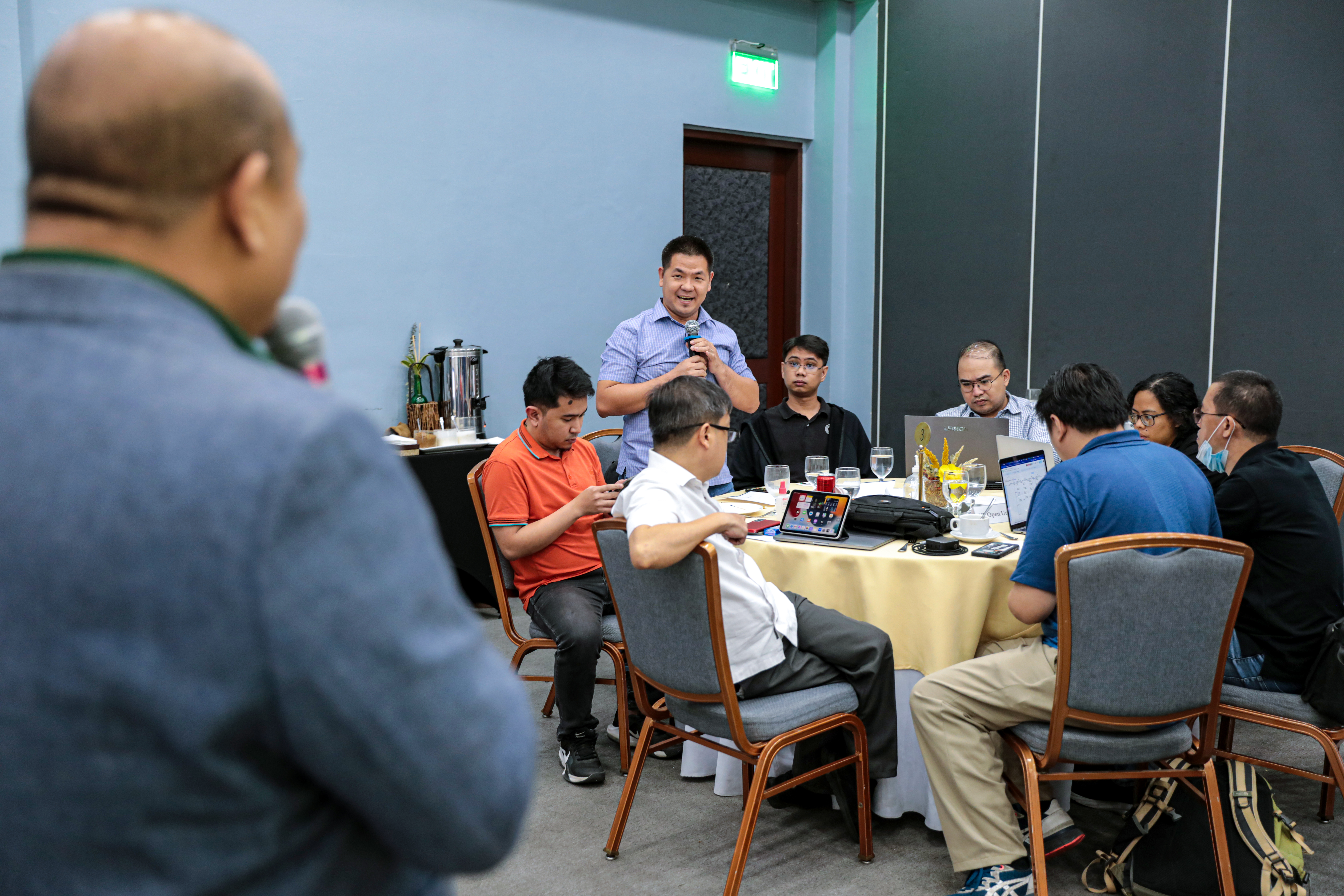
A lynchpin of all flagship programs
CUs throughout the UP System have already launched various digitalization projects to streamline their own administrative and academic processes and information systems: the Computerized Registration System (CRS) is currently being used in UP Diliman and UP Visayas for student registrations; while UP Los Baños, UP Manila, UP Open University, UP Baguio, and UP Cebu already utilize the Student Academic Information System (SAIS).
However, the lack of a system-wide student registration system means that inefficiencies remain, such as for cross-registration among CUs and troubleshooting for technical difficulties. This situation is also present in the University’s other service delivery efforts.
“As it is now, UP’s inefficiencies prevent the University from realizing its potentials and serving the Filipino people better. This renders UP increasingly unable to respond effectively to the needs of society. It is essential that we maximize the use of technology to over-cap our organizational handicaps,” Jimenez stressed in his keynote address during the conference.
The University therefore needs a “unified digital strategy” crafted through an “All-of-UP approach”, which Jimenez said “would provide a cohesive overall framework that ensures consistency, alignment, and synergy across all our digital transformation or Dx initiatives” while “[respecting] and [accommodating] the context-specific differences and unique needs and adaptations of our different units and constituent universities.”
Digital transformation, after all, serves as a lynchpin for the flagship programs of his administration’s Strategic Plan 2023–2029, from cultivating academic excellence to forging active partnerships and collaborations, providing online distance e-learning, and instituting a more inclusive admissions policy.
Significant system-wide efforts toward digital transformation are already underway. For example, Tuklas and Buklod, developed by Prof. Chito Angeles, former UP Diliman University Librarian, are also being deployed as the new discovery tool and library services platform to replace the old Integrated Library System (iLib). These allow students, faculty, researchers, and staff to access catalogs and online resources of libraries across CUs through a single portal.
“We cannot talk about IT without involving our library and commons. Mayroon na silang [Tuklas at] Buklod, [and] I think we have to continuously develop that,” Vice President for Legal Affairs Abraham Rey Acosta urged in his opening remarks for the conference.
The goal of digital transformation, Acosta stated, is to “create an ecosystem where. . . [one] unique identifier would become the key to all the services available in UP.”
Having such an ecosystem in place would also foster a more democratized access to UP’s services: “Ang maganda pala sa student number natin is walang sinasabi diyan [kung] taga saan ka ba except that taga-UP ka. Hindi ka [UP Los Baños], hindi ka UP Baguio, hindi ka UP Diliman—taga-UP ka, so it’s really something na hindi discriminatory,” he underscored.

Harmonizing transformation, collaboration
Jimenez nevertheless emphasized that creating and maintaining an ecosystem like this would need a central governing body or committee to oversee the different Dx projects across the UP System, in order to “standardize protocols for digital tools, platforms, and data management systems [and] ensure [their] interoperability and compatibility across the UP System,” while also assuring that CUs and units would “have the autonomy and drive to generate Dx projects that are suited to their own needs and unique contexts while adhering to the overarching standards.”
He also stated that required was “a culture of open collaboration and communication” to implement and further improve this unified strategy along the way: “We need to maintain regular communication channels among our CUs and the UP System to share updates, best practices and feedback,” he emphasized.
Hence, Vice President for Development Daniel Peckley Jr. asserted the need for a Office of the Vice President for IT and Dx to oversee these efforts: “If may isang opisina sa Quezon Hall na palaging nagpaparallel processing, palaging ang daming sabay-sabay na inaasikaso, siguro ito na ‘yung [Office of the Vice President for Development]. The problem with that is, when you are so thinly spread, if you cannot focus, walang matatapos—so it is really our earnest request na sana mabuo na ang Office for Vice President for IT and Dx.”
With an enabling environment, Dr. Jalao envisioned a push towards 100 percent digitalization “hopefully within the next five to 10 years,” through the training of end users and assisting them as they migrate and transition to new platforms and systems.
Ultimately, user experience is paramount in these efforts toward digital transformation; and their success can only be determined not by the procurement of the latest equipment or software but by the feedback on the impact on the work and lives of their end users: the UP community, and the Filipino people at large.
“We are the only persons here who know what is running behind the servers—pero ‘pag tinanong mo sa estudyante doon, ang sasabihin lang naman niya is, ‘ang bagal naman ng system ng UP’ o ‘ang bilis ng system ng UP’, etc. At the end of the day, this is what we want to achieve, at least in UP. The technology here is invisible, and the user experience is what matters most,” Acosta reiterated.

More on UP’s Strategic Plan 2023-2029
Flagship Program 1: Academic Excellence
Flagship Program 2: Inclusive Admissions
Flagship Program 3: Research and Innovation
Flagship Program 4: Open and Distance e-Learning (ODeL)
Flagship Program 5: Archipelagic and Oceanic Virtual University (AOVU)
Flagship Program 6: Active and Collaborative Partnerships
Flagship Program 7: Arts and Culture
Flagship Program 8: Expansion of Public Service Offices
Flagship Program 9: Quality Management System (QMS) and Quality Assurance (QA)
Flagship Program 10: Digital Transformation