

University of the Philippines Resilience Institute Executive Director Alfredo Mahar Francisco Lagmay and his team moderated a Nov. 28 special plenary session of the 20th Association of Pacific Rim Universities Multi-Hazards Symposium 2025. The event was held Nov. 26 to 29 at the UP Bonifacio Global City Campus.
With Lagmay were: Dr. Likha Minimo, director of UPRI’s Knowledge Sharing Office; Jericho Mendoza, chief science research specialist of UPRI; and Richard Ybañez, officer-in-charge of UPRI’s Education Office.
Lagmay said all sectors of society should be involved in hazard risk assessments and planning activities so that plans can be mainstreamed at the local level. “The challenge is to bring science down to the community level where it matters.”
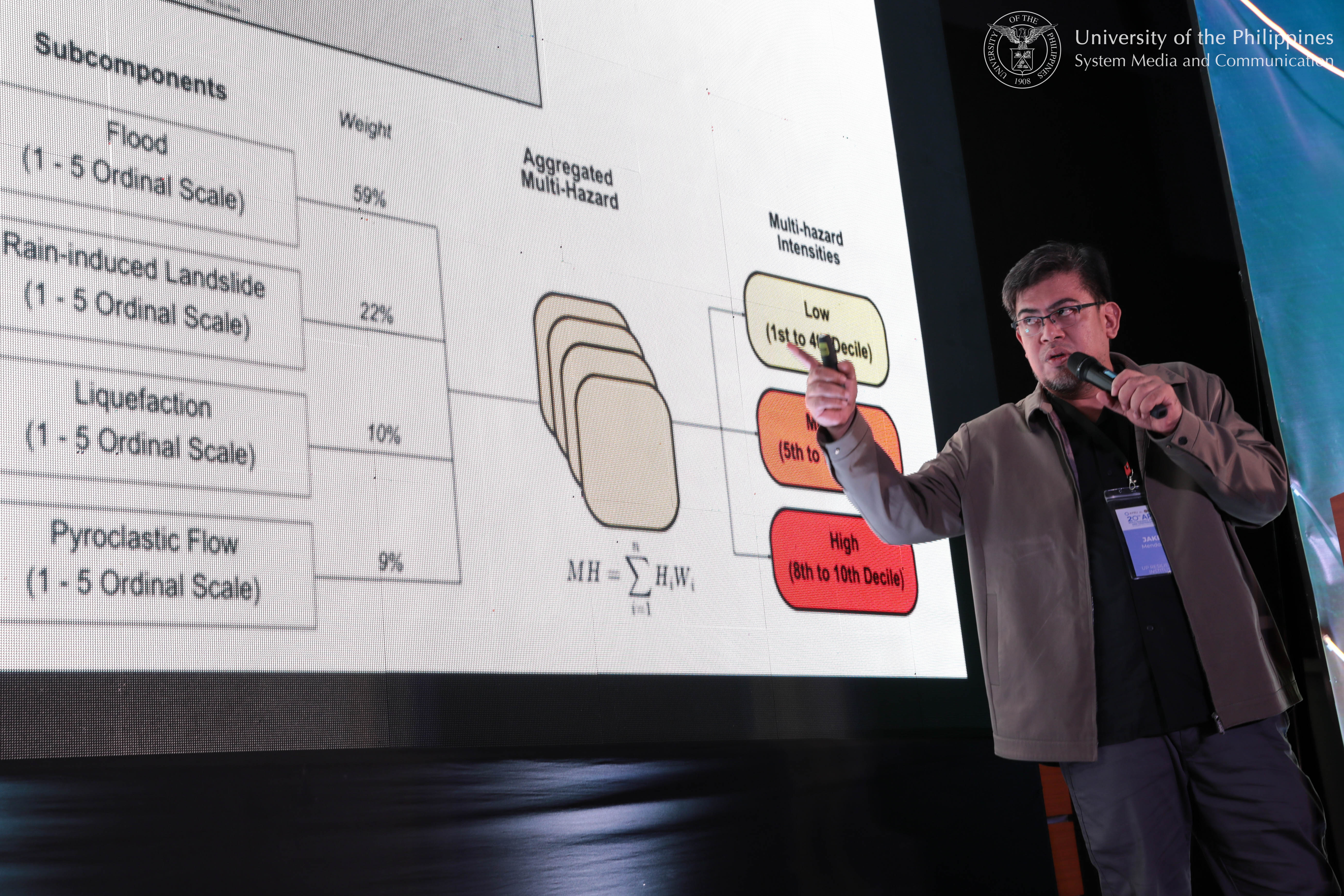
Climate change will likely enhance the risks faced by Filipinos from natural hazards, and the increasing number of disasters and damages already observed every year, according to Mendoza. “It’s time to shift our lens and incorporate multi-hazards assessment in planning.”

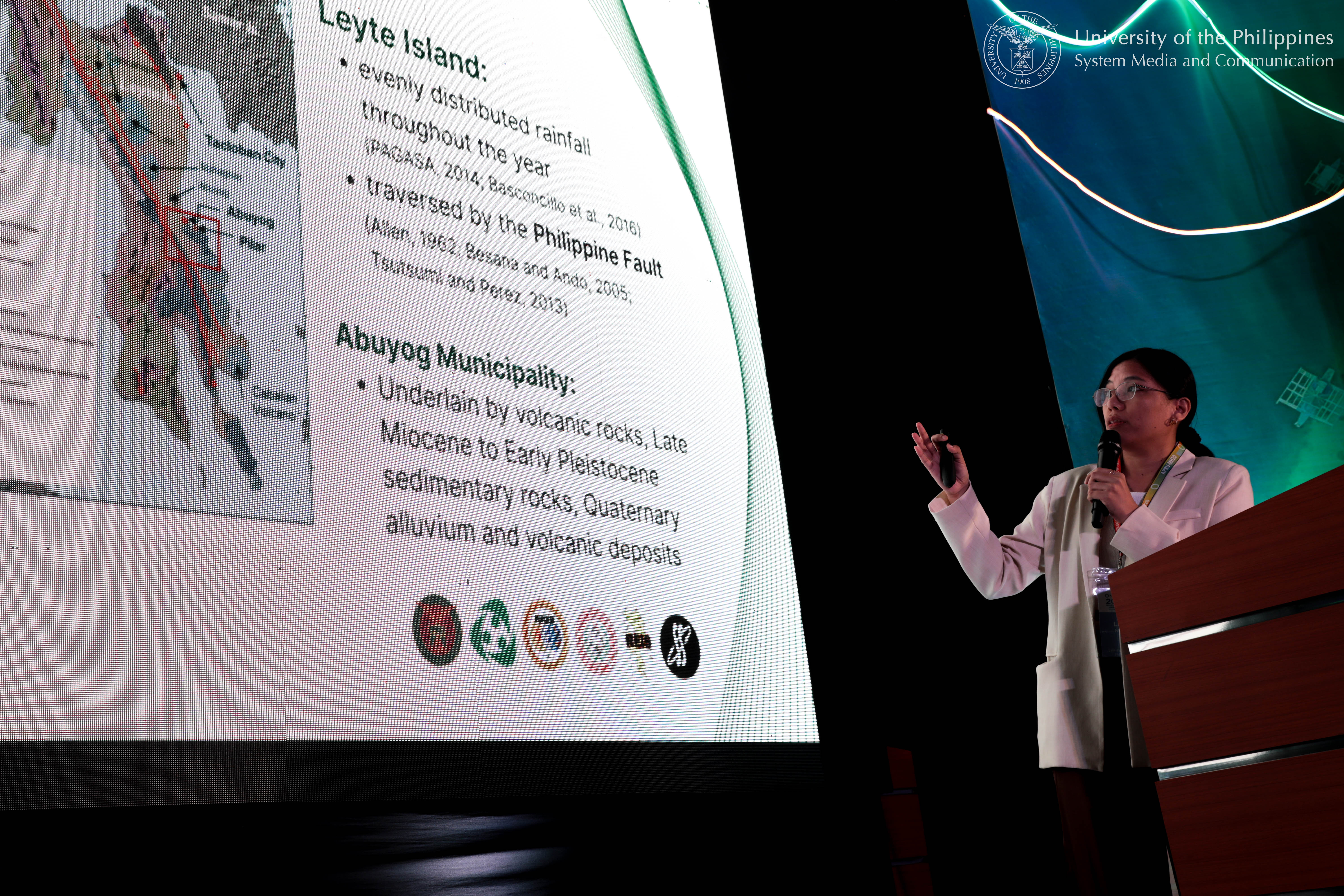
Minimo presented on the April 2022 rain-induced landslide-tsunami disaster in Pilar, Albuyog, Leyte. She said the Pilar disaster is an example of cascading hazards: the storms brought extended rainfall on faulted volcanic deposits, triggering the landslides that caused massive tsunami waves that were several meters high, and adversely affecting the said municipality.
Ybañez shared that UPRI created a matrix to easily visualize and communicate possible hazard interrelationships and that the team has identified 130 natural hazard interrelationships thus far. He explained that this “Philippine Hazard Interrelationships Matrix” can guide policymakers in identifying places and communities where resilience should be incorporated, help build multi-hazard scenarios, and address the challenges through preparedness programs.


The four-day international symposium aimed to examine resilience through interdisciplinary lenses as it gathered participants from 38 organizations across 13 economies. It featured research presentations and discussions in line with the theme “Resilience Retrospect and Prospect: Multi-Hazard Entanglements of Society, Environment, and Technology Across Space, Time, and Place.” It was hosted by UP Diliman through its College of Architecture and College of Engineering.


