



Finally, electricity!
On June 16, Datu Saldong Domino Elementary School — an off-grid school in Sitio Tagpangi, Barangay Simbalan, Buenavista, Agusan del Norte — said goodbye to teaching, learning, and working in dimly lit rooms, and said hello to technologies that relied on electricity, including connectivity.
It is the first public school to benefit from the national government’s Last Mile School Electrification Program, which was officially launched in the school on June 19. Implemented by the Department of Education (DepEd) and National Electrification Administration (NEA), the Program aims to provide electricity to over 1,600 public schools in isolated areas across the country. For this year, the goal is 295 schools.
And this nationwide power-up program is UP powered.
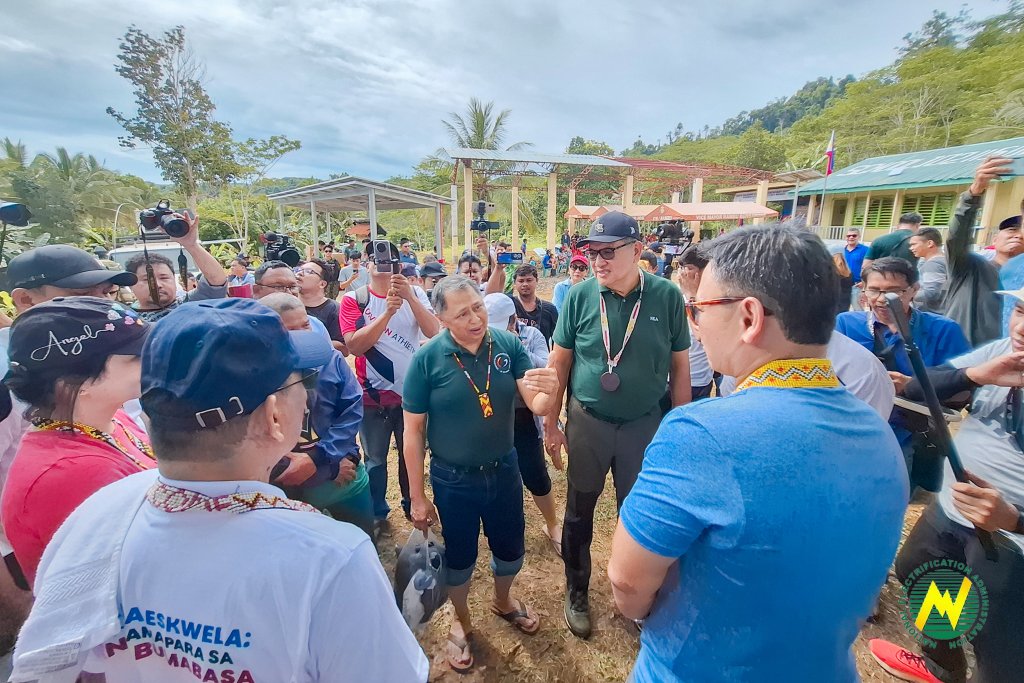
Through its partnership with NEA, the university provided the technical expertise that designed electrification systems and programs that were sustainable, scalable, and tailored to the needs of schools in remote, geographically-isolated communities.
Prof. Rowaldo Del Mundo of the UP Diliman College of Engineering leads the UP team of experts and represented the university at the June 19 launch. He relayed DepEd Secretary Sonny Angara’s expression of gratitude to UP “for its support in bringing electricity to last mile schools.” Del Mundo also witnessed the immediate impact of electrification and the resulting internet connectivity: “The school children requested the teacher not to dismiss the class. They wanted to be in the school longer.”
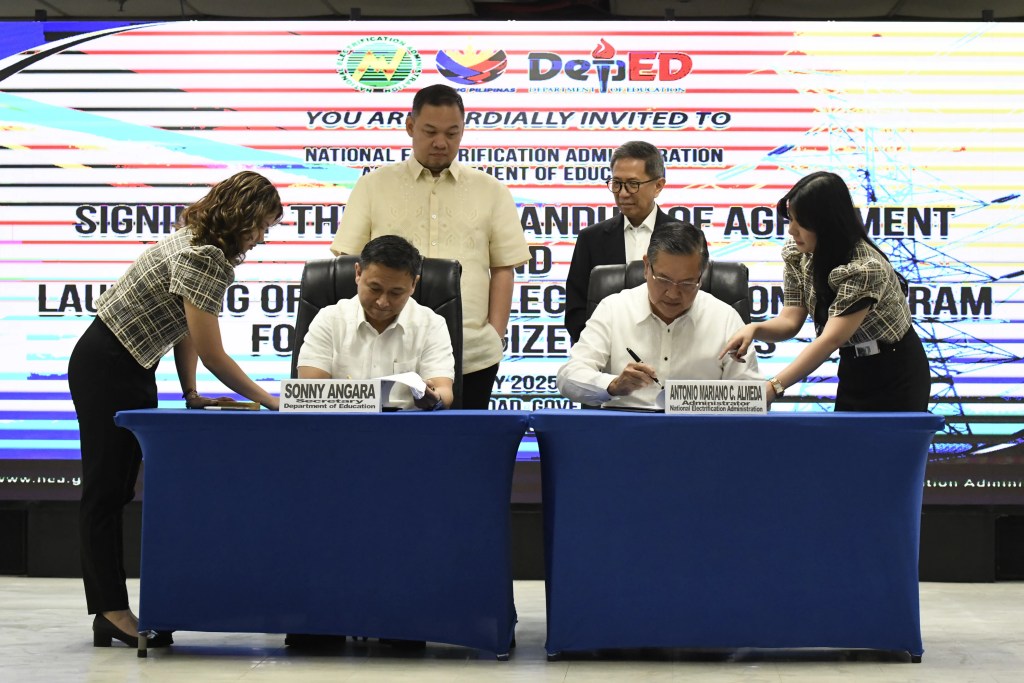
Early this year, at the February MOA signing between DepEd and NEA, the agencies officially conveyed to UP, through President Angelo Jimenez, their recognition of the university’s role in solving electrification challenges and helping them accomplish their respective agency mandates.
Jimenez then responded by emphasizing the meaningful national impact of shared vision and unified support in pursuing improved child development programs in remote communities. “It is only through access to electricity that we can integrate modernity into our teaching methods, which is essential for better employment and an improved quality of life.”
UP’s partnership with NEA formally began in January 2024 for the Accelerated Total Electrification Program that aimed to energize all households in the Philippines by 2028. The university’s technical expertise produced the Smart-Solar Home Systems, which are connected through low-cost rural communication systems for sustainable utility-based electricity services, done via electric cooperatives.

The university’s technical expertise produced the Smart-Solar Home Systems, which are connected through low-cost rural communication systems for sustainable utility-based electricity services, done via electric cooperatives.
According to NEA, “the innovation value added by UP in these electricity service systems is the ability of the solar home system to automatically report [power] outage to the electric cooperative service provider. This feature solved the otherwise slow, inefficient and costly operation and maintenance of dispersed solar home systems in the mountains.”
UP’s active role and vital contributions to these Philippine electrification programs reflect its commitment to public service and its ongoing contribution to national development goals by helping provide clean energy and educational opportunities to marginalized and geographically-isolated learners.