Is it possible to build and develop a sustainable urban community within Metro Manila? For the University of the Philippines, an answer lies in a 24-hectare lot deep within the heart of Diliman in Quezon City, where a model sustainable community is envisioned to rise.
The Sustainable Development Goals Urban Farm and Wellness Park is the University’s flagship sustainability project which aims to integrate urban farming, environmental conservation, decent and inclusive housing, effective water and waste management, community spaces for physical fitness and recreation, and education into a single holistic development.
Anchored on the United Nations’ 17 SDGs, the project seeks to demonstrate innovative solutions for urban living that address environmental challenges, promote and enhance public wellness, and empower marginalized sectors.
Finding solid ground
The project, however, has sparked discussions regarding the livelihood and welfare of the families and communities that have lived in the area for decades, as well as its supposed historical significance. At the root of these discussions is a lingering confusion on the exact location of the land for the SDG Urban Farm and Wellness Park.
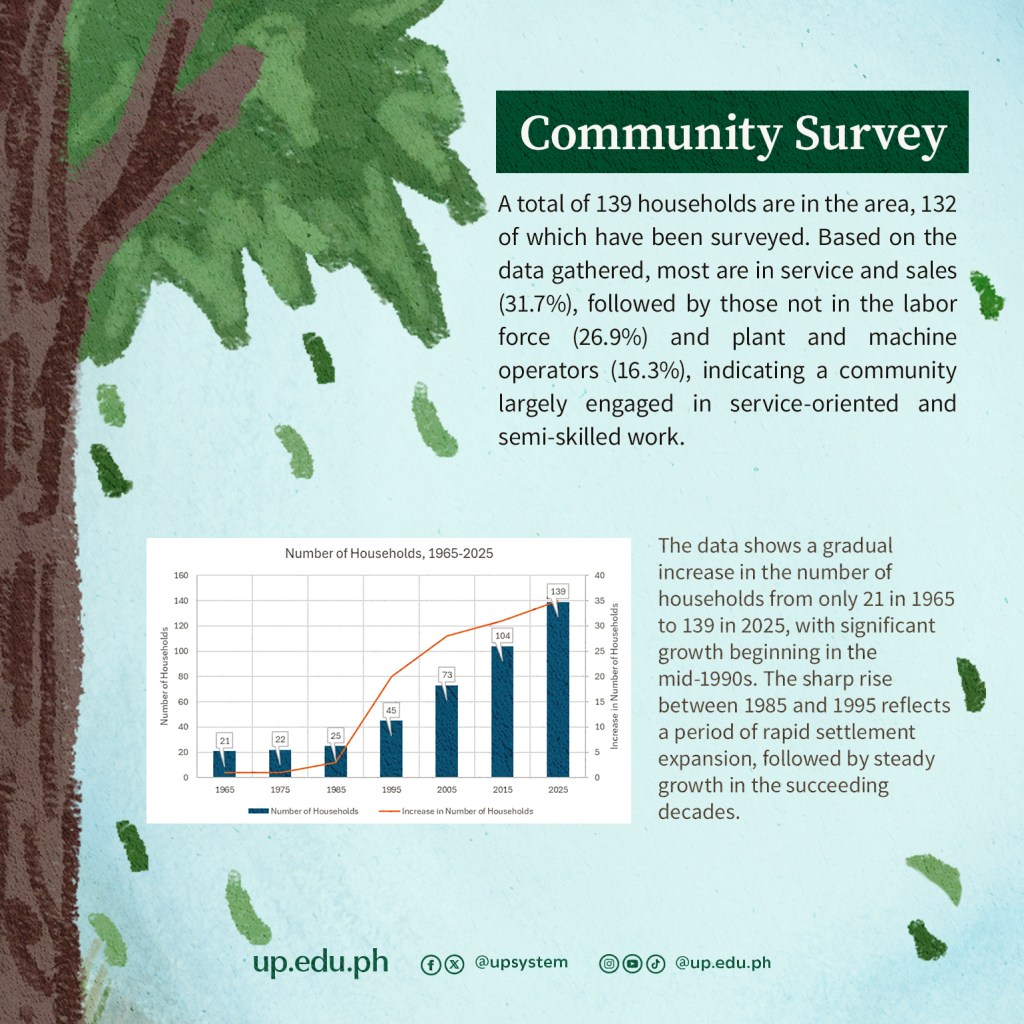
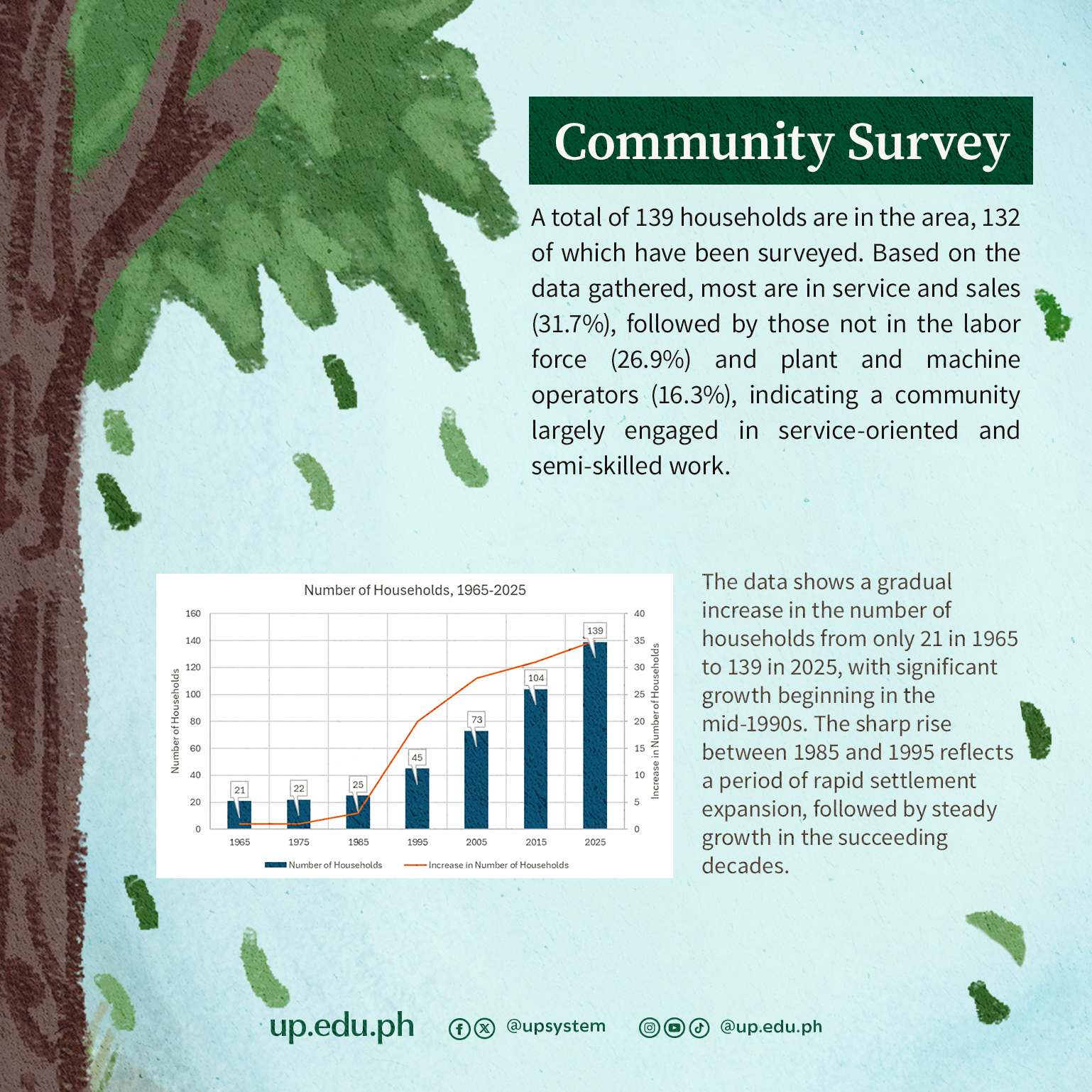
A large portion of the site designated for the project can be found in Purok Aguinaldo, a community of more than 100 working-class households within Brgy. UP Campus. Many in the community are also not in the labor force.
Amid plans to start the development of the area, some urban farmers and residents from the community called for consultations with UP as they claimed that the 24-hectare lot for the project is covered by the government’s Comprehensive Agrarian Reform Program due to Notices of Coverage issued by the Department of Agrarian Reform in 1991 and in 1996 for landholdings supposedly located in Brgy. Krus Na Ligas.
Two important facts have to be established in light of this claim. First, the Supreme Court has already upheld UP’s legal ownership of the lot. DAR has also affirmed in its 2019 legal opinion that the land is an institutional property of the university as part of the UP Diliman campus and therefore excluded from CARP.
Furthermore, NOCs also do not grant titles to farmer-beneficiaries of the agrarian reform program as this would require the issuance of Certificates of Land Ownership Award; meanwhile, Republic Act No. 9500 or the UP Charter prohibits the university from donating or transferring ownership of the land.
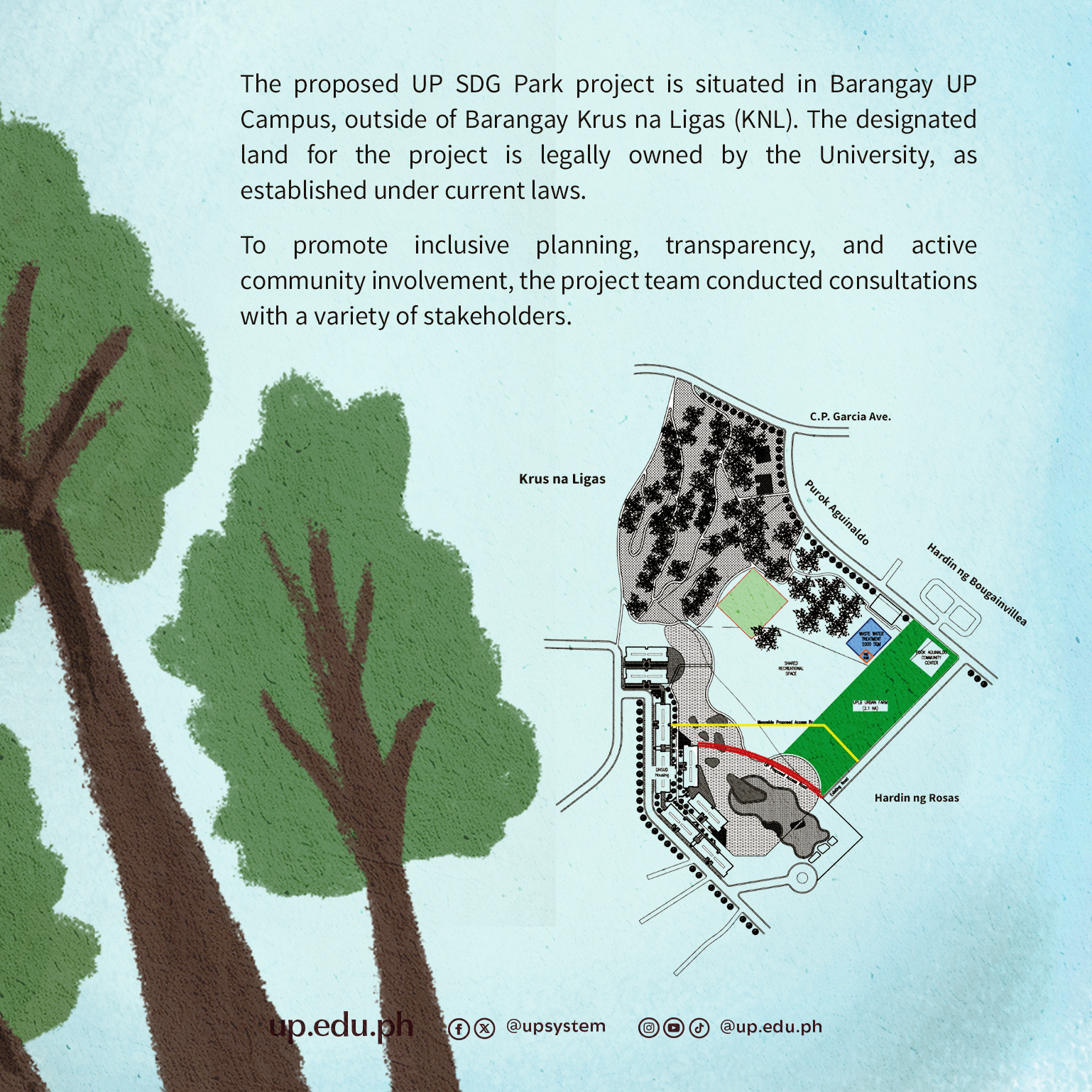
Second is the lot’s location within the jurisdiction of Brgy. UP Campus — making it distinct from the adjacent Brgy. Krus Na Ligas, whose residents’ decades-long land ownership dispute with the university has already been settled with the enactment of Republic Act No. 11454 in 2019.
The UP SDG Park project, a visual guide:
Honoring history through development, service
In locating the project within the jurisdiction of Brgy. UP Campus, claims of the area’s supposed significance in relation to the role played by Brgy. Krus Na Ligas during the 1896 Philippine Revolution appear to lack solid ground.
Far from diminishing historical concerns, however, the heritage of Brgy. Krus Na Ligas can be honored in the SDG Urban Farm and Wellness Park by installing and integrating educational landmarks and memorials within the spaces of a living community — allowing present and future generations to learn and appreciate our history.
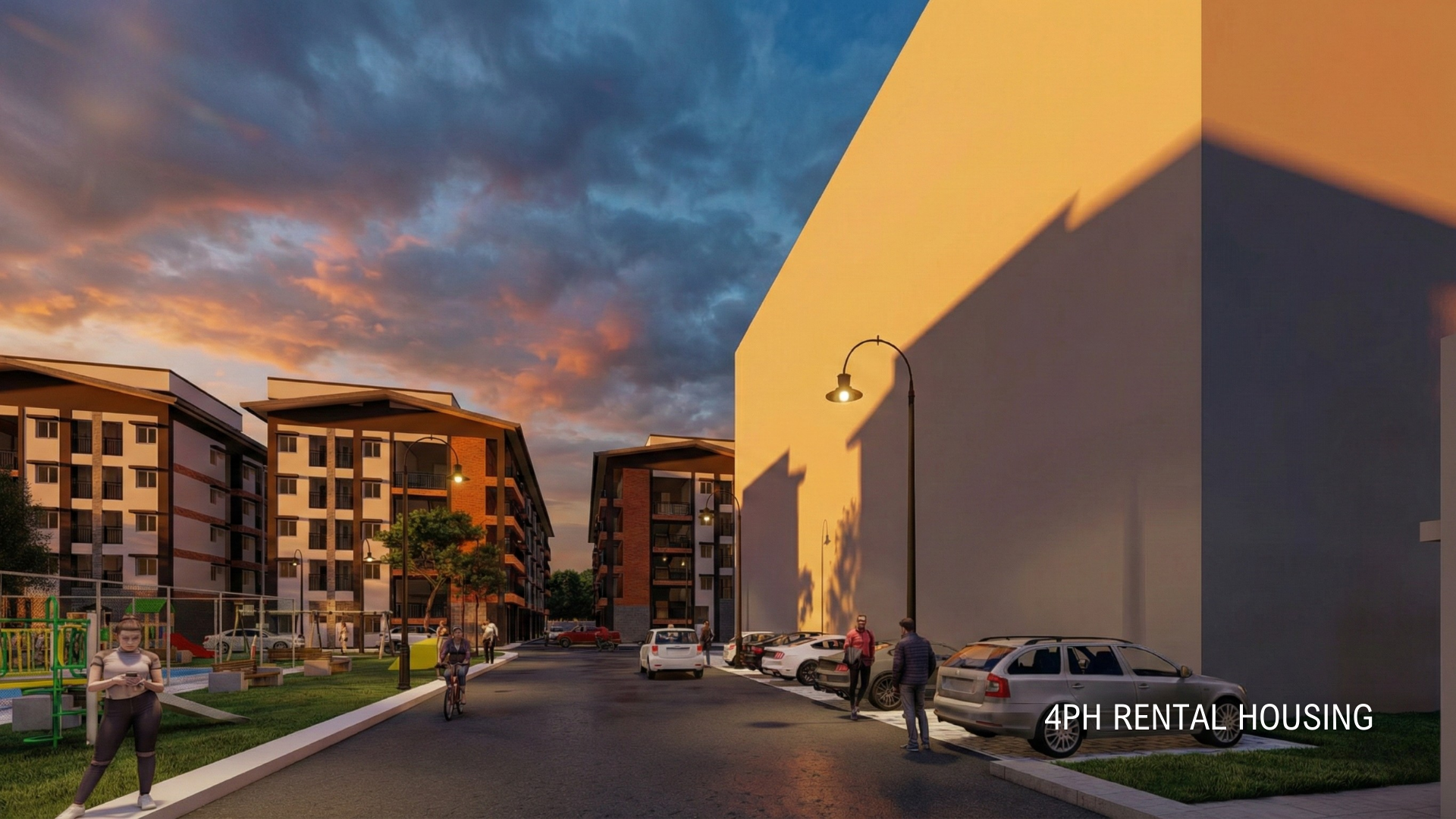
Envisioned as a holistic urban community, the SDG Urban Farm and Wellness Park will not only devote UP land to academic purposes and to house its faculty and staff, it also aims to initiate concrete and tangible social transformation within the university’s own backyard by providing accessible, affordable, and improved housing to informal settler families within the UP Diliman campus through the Marilag Residences Rental Housing Project.
“Through this undertaking, we aim to ensure that [ISFs] will finally, as people here whom we share, have a secure and dignified home of their own within the campus,” UP President Angelo Jimenez underscored at the Nov. 27, 2025 memorandum of agreement signing between UP and the Department of Human Settlements and Urban Development, which formalized the development of the housing project.
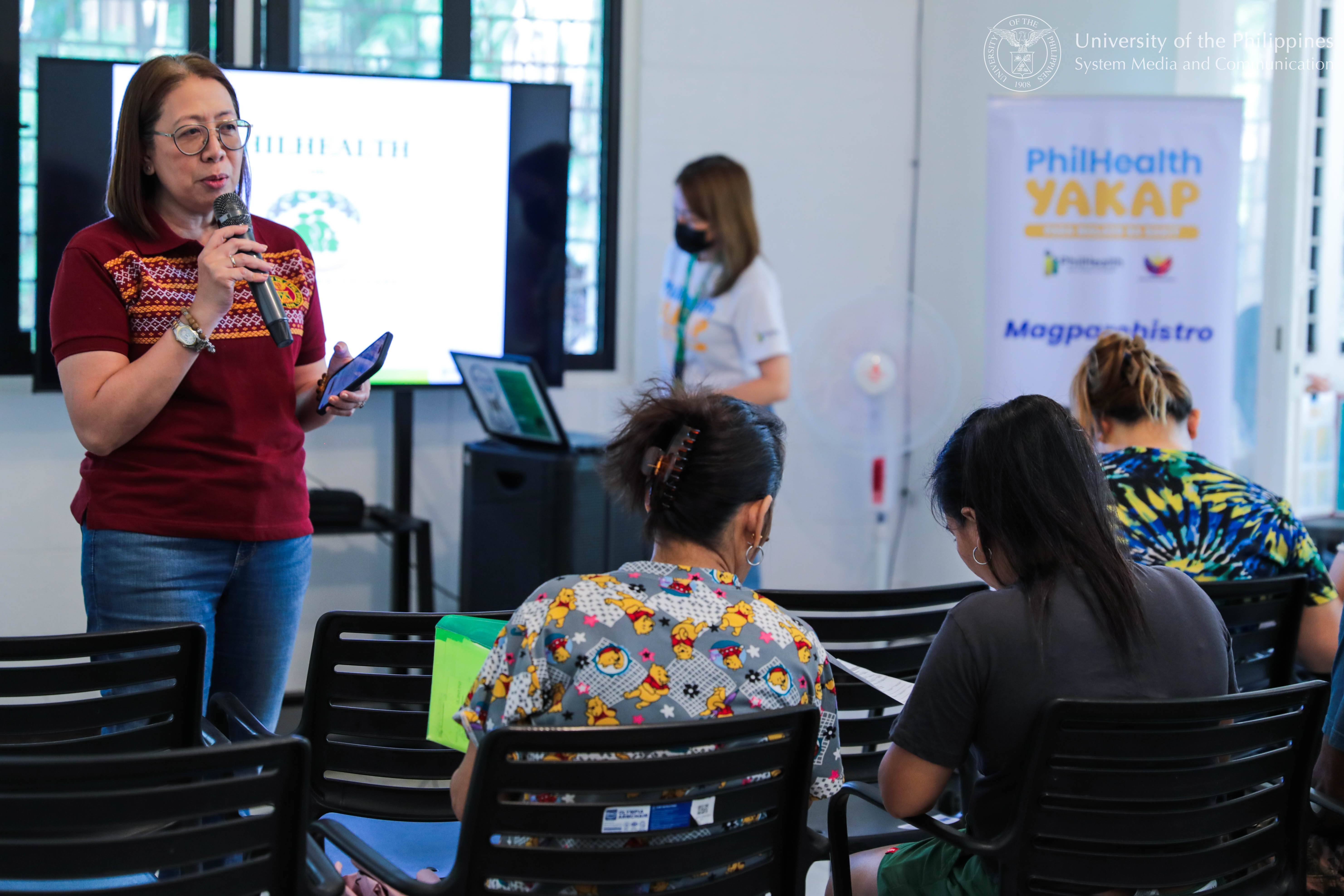
A partnership with vocational school Escuela de Taller also aims to enhance livelihood and educational opportunities for the community through upskilling and social enterprises. Community-oriented activities such as registration drives for the QCitizen identification card and PhilHealth’s Yaman ng Kalusugan Program will give community members greater access to basic social services and various government programs.
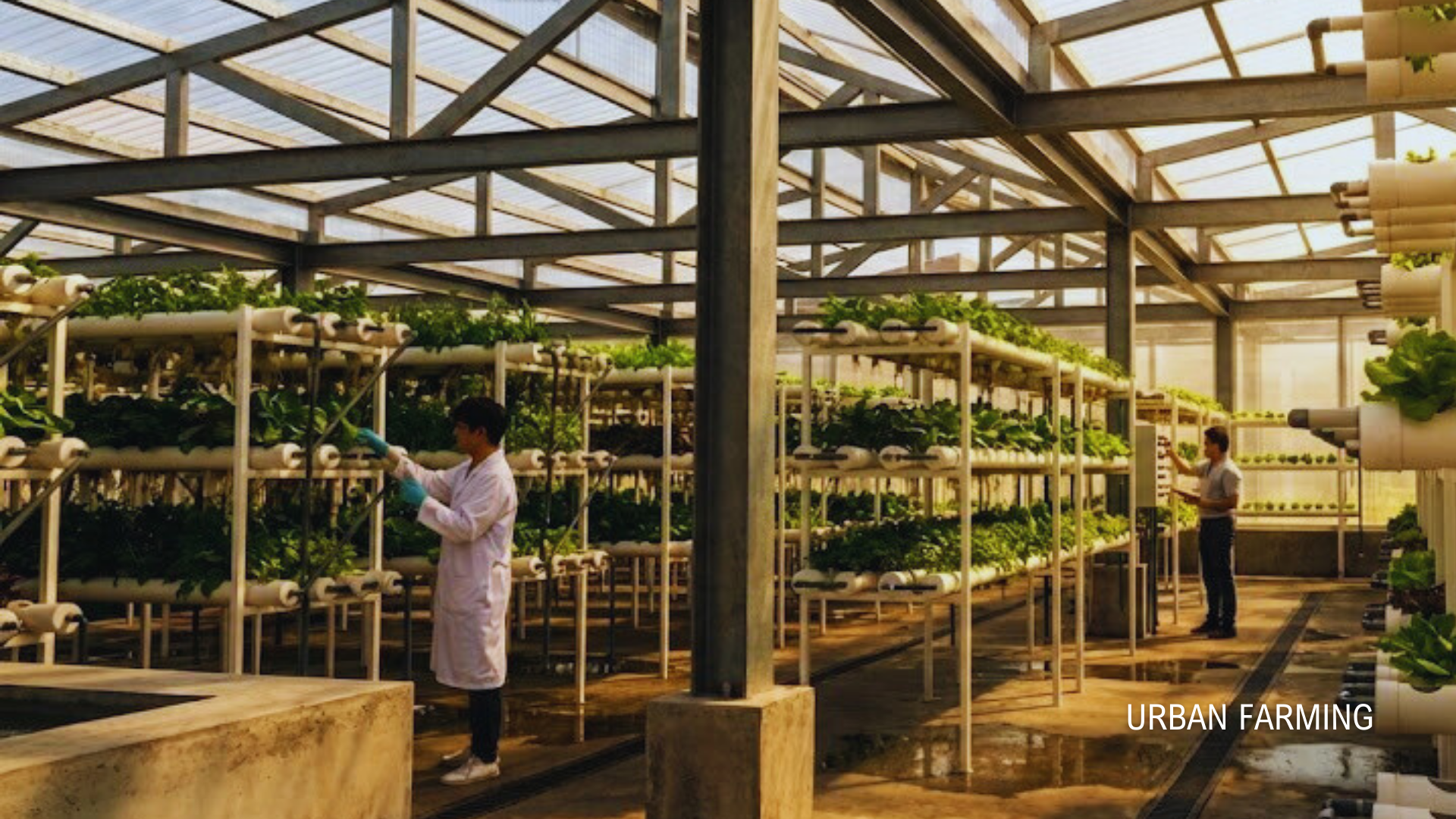
The project’s urban farms will likewise function as a living laboratory for sustainable agriculture under the stewardship of UP Los Baños — demonstrating climate-resilient farming methods and practices as well as modern cultivation techniques, and helping farming communities in the area develop productive and adaptive food systems that can withstand changing environmental and urban conditions. A farmers’ market selling produce from these urban farms will also empower local farmers and support community-led enterprises through direct market access.
Green public spaces for UP students, faculty, staff, and nearby communities are also integrated in the project through accessible gardens, open recreational areas, and wellness zones to promote physical and mental health such as cycling and walking paths. The project will also ensure sustainable access to safe and clean water through an innovative wastewater treatment service and water reuse demonstration.
Dialogue and inclusion, not displacement
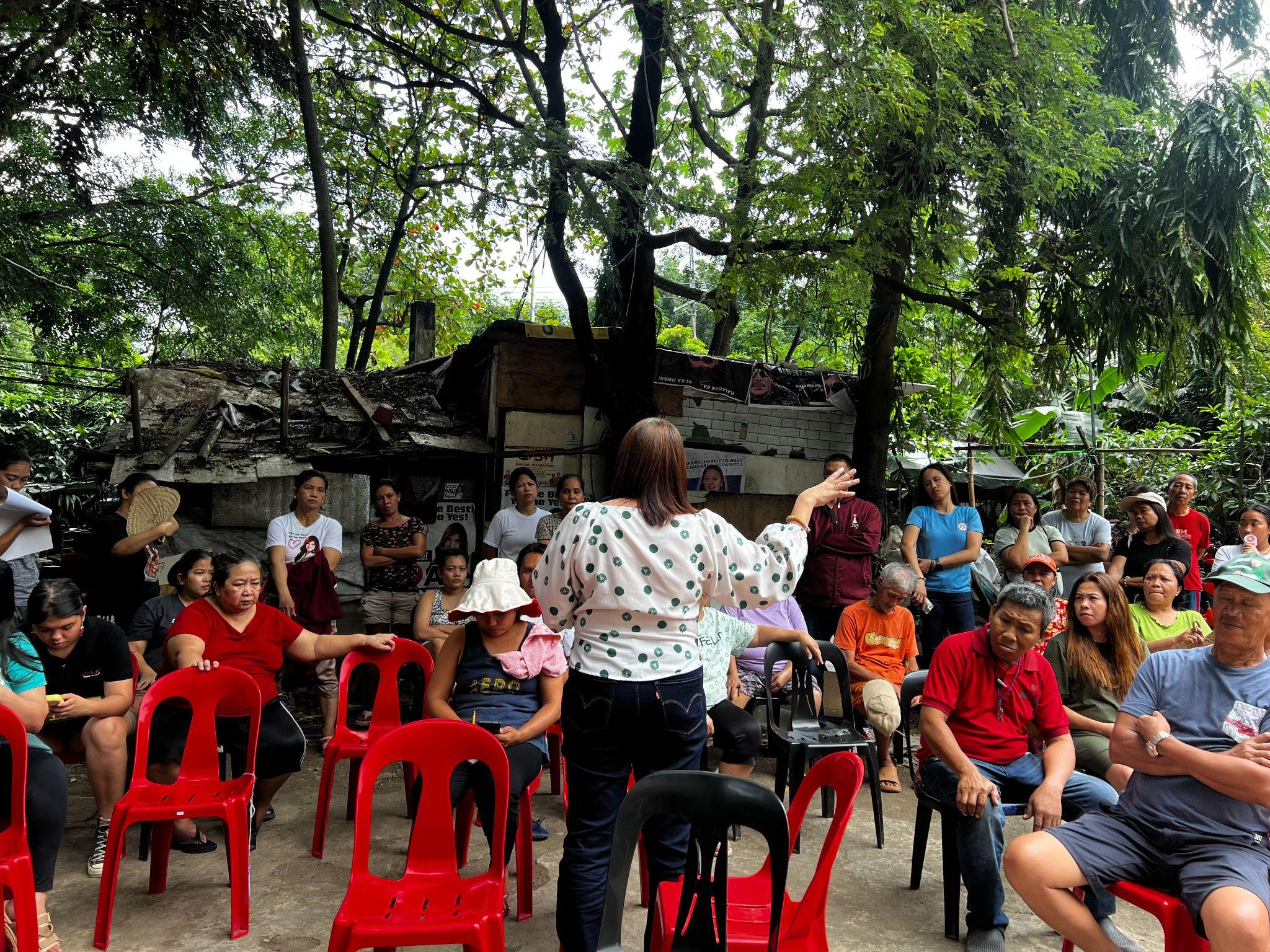
As the SDG Urban Farm and Wellness Park seeks to develop a sustainable urban community, every aspect of the project hopes to address the concerns and suggestions which members of the community themselves raised during their consultations with the OVPD.
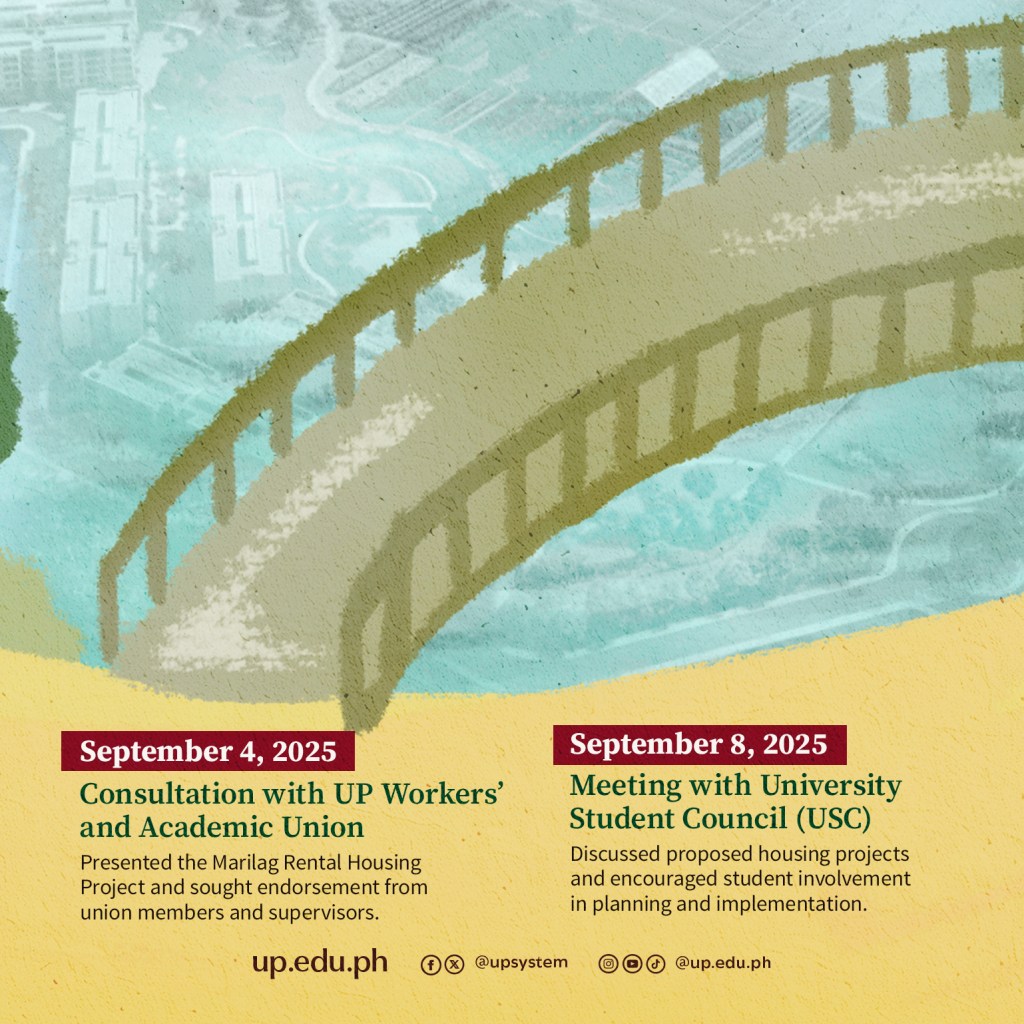
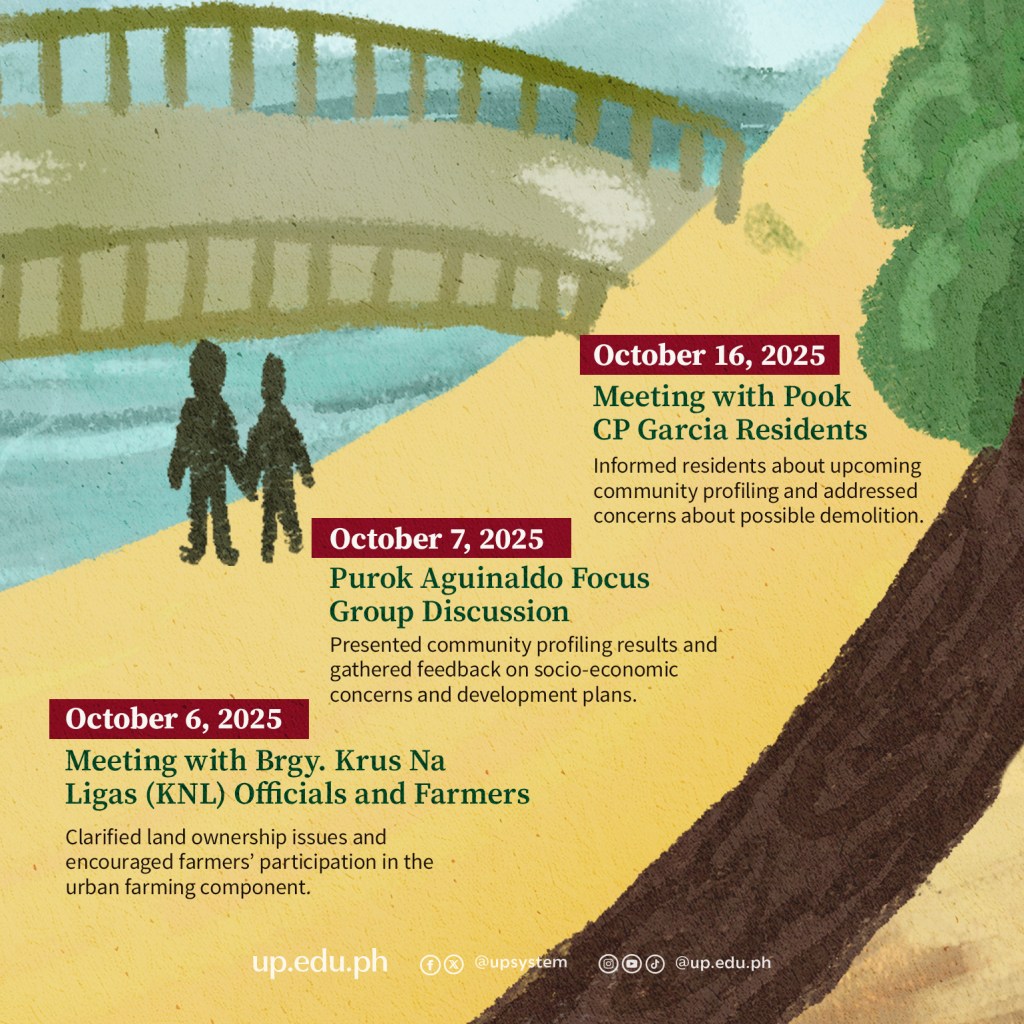
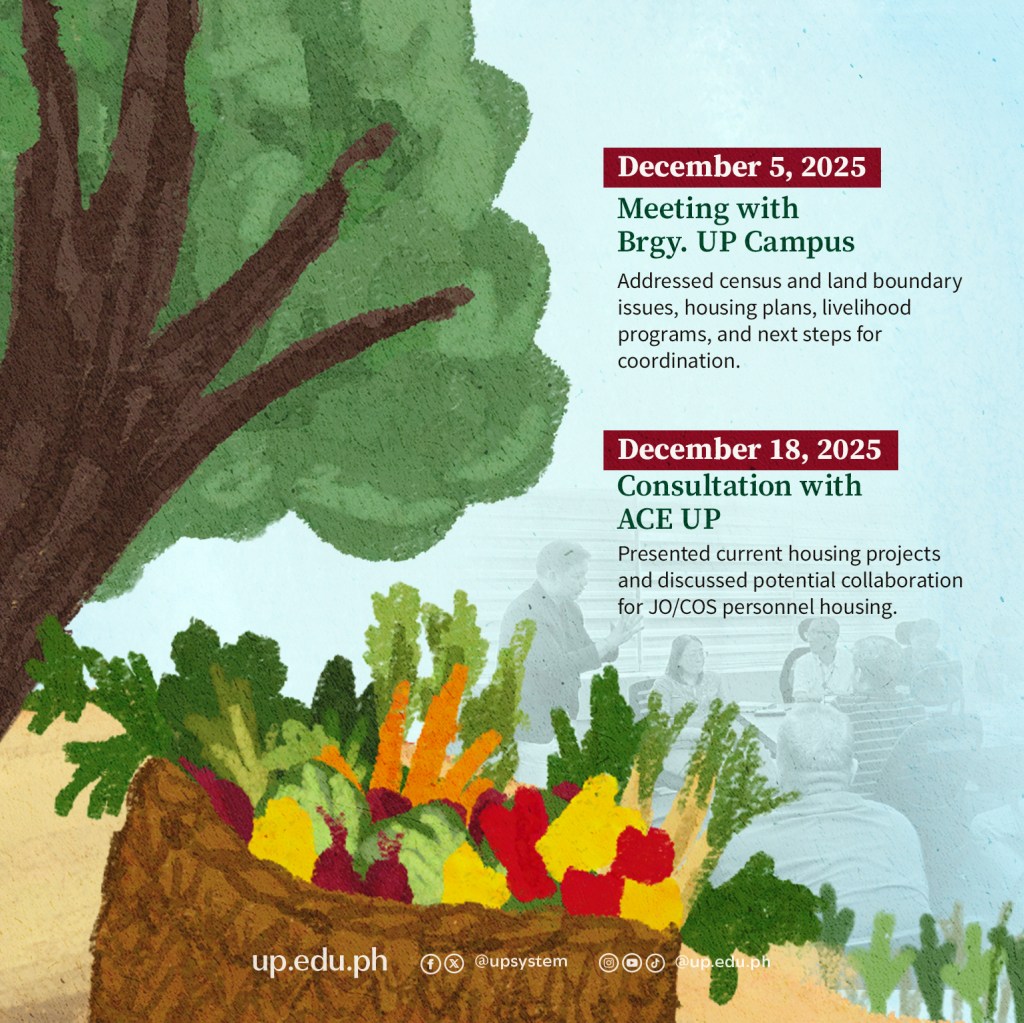
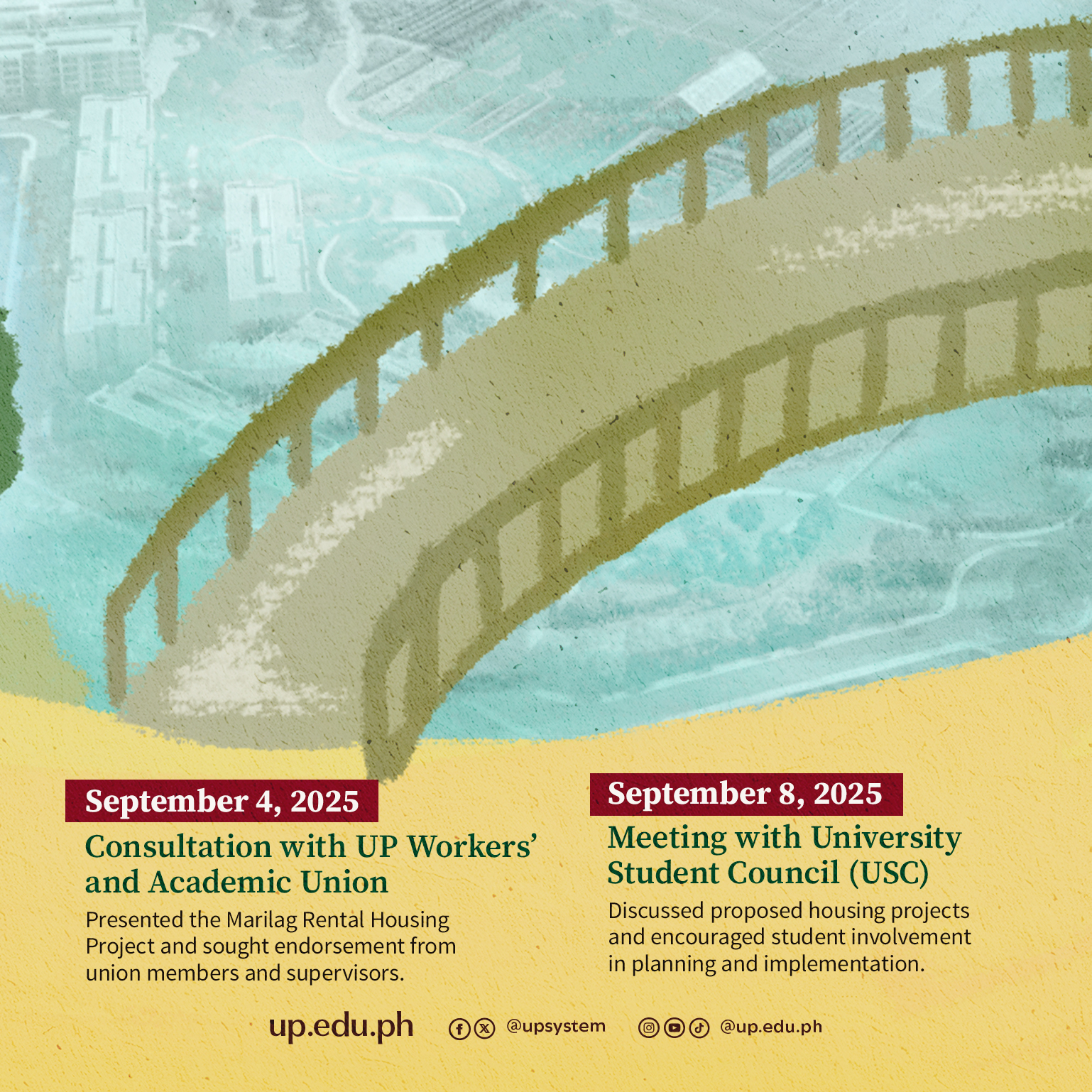
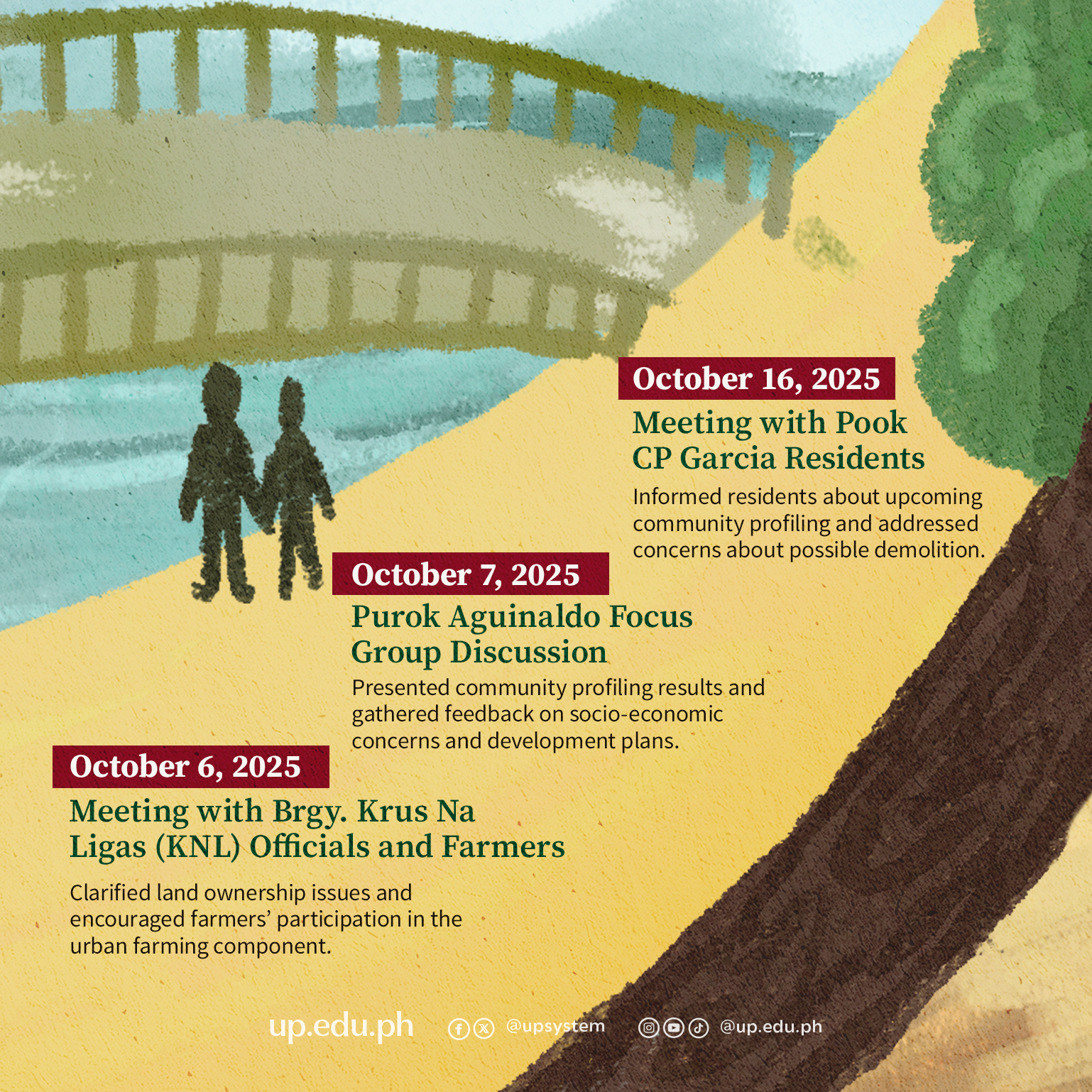
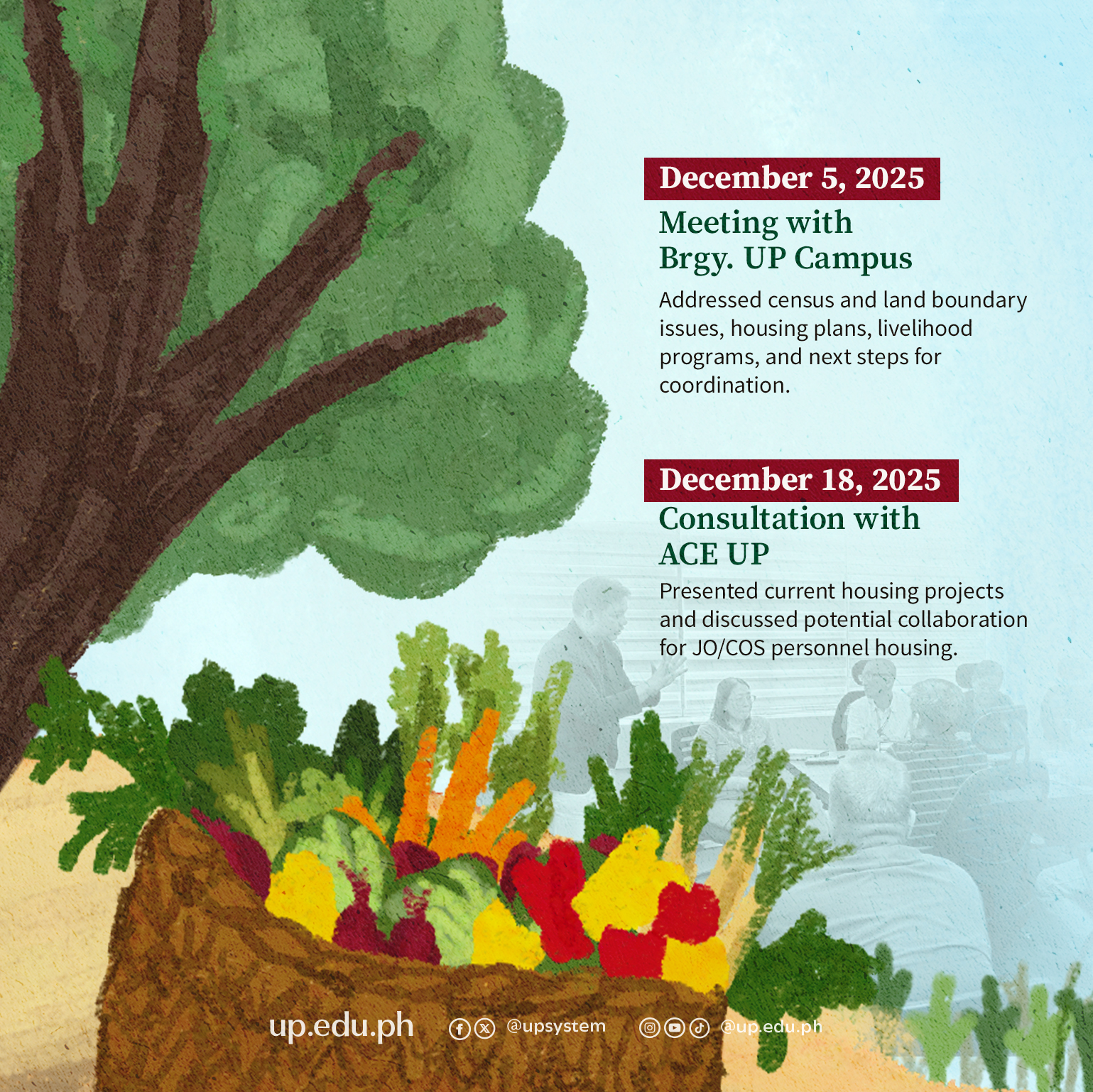
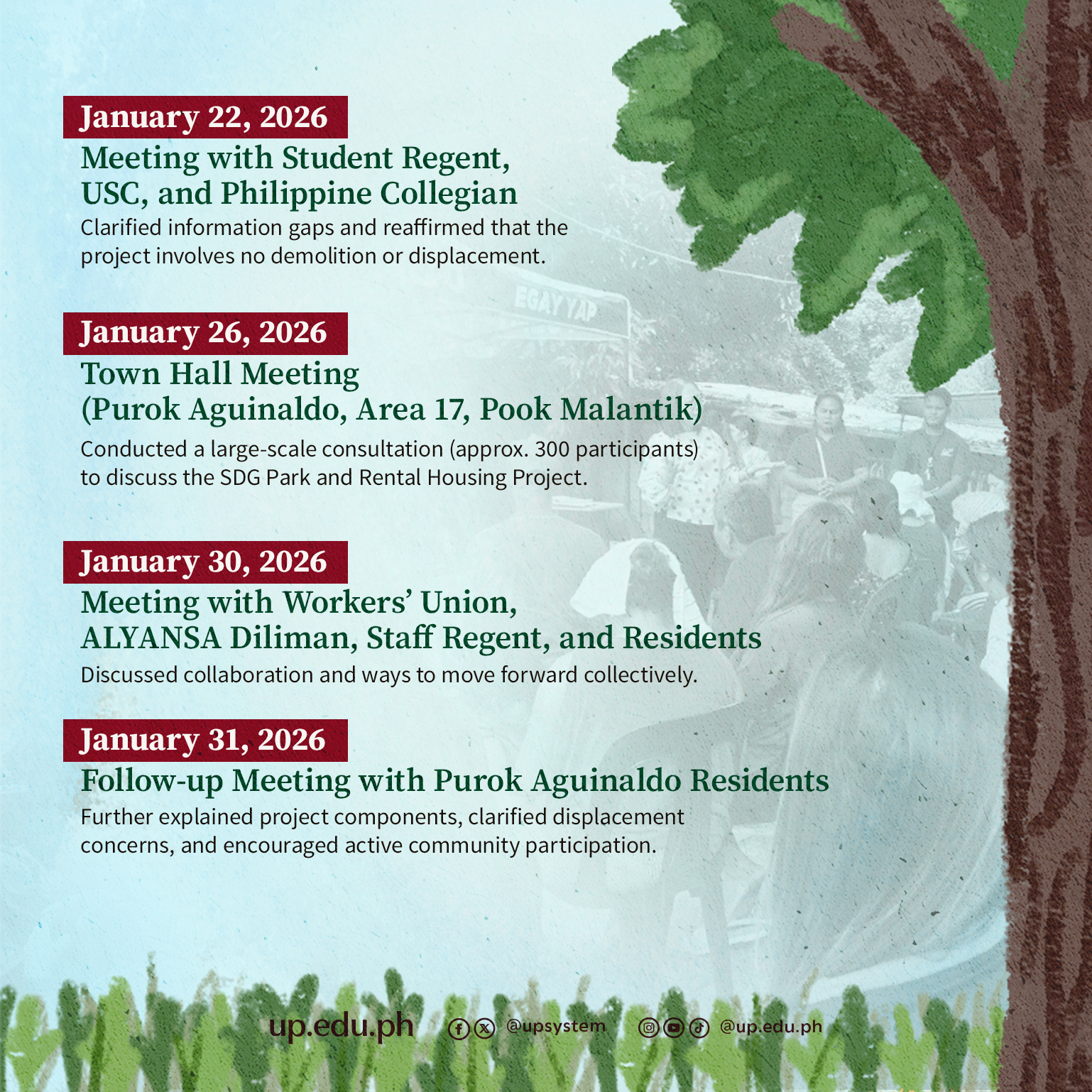
From Aug. 2025 to Jan. 2026, the OVPD conducted 14 consultations, dialogues, and town hall meetings with the affected communities as well as with various stakeholders to co-create a transition plan that would mitigate the challenges while the project is being developed. Brgy. UP Campus has since endorsed the project in a resolution dated Aug. 20, 2025.
The OVPD has repeatedly clarified in these consultations that the project will not displace and uproot the affected communities by relocating them outside the campus or to far-flung areas. Instead, transitional housing facilities with complete utility provisions such as access to clean water and electricity will be constructed in or near the area to support the households that will be affected by the project.
The university, in line with its public service mandate, continues to open its doors for dialogues and consultations with the affected communities and sectors to build a truly inclusive and sustainable community in the SDG Urban Farm and Wellness Park.