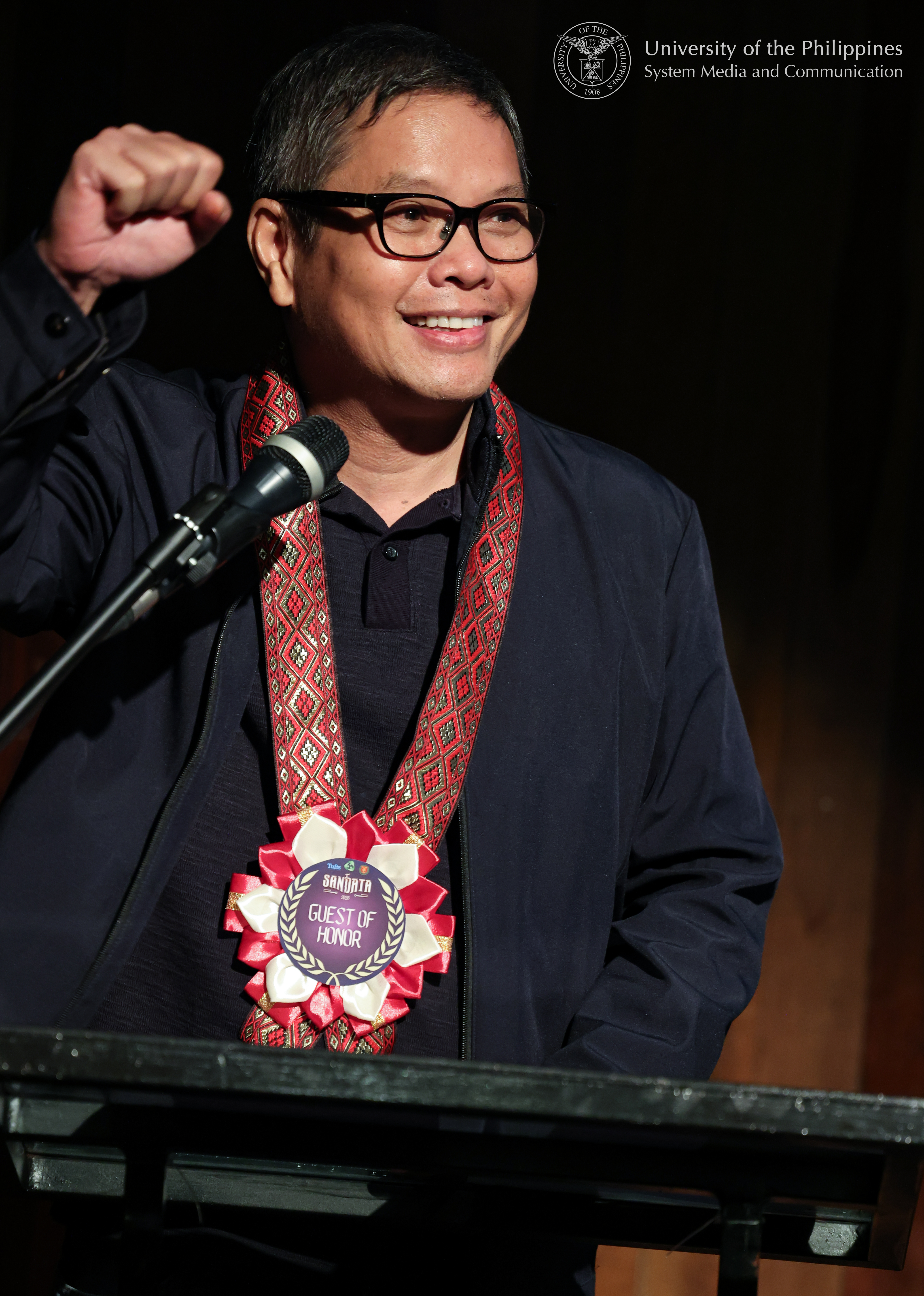
SanData 2026 presents research and dashboard vs. dengue

| Written by Fred Dabu

UPRI Executive Director Alfredo Mahar Francisco Lagmay (2nd from left) presents a token symbolizing the official turnover of the DengueR dashboard to Quezon City Vice Mayor Gian Carlo Sotto (3rd from left), as Dr. Darwin Bandoy (leftmost) and Dr. Rolando Cruz (rightmost) look on. Photo by Misael Bacani, UPS-MCO.

The University of the Philippines Resilience Institute held SanData 2026: A Performance Exhibit on Data-Driven Governance for Dengue Resilience, July 29 at Aldaba Hall, UP Diliman.


With the theme, Dahil datos ang sandata (Because data is our weapon), the event showcased four research initiatives that support public health decision-making in the fight against dengue, a viral infection transmitted to humans through the bite of infected mosquitoes: DengueR, a dashboard that forecasts dengue risk four to eight weeks in advance; and vital insights from research works titled Transmission Acceleration Outperforms Outbreak Threshold for Dengue-Outbreak Detection; Generative Embedding of Sparse Data with a Tabular Foundation Model for Dengue Anticipatory Action: A Machine Learning Approach; and Weekly Dengue Incidence Linked to Satellite Rainfall at City, Regional, and Country Scales.


Led by UPRI’s Research and Creative Work Division, SanData 2026 presented scientific outputs from multi-sectoral collaboration through audiovisual content and dance performances of youth organizations Simeona F. Chanyungco Lahing Kayumanggi Mananayaw ng Marikina Inc. and Kontemporaryong Gamelan Pilipino, an interactive exhibit featuring artworks by Tracie Anglo-Dizon, a technical demonstration of the dashboard, and a panel discussion.
Scenes from SanData 2026:

During the panel discussion, Dr. Arem Gem Austria of the Department of Health, Earl Joy Lopina of AHA! Behavioral Design, Dr. Roderick Salvador of Central Luzon State University, and Dr. Rolando Cruz of the Quezon City Epidemiology and Surveillance Division shared their insights about working together and translating data into meaningful action.


Toward the end of the program, UPRI Executive Director Alfredo Mahar Francisco Lagmay officially turned over the DengueR dashboard to QC Vice Mayor Gian Carlo Sotto. The said platform can provide information and insights needed for timely planning and response to potential dengue outbreaks. It was developed in collaboration with the local government and will be deployed through the QC Epidemiology and Surveillance Division.  


QC Mayor Josefina “Joy” Belmonte also delivered a video message for the event. She emphasized that transparency, honesty, and good governance are essential in addressing the city’s health problems through timely, data-driven, and evidence-based interventions.

More scenes and speakers from SanData 2026:

Attended by members of the academe, public health professionals, local government officials, and partner institutions, SanData 2026 was the culminating event for the Philippine component of the Center for Climate and Health Global Research on Disasters Project, an international research consortium funded by the US National Institutes of Health, in partnership with Tufts University. According to UPRI, “the project develops evidence-based approaches that strengthen public health systems and improve resilience to climate-related disasters, particularly in underserved communities across the Global South.”