


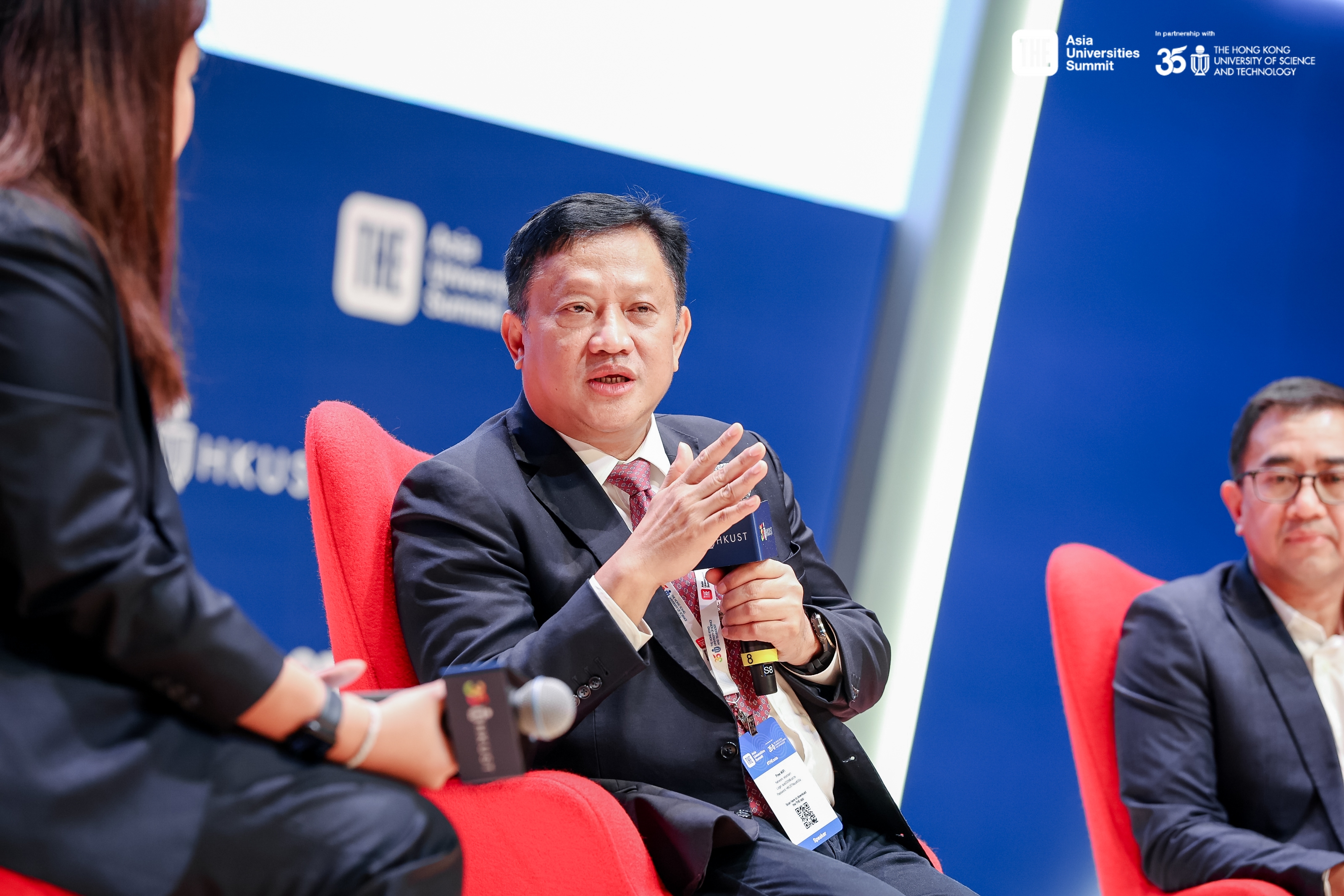
University of the Philippines President Angelo Jimenez highlighted UP’s efforts on climate transition on the third day of the Times Higher Education Asia Universities Summit 2026, April 24 at the Hong Kong University of Science and Technology.
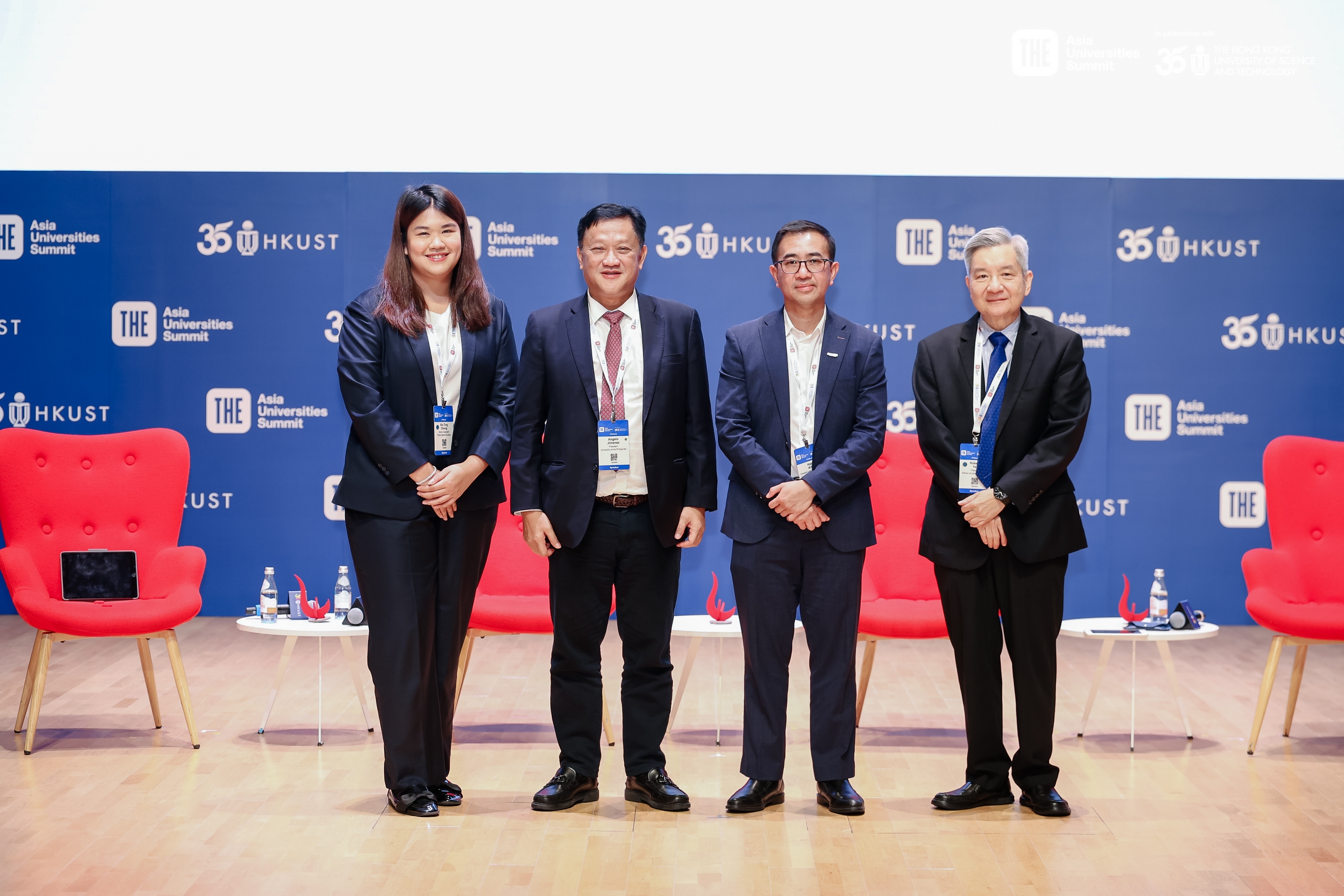
In the panel session, “Beyond net zero: Asia’s blueprint for a just climate transition,” Jimenez joined Fr. Roberto Yap, president of the Ateneo de Manila University, and Hazri Kifle, president and vice chancellor of the Universiti Brunei Darussalam, to discuss the role of Asian universities in designing climate transition policies that support sustainable development, protect livelihoods, and reduce inequality while cutting carbon emissions amid climate chang

Among the efforts Jimenez highlighted in the discussion were the hazard maps produced and developed by the UP Resilience Institute, which were used and implemented by national agencies and local government units in disaster response mechanisms and in planning major public works and infrastructure.
He also shared the university’s cooperation agreement with ACEN, an energy and renewable power generation firm under the Ayala Group, for the construction of a 335-megawatt solar-wind power project in Laguna.
Listening to sectors
Jimenez nevertheless acknowledged that differentiation and the danger of homogenization must be addressed in any effort toward a just climate transition, especially in highly diverse societies like the Philippines where “everyone has a different view of their own transition process.”
“Just transition has to be something that we will have to find out for ourselves, and I think that universities must be very careful about coming up with broad prescriptions,” he warned.
A key to just climate transition, he said, is to listen and work with the affected sectors: “Just transition is change, but we must advocate for it to be a change for the better, and the word ‘better’ has to be defined not by us but by the people we are trying to help.”
“The sectors have agency, lest we forget. The people we’re trying to help — the farmers, marginalized fisherfolks — they have agency. They have, in our experience, the ability to decide for themselves,” Jimenez stated.
The THE Asia Universities Summit 2026 was held from April 22 to 24, exploring Asia’s rise as a global leader in innovation and the pivotal role of universities in shaping humanity’s future.