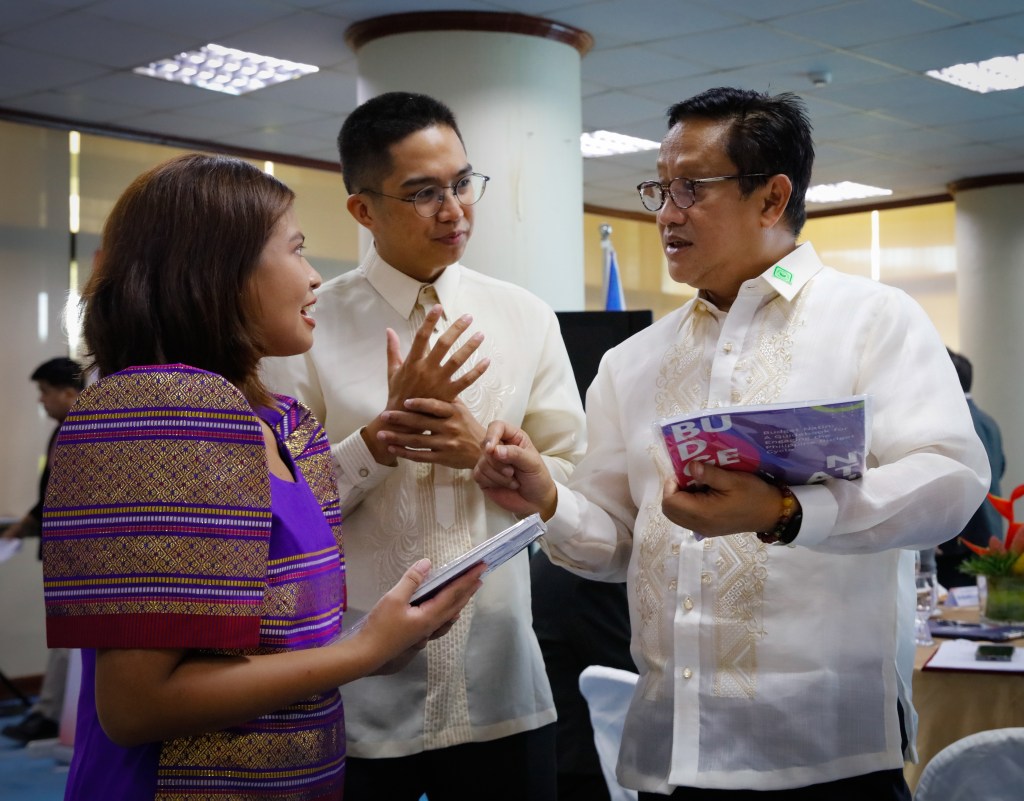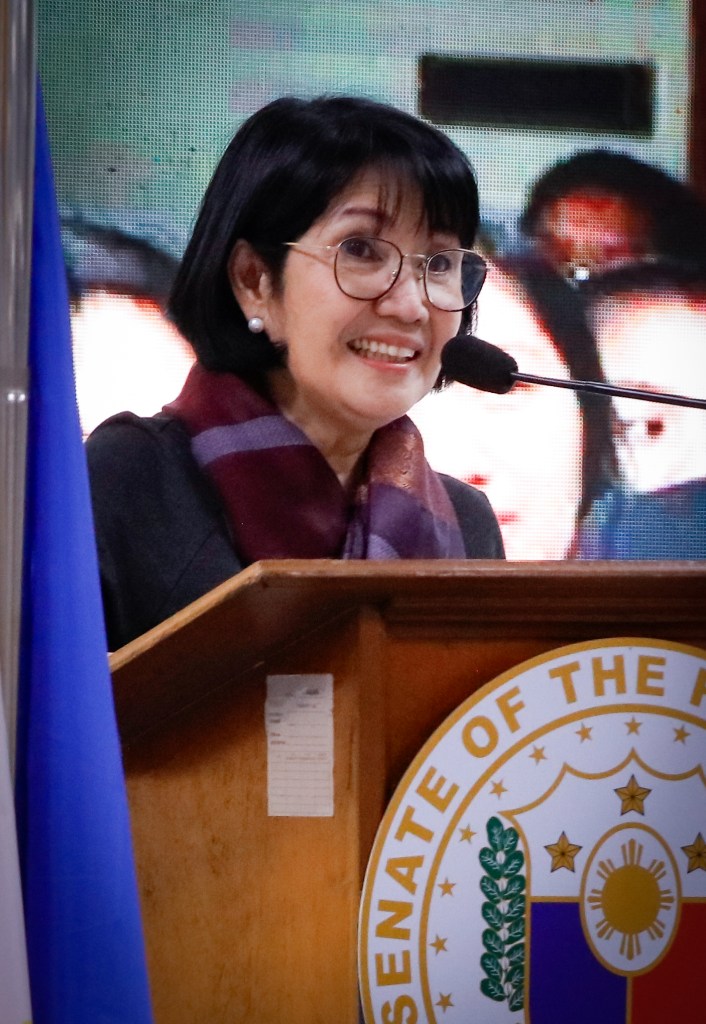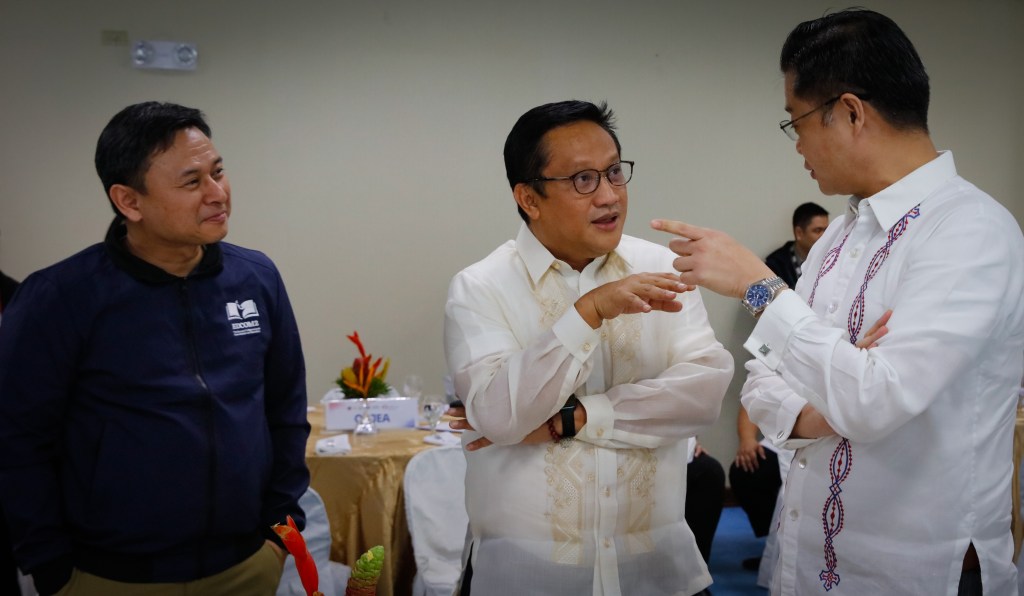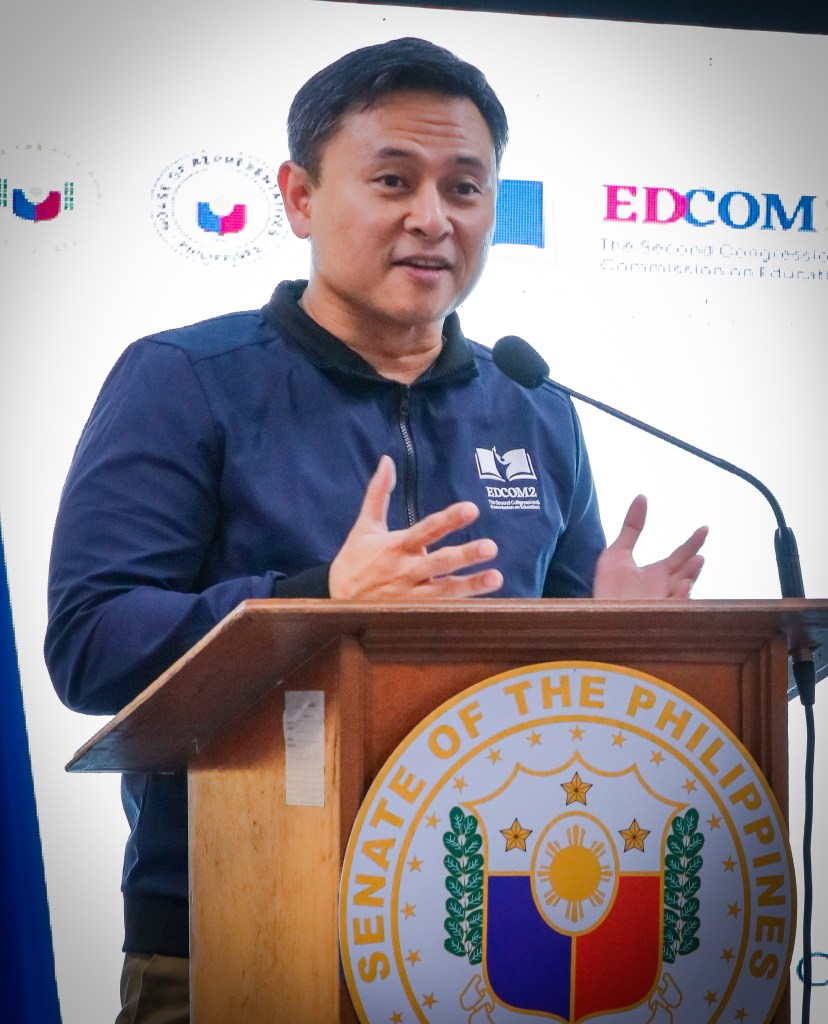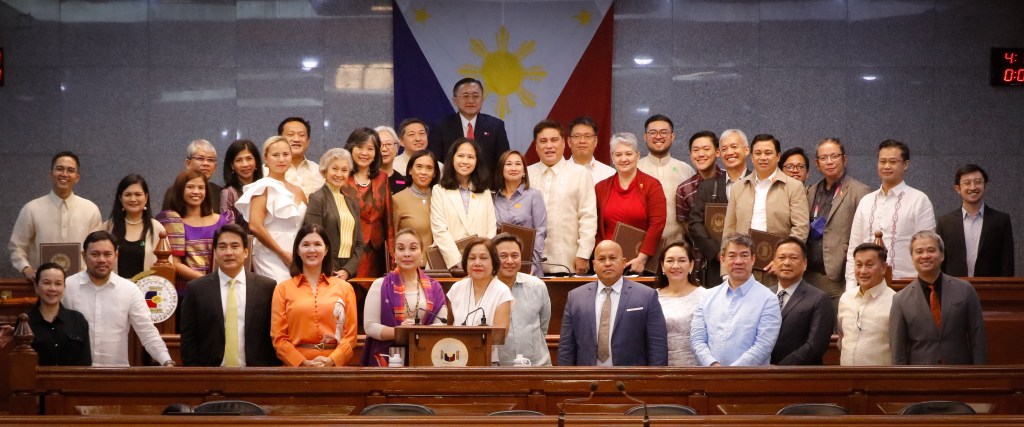


“Our lawmakers, and the people they represent, await the fruits of your labor, your commitment, and your passion.” This is what UP President Angelo A. Jimenez (PAJ) told the 23 recipients of the recently-revived UP President Edgardo J. Angara (UPPEJA) Fellowship Awards in the ceremony held at the Philippine Senate on September 26. The award, PAJ said, was “an opportunity to make works of immediate national impact.” The fellows are Filipino scholars from universities, think tanks, and organizations here and abroad.
The 19 UPPEJA-awarded research projects cover a wide range of education- and education reform-related topics. These were selected based on priority areas identified by the Second Congressional Commission on Education or EDCOM II: school infrastructure; access to quality higher education; needs-based system projecting the demands in workers’ upskilling; ensuring seamless and integrated delivery of education; complementarity between public and private education; integrated performance management and accountability system; efficiency in education financing and resource mobilization, and equity in the delivery of education; and decentralization, quality of education governance, and participatory governance.
One of the fellows, National Scientist and UP Manila Chancellor Carmecita D. Padilla, shared that she is “reviewing the gaps in the supply and demand for health human resources, assessing the health care system, and making recommendations to address the findings.” Another, Prof. John Paul C. Vergara of the Ateneo de Manila University, is looking into “generative artificial intelligence and how it will make an impact on higher education.” Riz Supreme B. Comia of WeSolve Foundation, meanwhile said that she and her research partner, Kenneth Isaiah I. Abante, are studying “the players and the special education fund and how participatory governance may be achieved in this area of the education system.”
The Fellowship runs from 26 July 2023 to 30 June 2024 with a research grant of P500,000. Below are the awardees.
- Kenneth Isaiah I. Abante and Riz Supreme B. Comia, WeSolve Foundation
- Michael Alba, Far Eastern University
- Cleve V. Arguelles, De La Salle University and Joel Paulin Mendoza, World Bank
- Lisa Grace S. Bersales, University of the Philippines
- Krista Danielle S. Yu, De La Salle University and Dr. Michael R. Cabalfin, Philippine Institute for Development Studies
- Ma. Assunta C. Cuyegkeng, Ateneo de Manila University
- Geoffrey Ducanes, Ateneo de Manila University
- Ma. Regina M. Hechanova-Alampay, Ateneo de Manila University
- Enrique Nino P. Leviste and Dr. Ma. Glenda Lopez Wui, Ateneo de Manila University
- Elizabeth M. King, Georgetown University
- Rosario G. Manasan, Asian Development Bank
- Carolyn Medel-Añonuevo, UNESCO Regional Office for Southern Africa
- Dina S. Ocampo, University of the Philippines
- Carmencita D. Padilla, University of the Philippines
- Maria Mercedes T. Rodrigo, Ateneo de Manila University
- Luis G. Sison, University of the Philippines
- Luis Rey I. Velasco, University of the Philippines
- John Paul C. Vergara, Ateneo de Manila University
- Felicia Yeban, Philippine Normal University