

In 2016, Rodrigo Duterte rose to the presidency with a promise to end crime and illegal drugs. And so for the past six years that followed, his Administration waged a bloody “war on drugs” despite local protests and international scrutiny. Today, the former President stands behind bars, the first Philippine president to face an international tribunal.
On March 11, Duterte was arrested and extradited to The Hague, the Netherlands after the International Criminal Court issued a warrant charging him with the crime against humanity of murder, in connection with the drug war.
The Philippine Drug Enforcement Agency reported at least 6,252 killed in anti-drug operations from July 2016 to May 2022, just a month before Duterte’s term ended. Human rights groups, however, believe the actual death toll is much higher, with many casualties unaccounted for.
In a hearing by the Senate Committee on Foreign Relations on Duterte’s arrest, then Justice Secretary Jesus Crispin Remulla admitted that the Philippine justice system failed to properly investigate the killings; and for many families of the victims, the ICC became their only remaining path to justice.
RESBAK’s “Stop the Killings” banner, composed of hundreds of mourning pins, protests the killings in the “war on drugs” under the Duterte administration. It was featured in the Warm Bodies: Defending the Right to Dissent exhibit, which ran from Jan. 26 to Feb 21, 2024 at the UP Fine Arts Gallery. Photo by Kevin Roque, UPS-MCO.
With the former President’s arrest, the confirmation of charges hearing — which will determine whether or not the case proceeds to trial — was initially scheduled to commence Sept. 23. But while the ICC Pre-Trial Chamber has postponed the hearing, the international tribunal has denied Duterte’s bid for interim release and has also asserted its jurisdiction over the case despite the Philippines’ withdrawal from the Rome Statute which took effect in 2019. The coming months will therefore test President Ferdinand Marcos Jr.’s commitment to the rule of law and to the reforms his administration pledged before the international community.
In November 2022, as the fourth cycle of the Universal Periodic Review began, Remulla pledged that the Marcos Jr. administration would strengthen the Philippines’ domestic accountability mechanisms. Then, in a marked departure from the Duterte administration’s hardline policy, Marcos Jr. promised a bloodless anti-drug campaign in his third State of the Nation Address July 22, 2024.
Despite these pronouncements, human rights groups and victims’ families remain cautious and vigilant, and with good reason — the bloodshed has not stopped.
With no let-up in the killings and amid renewed calls for justice, human rights defenders from the University of the Philippines keep count and keep watch as they lead initiatives to uphold the Philippines’ international human rights commitments and to advance reforms in drug policy, law enforcement, and accountability mechanisms.
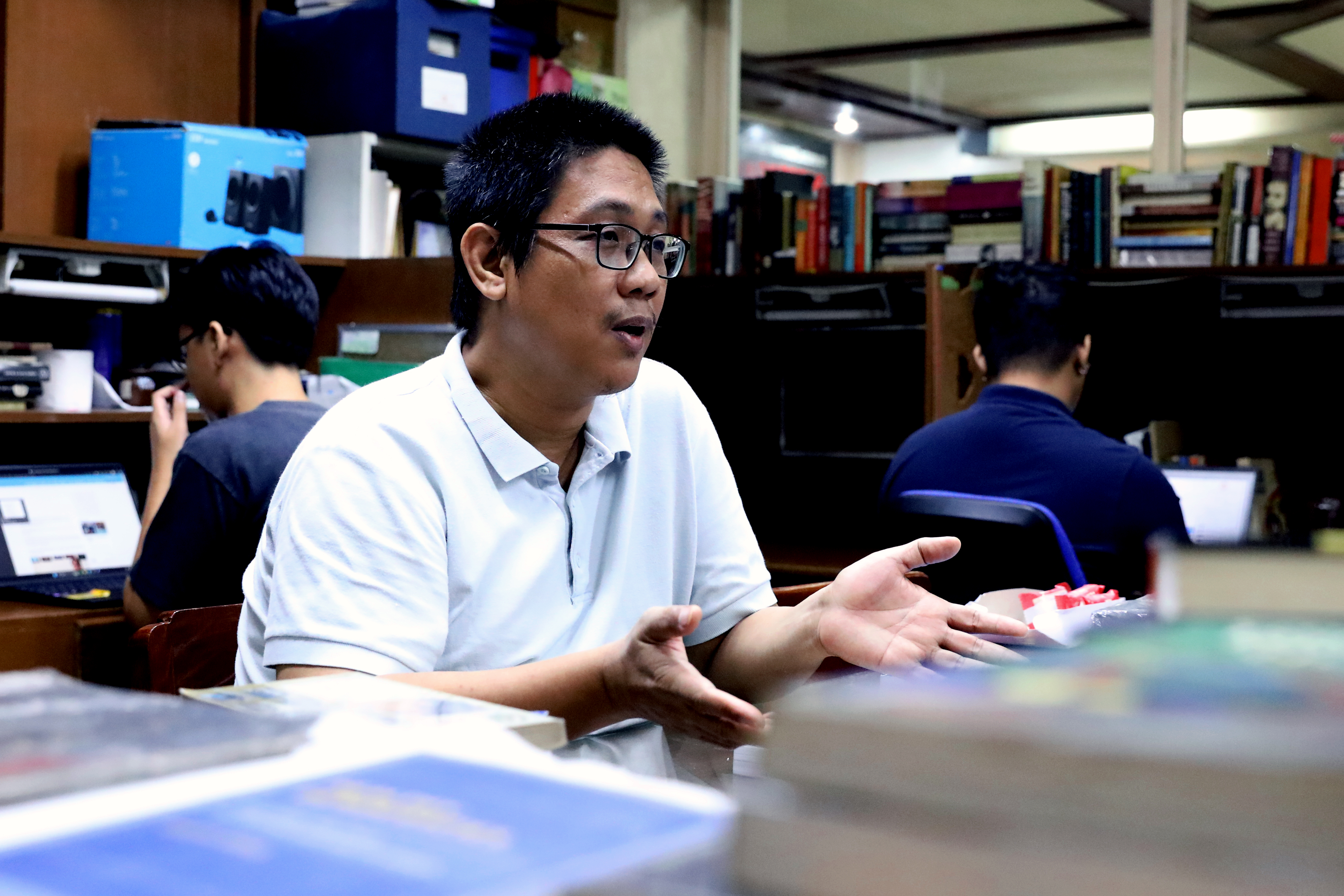
A university researcher, Joel Ariate Jr., leads student assistants from the UP Third World Studies Center in tallying reports of drug-related killings for the Dahas project. Photo by Jonathan Madrid, UPS-MCO.
Continuing the Count
Every day, in a cramped room beneath UP Diliman’s Palma Hall, a university researcher, Joel Ariate Jr., leads student assistants from the Third World Studies Center in parsing through hundreds of reports of drug-related killings. For hours, they scour news sites and the Facebook pages of police stations and regional media outlets to account for the dead in their weekly tally for the Dahas project.
Since 2021, this small team of researchers has committed itself to the herculean task of documenting the fatalities of the Duterte administration’s drug war. And as the killings continue under the Marcos Jr. administration, so does their monitoring work.
From July 2022 to June 2025, the Dahas project has documented at least 1,008 drug-related killings all throughout the country since Marcos Jr. took office.
“Walang dudang bumaba [ang mga patayan],” Ariate said. “Ito ay significant na decrease dahil ‘yung mga dating bilang umaabot ng libo ‘yung napapatay sa isang taon, pero sabihin man nating nahati ‘yung bilang ng napapatay, nagpapatuloy pa rin ‘yung patayan.”


Atty. Glenda Litong is a law reform specialist from the UP Institute of Human Rights, which was among the partners engaged by the government for the Philippine Drug Policy and Law Reform Summit. Photo by Jonathan Madrid, UPS-MCO.
Of the 1,008 drug-related killings documented by Dahas since July 2022, 362 alone were done in the second year of the Marcos Jr. administration, a slight uptick from the 342 victims reported in its first year and a steady increase from the 302 fatalities Dahas documented in the Duterte administration’s last year. While reported killings decreased to 304 this year, the numbers still indicate that the violence persists with more or less the same ferocity.
Along with the promise of a “bloodless” anti-drug campaign, Marcos Jr. had also repeatedly spoken of taking a “slightly different” approach that focused on rehabilitation and pursuing high-profile targets. However, he appeared to backtrack on these pronouncements; he has recently directed the Philippine National Police to return to operations targeting small-time drug peddlers.
Then newly-appointed PNP Chief Gen. Nicolas Torre III’s emphasis on “paramihan” as a performance metric also alarmed civil society, prompting even the Commission on Human Rights to warn that “historically, such frameworks have risked incentivizing shortcuts, abusive, or arbitrary practices, which undermine human rights and erode public trust in law enforcement.”
Yet with the numbers from their documentation in Dahas, Ariate sees no significant change in the present administration’s approach to illegal drugs. 354 or 35.12% of the drug-related killings were small-time drug pushers. State agents also still hold responsibility for a significant portion of the bloodshed: 360 or 36% were killed in law enforcement operations.
“Isang indicator na tinitignan namin ay ilang bahagdan ba dito [sa mga patayan] ang gawa ng pulis at PDEA, at sa tingin namin, nandoon pa rin siya sa 35 to 40 percent. Hindi pa rin nagbabago. Hanggang ganoon ‘yung bahagdan, masasabi mong halos walang pagbabago pa rin sa kung paano tinutugunan ng gobyerno ‘yung isyu ng ilegal na droga,” he stated.


Along with tallying reports of drug-related killings for the Dahas project, Joel Ariate Jr. is also involved in other research projects and publications of TWSC. Photo by Jonathan Madrid, UPS-MCO.
Struggle for reforms
“You really have to look at the numbers. Ano ba talaga ang nangyayari sa labas — and if there is documentation that the policy [of killings] continues, saan ang problema?” Atty. Glenda Litong, a law reform specialist from the UP Institute of Human Rights, asked.
The UP IHR was among the partners engaged by the government for the Philippine Drug Policy and Law Reform Summit as part of the three-year UN Joint Programme which concluded July last year. The UNJP works in line with the implementation of UN Human Rights Council resolution 45/33 on technical cooperation and capacity-building, which aims to aid the Philippines in fulfilling its international human rights obligations and commitments.
Litong was at the forefront of the summit in engaging various sectors and stakeholders in dialogues to gather their insights and recommendations to propose human rights-oriented and public health-focused amendments to Republic Act No. 9165 or the Comprehensive Dangerous Drugs Act of 2002.
Destigmatization and harm reduction measures were among the recommendations she presented as part of her rapporteur’s report at the summit’s culmination July 12, 2024, following 22 dialogues over the course of three months.
“It’s not an easy task to conduct dialogues,” she admitted. Nevertheless, she also emphasized that ensuring the inclusive participation of concerned sectors, grassroots organizations, and other relevant stakeholders was critical in realizing the summit’s goal of advancing a responsive drug policy.
“Sabi nga namin, ang daming moving parts [at] medyo ambitious, but kailangan kasi ganito ‘yung process para maka-reach ka ng isang responsive drug policy: kailangan dumaan sa proseso ng dialogues and stakeholder participation, honest-to-goodness reflection and deliberation,” she asserted.
Nonetheless, the continued killings and the lack of meaningful domestic accountability cast a shadow over the summit; and she said that these issues were raised in one of the meetings with the UN Office on Drugs and Crime: “We’re moving forward without looking back, and is that enough? Insofar as accountability is concerned, hindi pa talaga naaachieve ‘yung expectations ng victims and even the general public.”
Dr. Raquel Del Rosario-Fortun examines the skull of a cadaver in her makeshift stockroom in UP Manila’s Calderon Hall as part of her forensics work. Photo by Gilliano Salvador, UPS-MCO

The Philippine Drug Policy and Law Reform Summit culminated on July 10–12, 2024 at the Diamond Hotel in Manila following 22 dialogues over the course of three months. Atty. Glenda Litong (ninth from left) delivered the Rapporteur’s Outcome Report on the summit’s first day. Photo courtesy of the UP College of Law.
Dead men’s tales
Indeed, a significant stumbling block to strengthening domestic accountability mechanisms is the lack of systems for conducting science-based forensic investigations, especially for gathering evidence on what could be unlawful deaths.
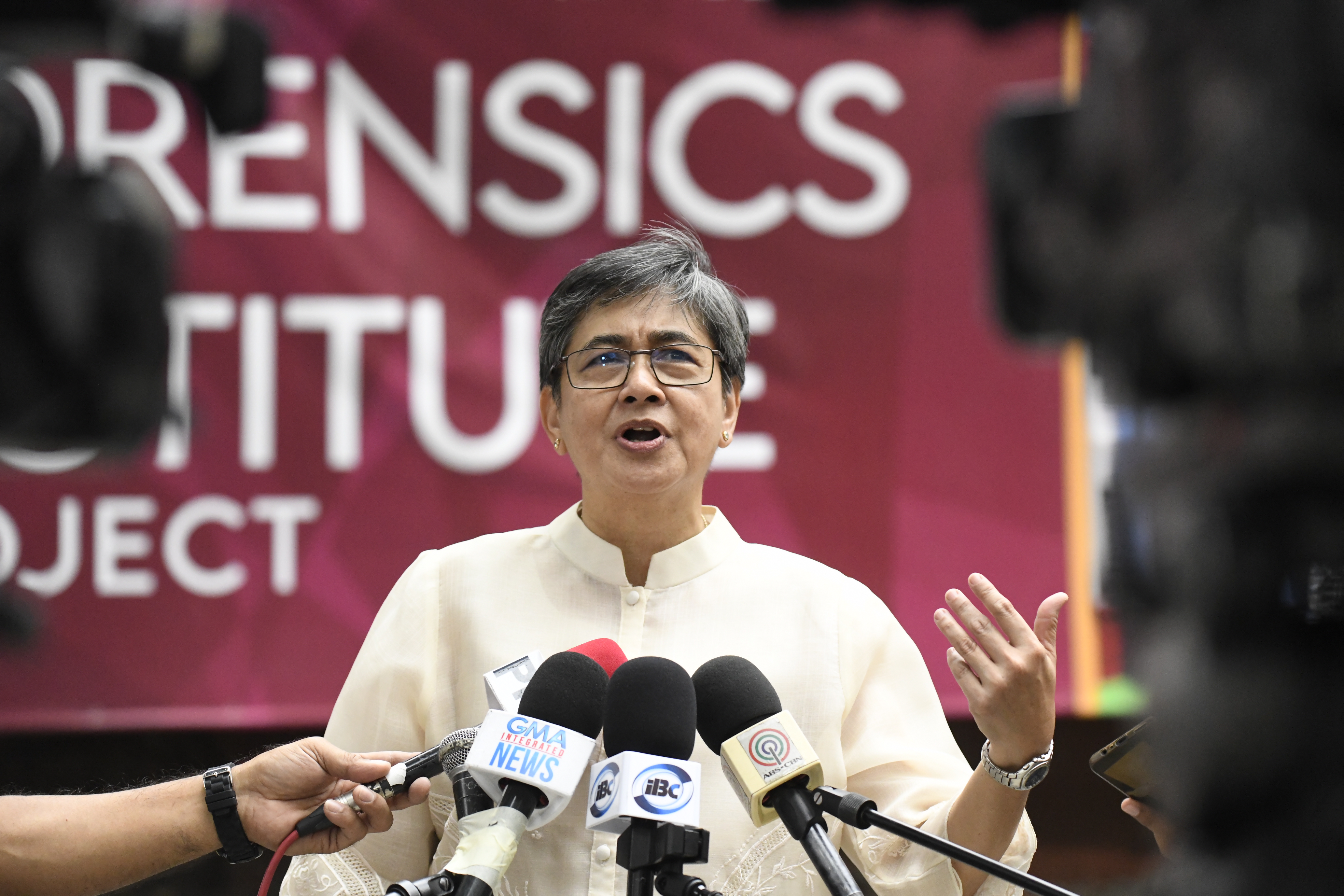
On the sidelines of the launch of the National Forensic Institute June 18, Dr. Raquel Del Rosario-Fortun, former chair of UP Manila College of Medicine’s Department of Pathology and one of only two forensic pathologists in the Philippines, told the media how the country was lagging way behind in the field: “We don’t have a death investigation system where, automatically, bodies that have to be investigated are examined.”
In an old makeshift stockroom inside UP Manila’s Calderon Hall, Fortun has taken it upon herself to examine the remains of some drug war victims. With the consent of their families and with the help of Catholic priest Fr. Flaviano Villanueva, Fortun offered to conduct independent autopsies on the exhumed remains as their five-year burial leases in public cemeteries have expired.
“They were killed violently, so automatic ‘yan dapat, forensic autopsy, may scene investigation, may homicide investigation; but there was none. In many cases, no autopsy at all,” she said, in an interview in her laboratory.
In April 2022, after months of examining 46 remains of drug war victims who were killed in 2016 in Metro Manila, Fortun revealed a disturbing finding from her autopsies: at least seven victims had death certificates wrongly attributing their deaths to natural causes such as pneumonia or sepsis, despite the bullet holes on their bodies.
Whether it was mere mishandling of the remains, deliberate falsification to cover up the deaths, or a lack of willingness and capacity to solve or investigate the killings, these irregularities nevertheless challenged the “nanlaban” narrative that drug war victims were killed because they resisted arrest. They also suggested that more casualties remain indeed unaccounted for, if not improperly documented.
While the Duterte administration refused to cooperate with international bodies in investigating the drug war despite these revelations, the Marcos Jr. administration seemed to signal more openness to the international community. During the 75th anniversary of the Universal Declaration of Human Rights Dec. 10, 2023 in Geneva, Switzerland, it pledged the establishment of the NFI, which it also reaffirmed at the conclusion of the UNJP.
Executive Secretary Lucas Bersamin stated that NFI, which will rise in the heart of UP Manila, just behind Calderon Hall “will contribute to strengthening [the country’s] domestic accountability mechanisms addressing grave human rights violations, particularly extrajudicial killings, enforced disappearances, and torture.”
According to Fortun, it will be the first time that the national government has supported such an initiative since the UP Board of Regents approved the establishment of the Forensic Science Institute in 1999. While she recognized the institute’s launch as “a good start” toward establishing a death investigation system led by properly trained forensic experts, the challenge for the Marcos Jr. administration, however, is upholding forensic science’s commitment to unfettering the truth.
Fortun concluded, “In the first place, there’s a commitment to forensic science, which is after the truth, meaning, you are not scared of the truth. That’s the problem that I’ve seen in the Philippines: takot na lumabas ‘yung totoo, takot na may accountability.”