From the margins: How social history gave space to women

| Written by Clariza Concordia

It was a typical day at a cigar factory in 19th-century Philippines. The pounding against wooden tables echoed through the halls of the tabacalera. Inside were women, seated on the floor, in front of low tables. On one hand, a sheet of tobacco leaf; on the other, a rock. The cigarreras spent their day beating tobacco leaves and rolling them into cigars. Before leaving for midday break, these women went through a routine body search. It was a policy they had willingly subjected themselves to. 


Until reports of maestras violently touching the cigarreras’ private parts surfaced. 


The abuse, along with poor working conditions and underpayment of wages, led the women workers to abandon their posts. On one fateful day in 1812, the cigarreras did not report to the factory.

A cigarrera prepares tobacco leaves. Illustration from Biblioteca Nacional de España, published by the National Historical Commission of the Philippines Facebook account (March 5, 2024).

Historians documented the incident as an “alboroto,” a tantrum. But for Professor Emeritus Ma. Luisa Camagay of the University of the Philippines Diliman Department of History, the 1812 incident was not an alboroto — it was a strike, a “welga.” 


Why was such a bold move, perhaps a rebellious act, seen as a mere outburst of anger? 


“Since a male was the one documenting the incident, he did not feel that it was a welga,” Camagay states matter-of-factly. “Because women were,” she trailed, “their actions were never really respected for what they are.”

“One, as a woman, has to re-read the text in order to be more critical, because history is basically very masculine.” — Professor Emeritus Ma. Luisa Camagay, in her keynote at the ASEAN University Network-Gender Justice and Inclusion’s “Forum on Gender-Transformative Curriculum: Reimagining Education and Advancing Gender Justice in the ASEAN” held Dec. 15, 2025. Photo by Kevin Roque, UPS-MCO.

According to Camagay, the traditional disciplines in history — political, diplomatic, economic — were very masculine, primarily because the narrators are males. Historical texts focused on males written from a male point of view.


The same can also be said of Philippine history, Camagay pointed out. “If you look at the history texts, just the textbooks of [Teodoro] Agoncillo, and you see the mention of women, women will just be included in the women’s chapter of the Katipunan. And after that, it’s gone. So, that’s already a sign of the absence of women in the historical narrative.”


It was not until the emergence of social history that women were no longer reduced to footnotes in archival documents.

History from below

In 1929, French historians Lucien Febvre and Marc Bloch published a journal to provide a platform for research on history that is not traditional. The journal, “Annales d’histoire économique et sociale,” was then established as a school of thought. Contrary to traditional disciplines of history, which are focused on the elite, the Annales school of thought highlighted the narratives of ordinary people. The Annales, explained Camagay, would then be the start of social history.


“So, social history tends to be like that. It looks at the ordinary people, the marginalized sectors of society, like the poor, the prostitutes, the ones who are sick. It’s really the people that they’re interested in.”

A glimpse into the life of then post-graduate student Ma. Luisa Camagay at the École des hautes études en sciences sociales in Paris, France. Photo from Professor Emeritus Ma. Luisa Camagay, UP Department of History.

The translation of works into different languages paved the way for the dissemination of the Annales school of thought. It was during her doctorate in France when Camagay got acquainted with social history. When she came back to the Philippines, a colleague from the Department of History asked Camagay to share what she learned. 


What officially brought social history into the Philippine academic setting was Reynaldo Ileto’s seminal work. “I think one turning point of introducing [social history], aside from me sharing it, was the book of Ileto on ‘Pasyon and Revolution’,” shared Camagay. 


The 1979 book, which reinterprets the Philippine revolution through a cultural lens, is reminiscent of the Annales school of thought. Centered on Ileto’s dissertation were the marginalized peasants, the masses. It was a shift from the elite-focused narratives. “It’s so different from what history books of the Philippines are like, because it’s really political, what we have here as Philippine history,” said Camagay. “So, I think that work really, in a way, introduced social history in the Philippines.”

Filipino historian Reynaldo Ileto’s “Pasyon and Revolution: Popular Movements in the Philippines, 1840-1910” published in 1979. Photo by Kevin Roque, UPS-MCO.

The study of social history was formally introduced in UP after a curricular revision. Camagay led the development of the course syllabus for the two courses, KAS 117 (Social History) and KAS 118 (History of Women in the Philippines). By word of mouth, news about the courses spread. Students from different fields enrolled in the courses. 


“But, you know, what has helped really [spark] interest on women is the establishment of women’s studies centers in the different constituent universities of UP,” Camagay claims.

Filipina First

Have women gained their space in contemporary texts? According to Camagay, there have been significant strides in women’s representation.

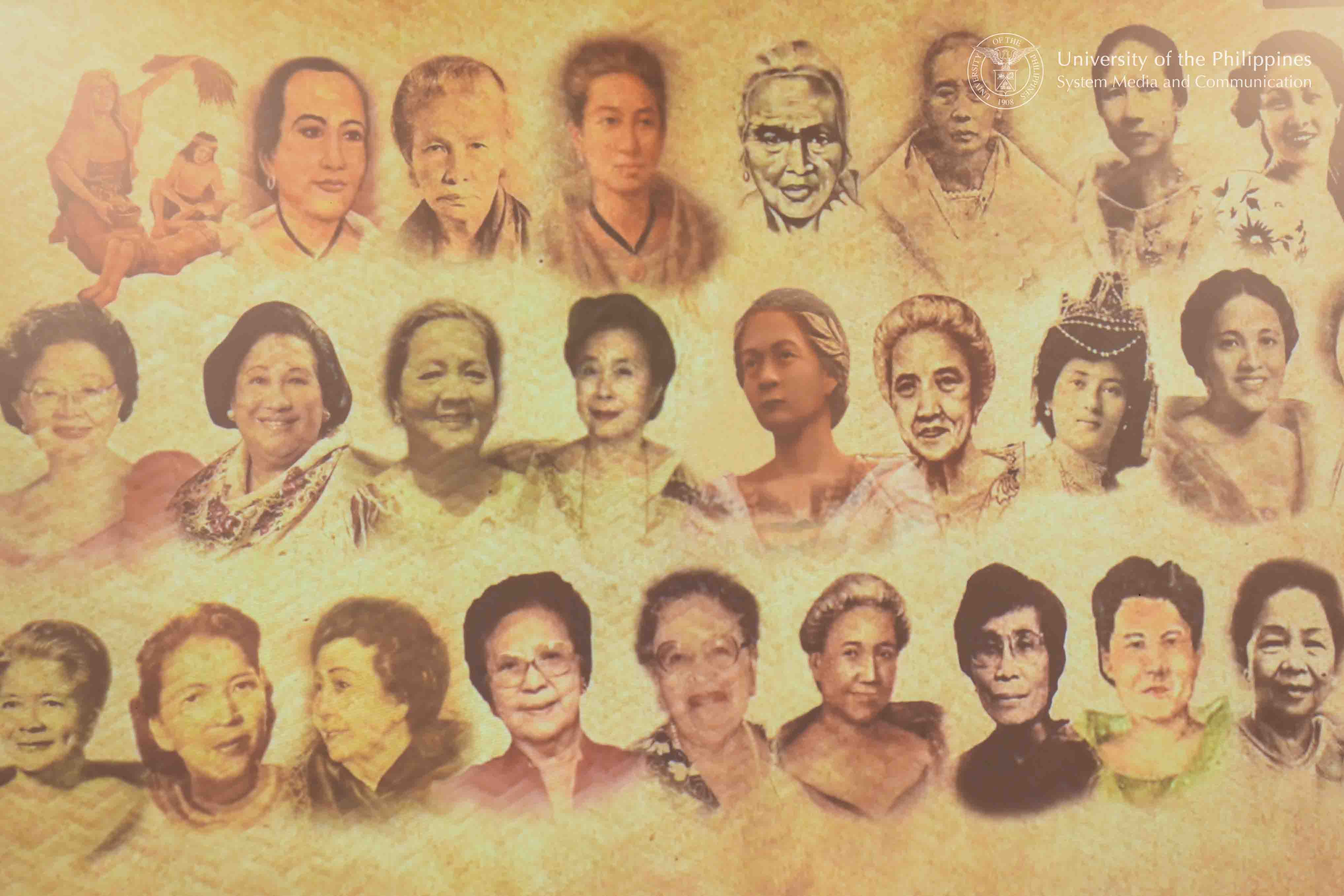
From pre-colonial times to the contemporary period, Filipinas have claimed their place in the nation's history. Photo by Kevin Roque, UPS-MCO.

During the centennial of the Philippine Revolution, Camagay took part in a project exploring the pioneering Filipinas in different fields. The book, “Filipina First,” was published by the Philippine American Foundation in 2002. 


“My involvement there was to research on ‘Filipina First,” Camagay narrated. “We divided it into executive, legislative, judicial, and other professions. We were able to identify the first Filipino woman doctor, the first Filipino woman engineer, and others. We identified about 100 names. They were not necessarily elite women.”


The book, however, was not distributed in the Philippines. 


Regardless, more texts on women written by women now exist. There is more scholarly production of historical works that are focused on women. “Women themselves are now wanting and are curious of their past, what has been the past of their fellow women,” Camagay said, on why there is an increase in texts about women. 


History itself may be a by-product of patriarchy. But it takes women — those silenced in the narratives — to find and reclaim their space in the lost pages.

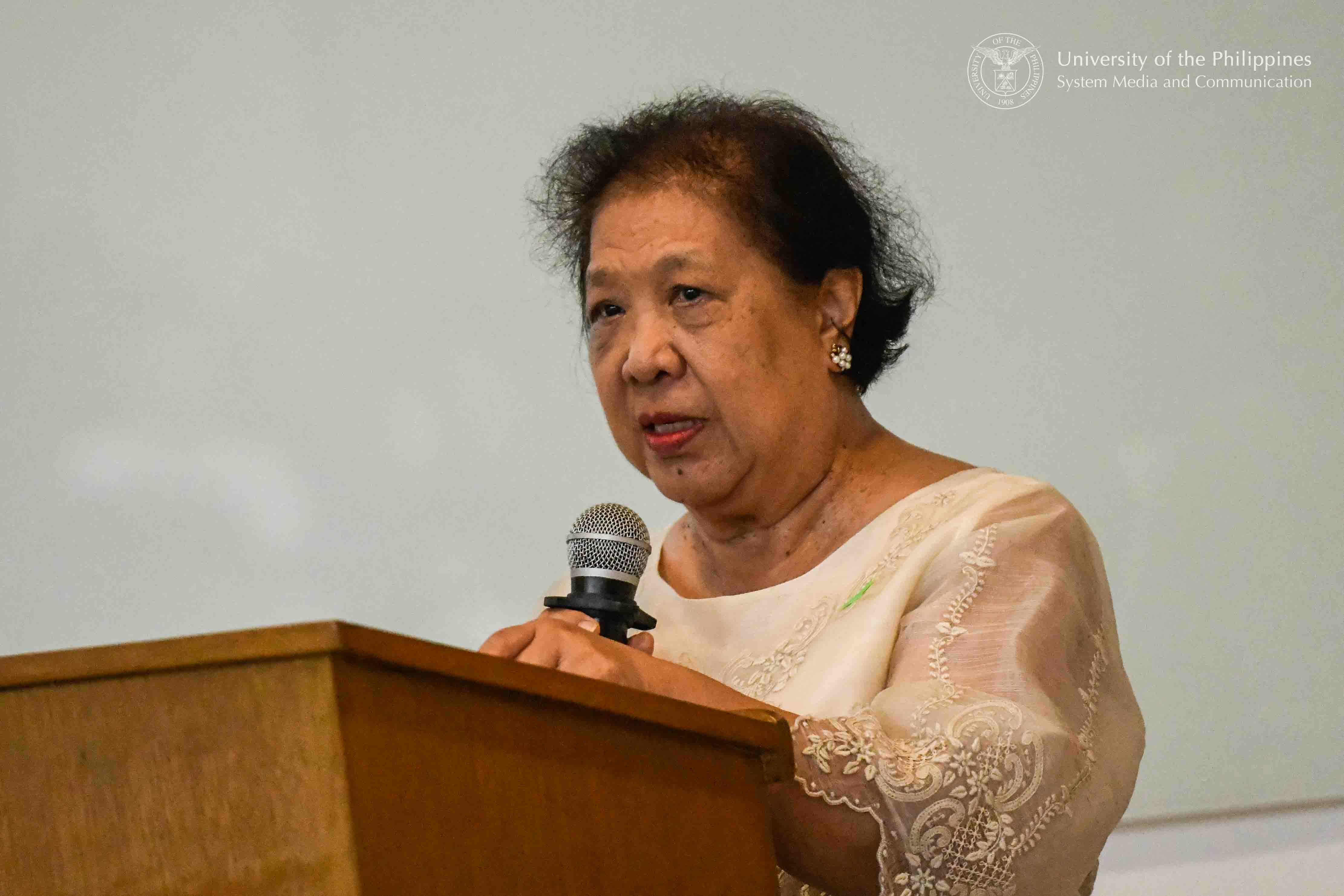
Illustration by Tricia Mabale, UPS-MCO.