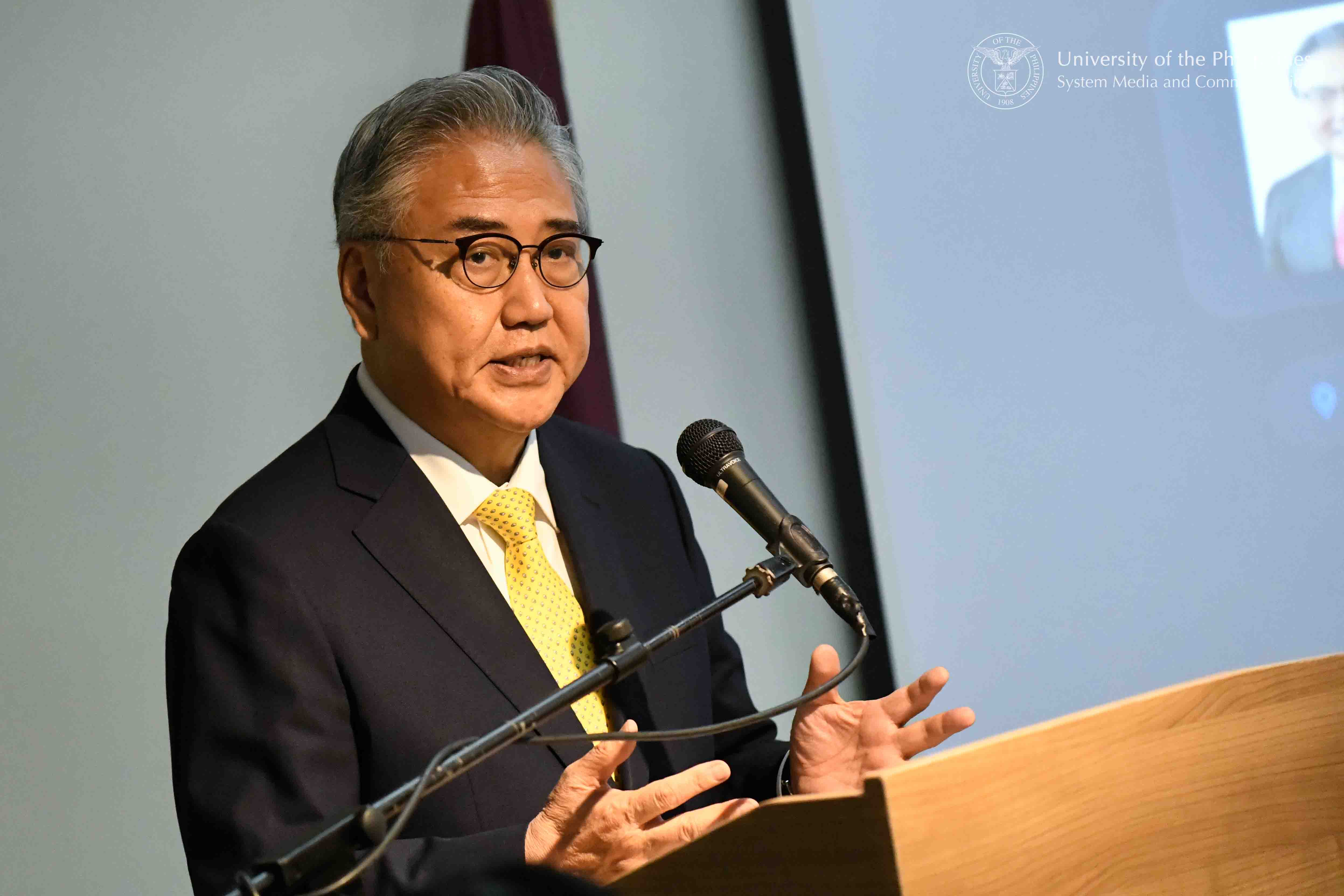
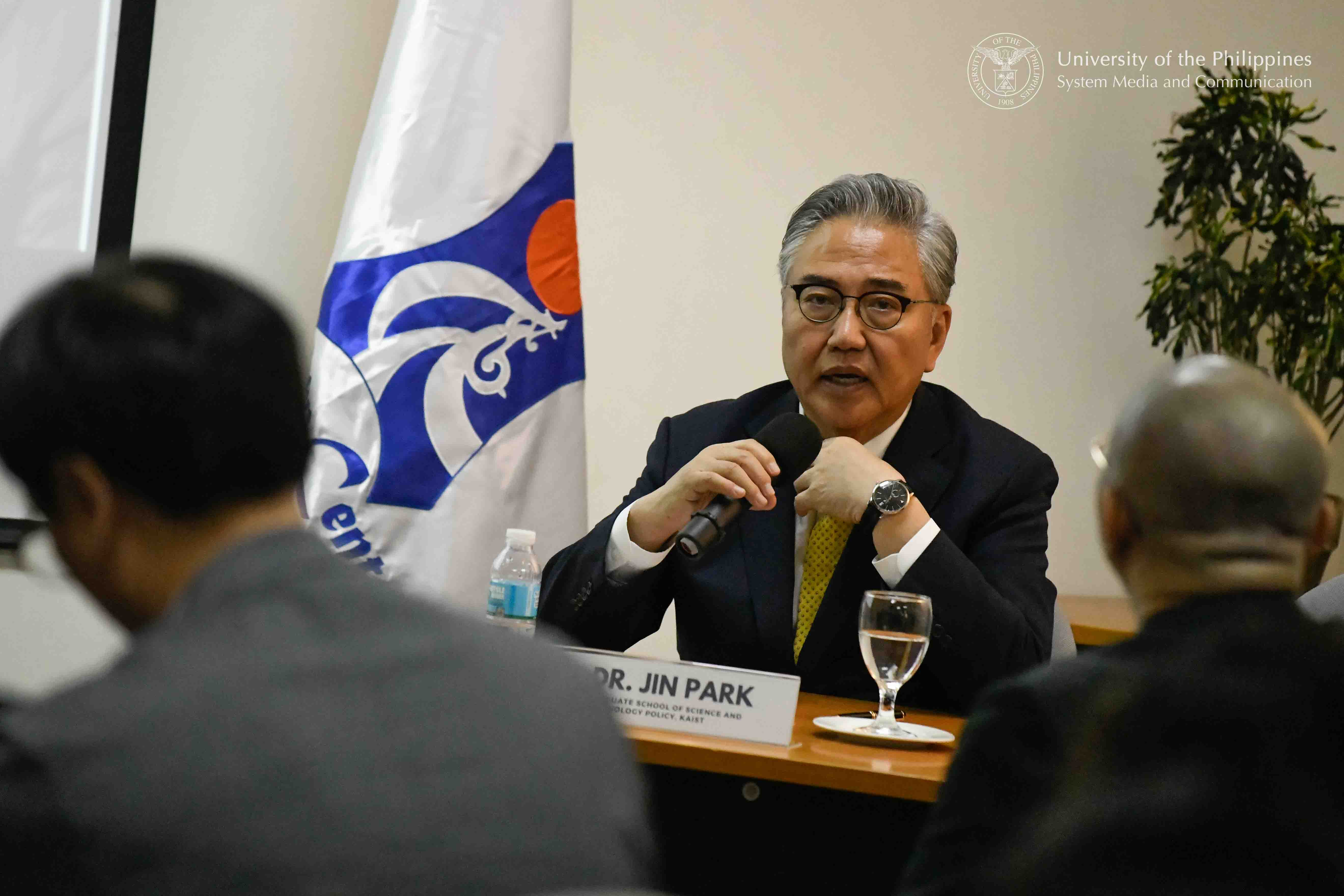
Science for diplomacy and diplomacy for science are key to promoting cooperation among states and addressing global issues. This was the highlight of the lecture of Dr. Jin Park, former minister of foreign affairs of the Republic of Korea and invited chair professor at the Graduate School of the Korea Advanced Institute of Science and Technology.
Park’s lecture, “Science Diplomacy and the Future of Korea-Philippines Partnership,” was held April 28, online via Zoom and on site at the Asian Center, University of the Philippines Diliman. The event was co-organized by the Office of the Vice President for Research and Innovation, UP Korea Research Center, and AC.
In his lecture, Park shared his insights on the future direction of cooperation between the Philippines and ROK. He outlined priority areas for cooperation between the two countries. These were: artificial intelligence and digital transformation, particularly in the field of education; biology and healthcare, which include joint research on and production of vaccines and the development of digital healthcare platforms; climate change response through the use of renewable energy; marine resource management and marine security; and educational cooperation through student exchange programs.