


A graduate from UP Cebu Class of 2024 raises a banner that reads “Trans Rights are Human Rights” as they join the traditional lightning rally during the 85th commencement exercises on July 5, 2024. Photo by Kevin Roque, UP MPRO.
It is every student's dream to hear their name called during graduation.
For Iskolar ng Bayan, being called onstage to receive their diploma and shift their Sablay marks the culmination of years of painstaking hard work — even sacrifice — in the University of the Philippines.
During its 83rd commencement exercises in 2022, UP Cebu made a bold announcement: graduates would be allowed not only to dress according to their lived identities in terms of sexual orientation and gender identity, but also to have their lived names exclusively read and displayed during the program.
“All graduates will not be obliged to conform to heteronormative standards and there is also no need to ask permission from the administration or prepare a letter when doing so,” the announcement read.
While official documents such as diplomas and transcripts of records would still reflect students’ legal birth names, UP Cebu’s guidelines for its 83rd commencement exercises marked a significant institutional recognition of lived identities. These progressive guidelines have remained in place — including in this year’s 86th commencement exercises.
“It is especially important in occasions such as commencement rites that we celebrate not only the success of our students but also their freedom to express themselves in their gender identity,” Asst. Prof. Archill Niña Faller-Capistrano, coordinator of UP Cebu’s Office of Anti-Sexual Harassment, asserted.
Names, after all, are more than just words on a screen for UP’s transgender and gender-nonconforming students: they embody identity, struggle, and defiance in a society that still often refuses to accept who they are.
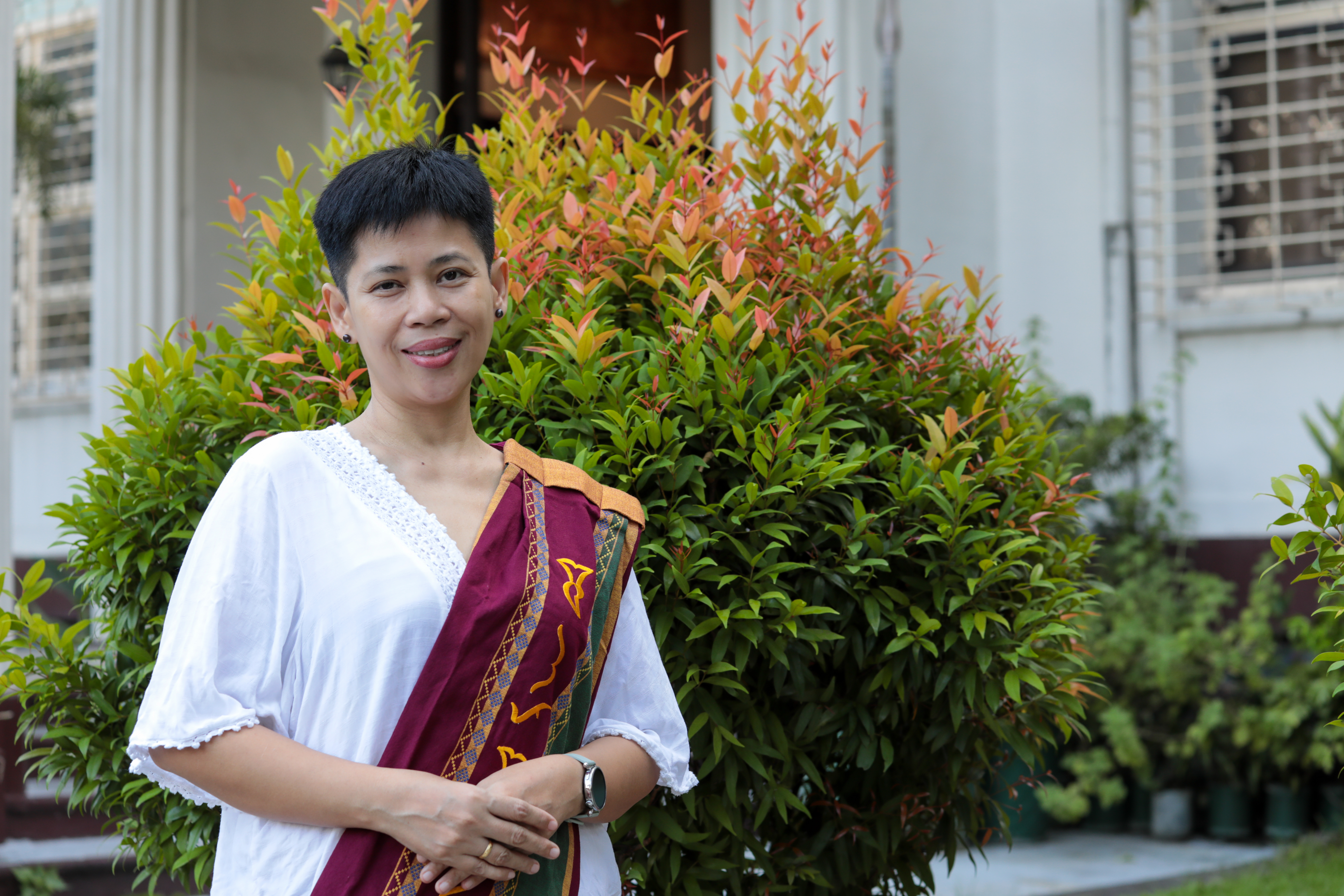
Asst. Prof. Archill Niña Faller-Capistrano, coordinator of UP Cebu’s Office of Anti-Sexual Harassment. Photo by Jonathan Madrid, UP MPRO.
What's in a name?
The UP community has a proud tradition of championing gender equality and inclusivity, and of advocating for the rights and welfare of the LGBTQ+ community. In recent years, there has been meaningful progress in the push for gender inclusivity across the University.
In a March 2021 memorandum, the UP Diliman Office of the Vice Chancellor for Academic Affairs adopted the UP Center for Women’s and Genders Studies guidelines on affirming the names, pronouns, and titles of transgender and gender-nonconforming students, in compliance with the UP Anti-Sexual Harassment Code.
According to the UP CWGS guidelines, a lived name “affirms [the] gender identity and/or expression” of transgender and gender-nonconforming people and is usually different from their legal name, which is often referred to as a “dead name.”
Since then, other constituent universities (CUs) in the UP System have adopted similar policies. Just this April, UP Los Baños Chancellor Jose Camacho Jr. issued a memorandum encouraging the use of gender-sensitive language not only for students, but also for its officials, faculty, and staff.
Student councils and organizations as well as gender offices in other CUs have likewise lobbied for the exclusive use of lived names in their respective commencement exercises. However, certain issues remain.
Some administrators have raised questions about legal implications and parental consent. Several CUs have only agreed to read and display graduates’ lived names alongside their legal birth names during the program.
These compromises, however, have drawn concerns particularly from transgender and gender-nonconforming students who do not wish to be deadnamed or misgendered — especially during an occasion that is supposed to celebrate their struggles and achievements.

Asst. Prof. Archill Niña Faller-Capistrano believes UP Cebu’s inclusive policies on lived names come from “lived policies of actually respecting the lived names of our students, even our faculty members and employees” and their community’s “dauntlessness” in fighting for authenticity. Photo by Gilliano Salvador, UP MPRO.
Dauntless fight for authenticity
How, then, was UP Cebu able to assert such inclusive policy for its commencement exercises? Capistrano believes they came from UP Cebu’s “lived policies of actually respecting the lived names of our students, even our faculty members and employees” and their community’s “dauntlessness” in fighting for authenticity.
“If that means we have to fight discrimination, even if we are red-tagged, even if we are mocked by people, we just trudge on, because we know what is correct, because we know what is right, what is true — and this is something that is worth fighting for, even with our very own lives,” she declared.
Like other CUs, UP Cebu also strives to ensure that correspondences affirm lived names.
“I think even in our [Document Routing System], certain records, like communications, correspondence, electronic or otherwise, even written ones — for as long as they don’t make it, for example, to the transcript of records — then we, as much as possible, respect and uphold the lived names of individuals,” she said.
But beyond documents and legalities, Capistrano also emphasized that the exclusive use of lived names in UP Cebu’s commencement exercises is not merely respect: it is a celebration of each graduates’ identity and their journey as Iskolars ng Bayan.