

The University of the Philippines and De La Salle University, in cooperation with the ASEAN University Network, co-hosted the 16th AUN Rectors’ Meeting and the 40th AUN Board of Trustees Meeting in Manila on July 23 to 25, 2025.
Attended by presidents, rectors, chancellors, or designated officials of AUN member universities from Brunei Darussalam, Cambodia, Indonesia, Lao PDR, Malaysia, Myanmar, Singapore, Thailand, Timor-Leste, Vietnam, and the Philippines, the meetings carried the theme “From Networks to Impact: The Future of Global Higher Education.” Discussions highlighted the shared role of higher education institutions in addressing global challenges through international and multilateral partnerships. The gathering also served to provide updates on AUN activities, newly appointed officials, and plans for 2025 to 2029.
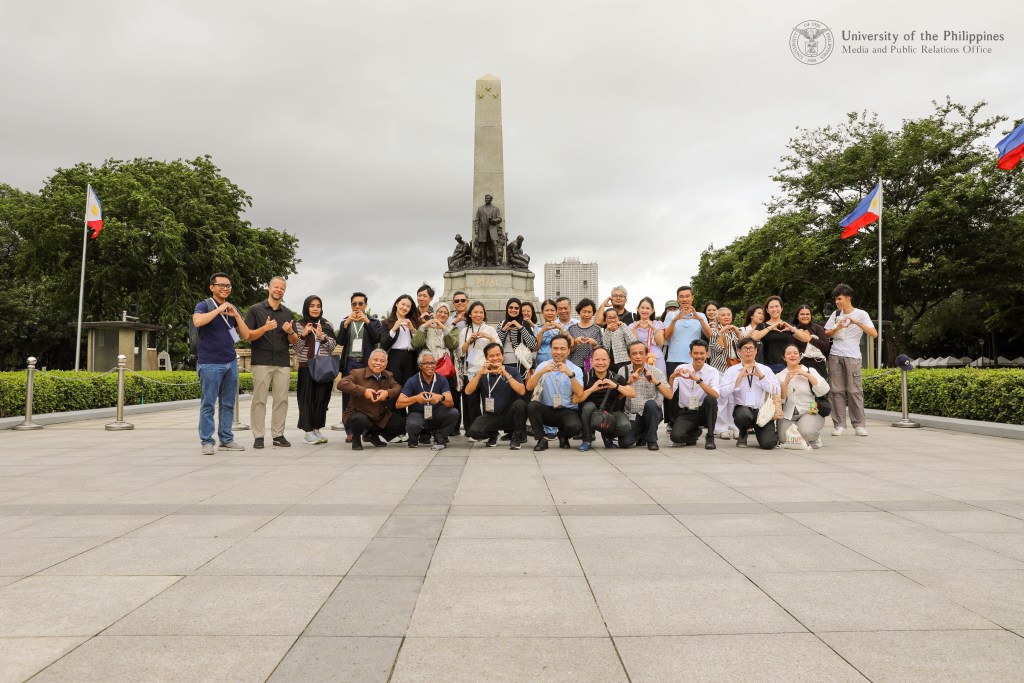
After the series of meetings, a Manila tour for the AUN delegates pushed through despite the monsoon rains. Delegates briefly visited the Rizal Monument in Rizal Park and historic sites in Intramuros before proceeding to the country’s largest mall in Pasay.

Social impact through alliances
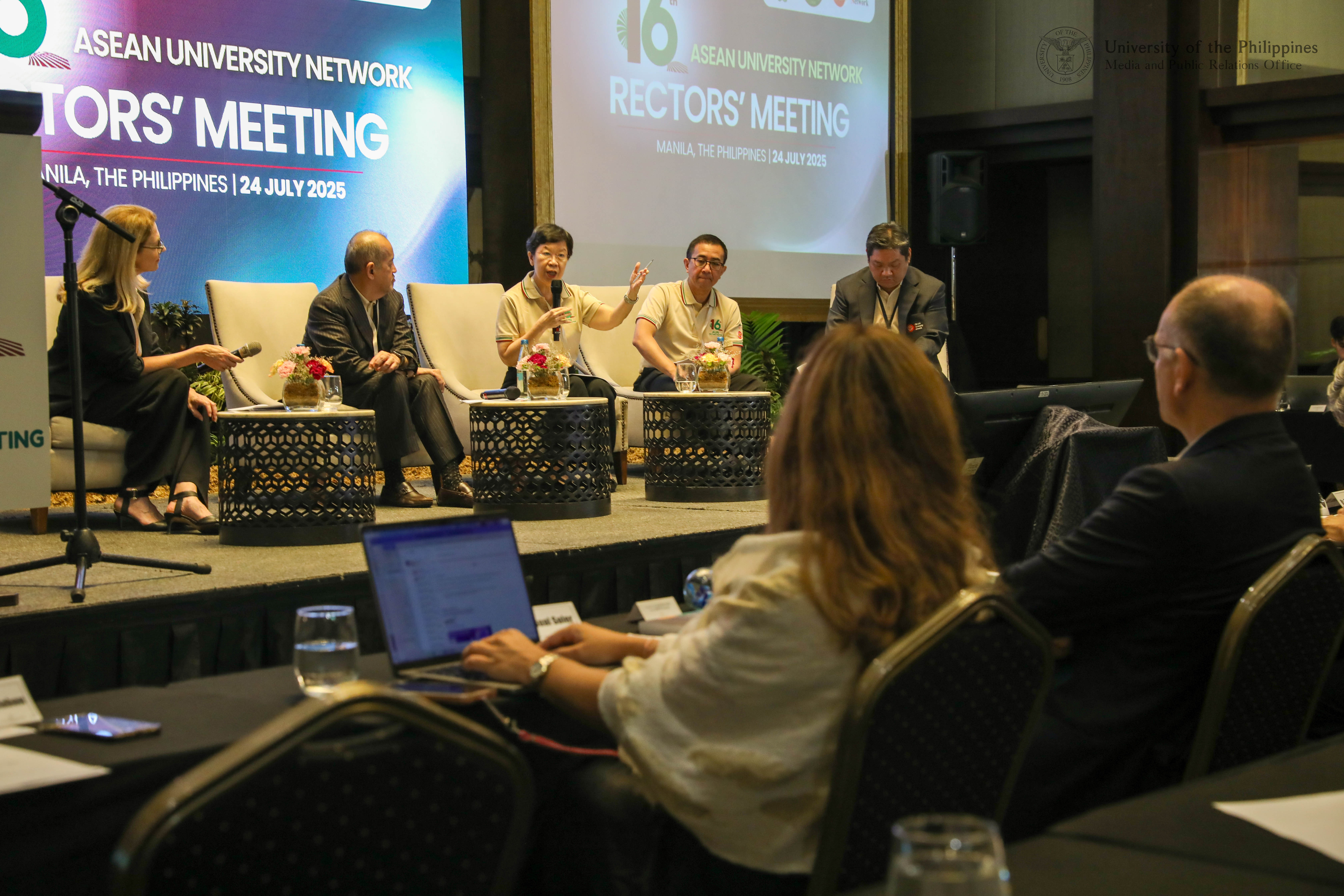
Br. Bernard Oca, DLSU president; Atty. Angelo Jimenez, UP president; and Chulalongkorn University’s Dr. Thanapan Laiprakobsup, AUN acting executive director, welcomed the delegates who attended the 16th AUN Rectors’ Meeting on July 24. The event featured two plenary discussions and a closed session meeting of HEI heads.
Speakers for the first session, titled “Transforming Societies: Universities Driving Impact Through Multilateral Alliances,” shared their respective examples of successful programs, strategies, and benefits of partnerships in advancing education, research, and community development. Resource persons, namely, Julie McMahon, vice president for the Asia-Pacific region of Times Higher Education; Oca; Prof. Lily Kong, president of Singapore Management University; and Dr. Hazri bin Haji Kifle, vice chancellor of Universiti Brunei Darussalam answered questions from the floor after their presentations. Laiprakobsup was session moderator.
McMahon discussed how THE measures the impact of HEIs on society through their programs for people, land, communities, and the Sustainable Development Goals they support, among others. She added that “the ASEAN region has shown exceptional leadership in collaboration.”

Oca highlighted DLSU’s “Spirit of Faith and Zeal for Service,” global partnerships being imbued with moral purpose, multisectoral partnerships with underserved sectors and local government units, and “whole-of-university approach.”
Kong affirmed that “the most effective multilateral alliances have the character of moral interventions,” while Kifle emphasized in his presentation that “the university is in a unique position to contribute significant change.”
The second session, “Reimagining the Role of Universities in Global Problem-Solving,” focused on how universities “can drive solutions to evolving and complex global challenges through interdisciplinary, sustainable, and inclusive internationalization.” HEIs can help address prevalent problems such as climate change, social inequality, and technological disruptions. University leaders exchanged ideas on making HEIs proactive agents of change by delivering sustainable, collaborative, holistic and globally relevant solutions.
Dato’ Professor Dr. Ahmad Farhan Mohd Sadullah, vice chancellor of University Putra Malaysia; Prof. Dr. Ir. Tatacipta Dirgantara, rector of the Institut Teknologi Bandung; Jimenez; Prof. Tan Eng Chye, president of the National University of Singapore; and Enrico Letta, IE School of Politics, Economics & Global Affairs dean, Geneva Science and Diplomacy Anticipator board director, and former prime minister of Italy, served as resource speakers. Prof. Dr. (Anthony) Shun Fung Chiu, DLSU vice president for external relations and internationalization moderated the session.

Ahmad Farhan emphasized how universities can help provide solutions by prioritizing issues faced by their own countries. He focused on food security and his HEI’s role in addressing the agricultural and food needs of his country. He said “universities have a critical role to play in addressing the global food security agenda.”
Tatacipta discussed the need for a paradigm shift to address brain drain and promote “brain circulation” by “building global-talent pipelines,” and enable “flexible return of knowledge and capital.” He added that “universities must serve as global nodes offering hybrid reentry paths” and that ASEAN collaboration is integral to tackling global challenges.
Jimenez said universities must promote social responsibility and take a stand as moral institutions. HEIs are “shaping values, engaging communities, and forming citizens who understand the moral dimensions of the world’s problems,” he said. He explained that UP is pursuing a transformative agenda by “deepening the quality and relevance of our programs, expanding our reach through inclusive admissions and distance learning, building networks for collaborative innovation, affirming the role of arts and culture in humanizing knowledge, and striving to build a culture of kindness and public purpose.”

Letta’s discussion highlighted the need to put the idea of anticipation in the core of education for ASEAN universities to be more proactive. This means enabling HEIs to also forecast and be prepared to address future issues rather than being “not anticipatory and just solving problems day by day.”
Chye similarly talked about the relevance of “anticipatory leadership” as well as the need for substantive science and technology solutions to shared problems, fostering deep ties among universities and stakeholders, identifying issues important to ASEAN, and universities acting as change leaders.

Deeper discussions revolving around “Anticipatory Leadership: Science and Technology Anticipation Skills for HEIs’ Medium-Term Planning,” were continued, with NUS’ Chye and GESDA’s Letta as speakers, and Dr. Marga Gual Soler, GESDA head of science diplomacy capacity building, as moderator. Topics such as future food systems, robotics and artificial intelligence, biodiversity and oceans, healthspan extension, infectious diseases, and quantum computing were also tackled.
The closed session meeting of HEI heads followed, covering various agenda facilitated by the AUN Secretariat. Among them were: recognition of Dr. Choltis Dhirathiti’s leadership and term conclusion, reporting of AUN activities, AUN Strategic Focus, AUN Thematic Networks, and Worldwide Universities Network.
40th AUN Board of Trustees Meeting concludes in Manila
The 40th AUN-BOT Meeting held on July 25, hosted and organized by the AUN Secretariat, formally acknowledged the appointments of Laiprakobsup as new AUN executive director as well as those of other new officials of the network. AUN officials discussed matters arising from related ASEAN meetings by the ASEAN Secretariat, AUN’s progress report and recent activities, and its key programs and activities until 2029.