A new start for UP’s research and innovation endeavors

| Written by Fred Dabu

Photo by Kevin Roque, UPS-MCO.

From instructor to outstanding professor, from building laboratories to helping found the nation’s space agency, Dr. Joel Joseph Marciano Jr. is back at the University of the Philippines to guide research and innovation. His journey is a story of personal dedication and loyalty to his institution. In every stage, one theme is constant: the privilege of building something from the ground up.


Marciano began his teaching career at the Department of Electrical Engineering (now the Electrical and Electronics Engineering Institute), College of Engineering, UP Diliman, rising steadily through the ranks. Between 2009 and 2015, he served as EEEI director. In 2016, he was acting director of the Department of Science and Technology-Advanced Science and Technology Institute.


He led the Philippine Scientific Earth Observation Microsatellite program, which successfully built and launched the first Philippine microsatellite, Diwata-1, into space in 2016. This was followed by the launch of the Diwata-2 microsatellite in 2018 and the development of the Maya-1 and Maya-2 nanosatellites under the Space Technology and Applications Mastery, Innovation, and Advancement program, which he also oversaw.

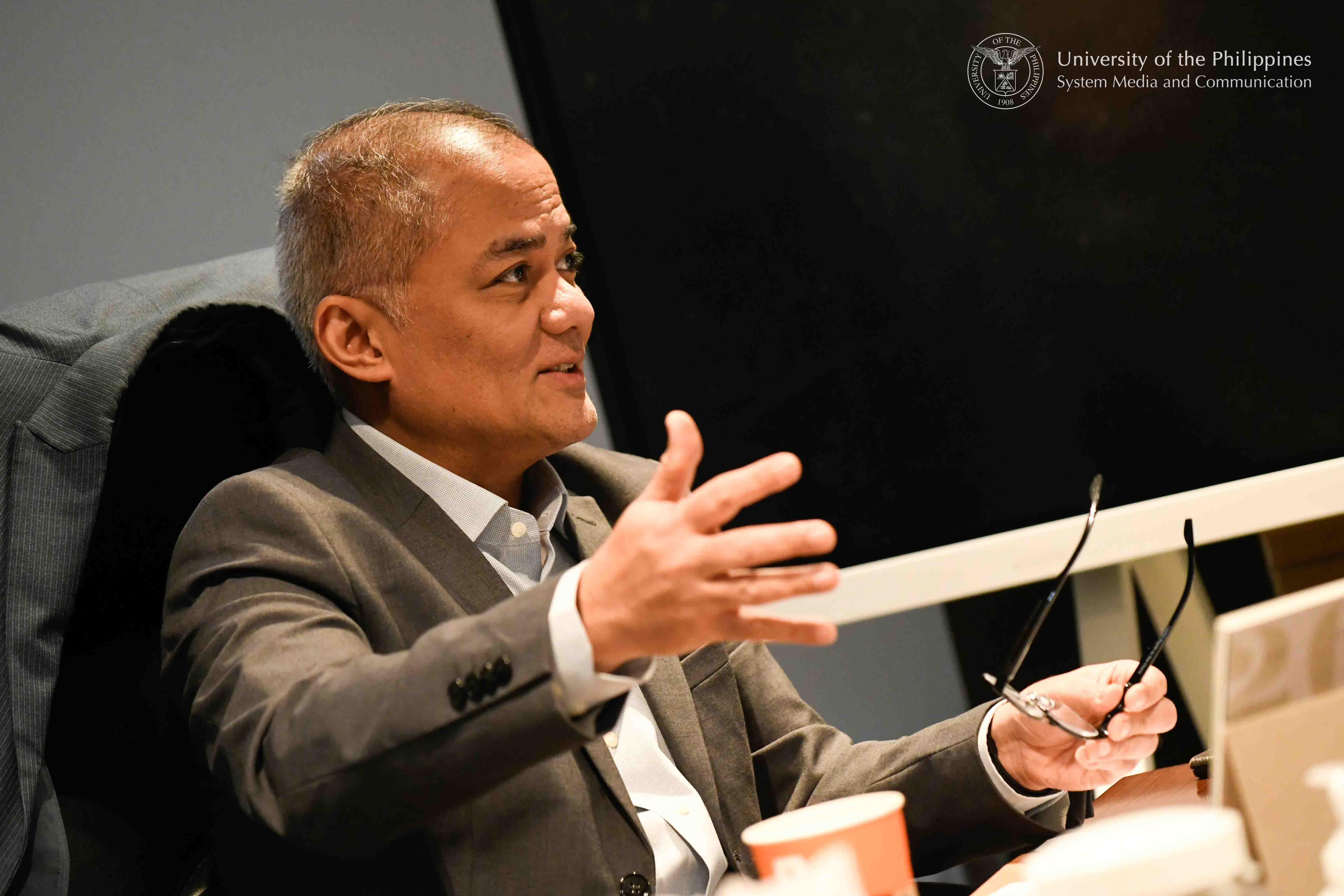
Dr. Joel Marciano Jr., UP Vice President for Research and Innovation, presents his vision for the OVPRI. Photo by Kevin Roque, UPS-MCO.

Then came the creation of the Philippine Space Agency, established through the Philippine Space Act of 2019. From 2020 to 2025, Marciano helped the agency as its Director-General, where, as “employee number one” he was, for a considerable time, also the “one and only employee.” In March 2020, just as operations were beginning, the COVID-19 pandemic struck. Despite that, PhilSA grew into a 250-person organization in a span of five years.


“It was a privilege to start from the ground up,” he reflects. “You get to define what a pioneering agency should be.”

Return to UP, establishing the OVPRI

After five years at PhilSA, Marciano returned to UP, asked by the Jimenez administration to help establish the Office of the Vice President for Research and Innovation. Again, he found himself in familiar territory. OVPRI was carved out from the Office of the Vice President for Academic Affairs in a deliberate move to bring research and innovation under one roof.


Beginning Sept. 15, 2025, the OVPRI supervises the following units: UP System Technology Transfer and Business Development Office, UP Korea Research Center, UP Philippine Genome Center, and the UP Center for Integrative and Development Studies. The VPRI, in November 2025, was also authorized to sign financial and administrative documents of the UP Resilience Institute and the UP Intelligent Systems Center.


The OVPRI now also manages the Emerging Interdisciplinary Research Program, the Enhanced Creative Work and Research Grant, and the Commission on Higher Education-Philippine California Research Institute Projects, including the International Publication Award, the UP Scientific Productivity System, the UP Social Sciences and Philosophy Productivity System, and the Scientific Career System.

Aspects of the OVPRI in pictures:

The transition was intentional: research and innovation are not to be treated as separate silos. Instead, Marciano explained, “innovation must be top of mind as part of research itself.” OVPRI’s task is to craft programs and policies that highlight synergy, ensuring that discovery naturally leads to impact.


Marciano said, “agility, dynamism, adaptability, and the startup mentality are important. It’s a privilege and an honor.”


Teamwork, he emphasized, is essential. “You cannot build institutions alone.”

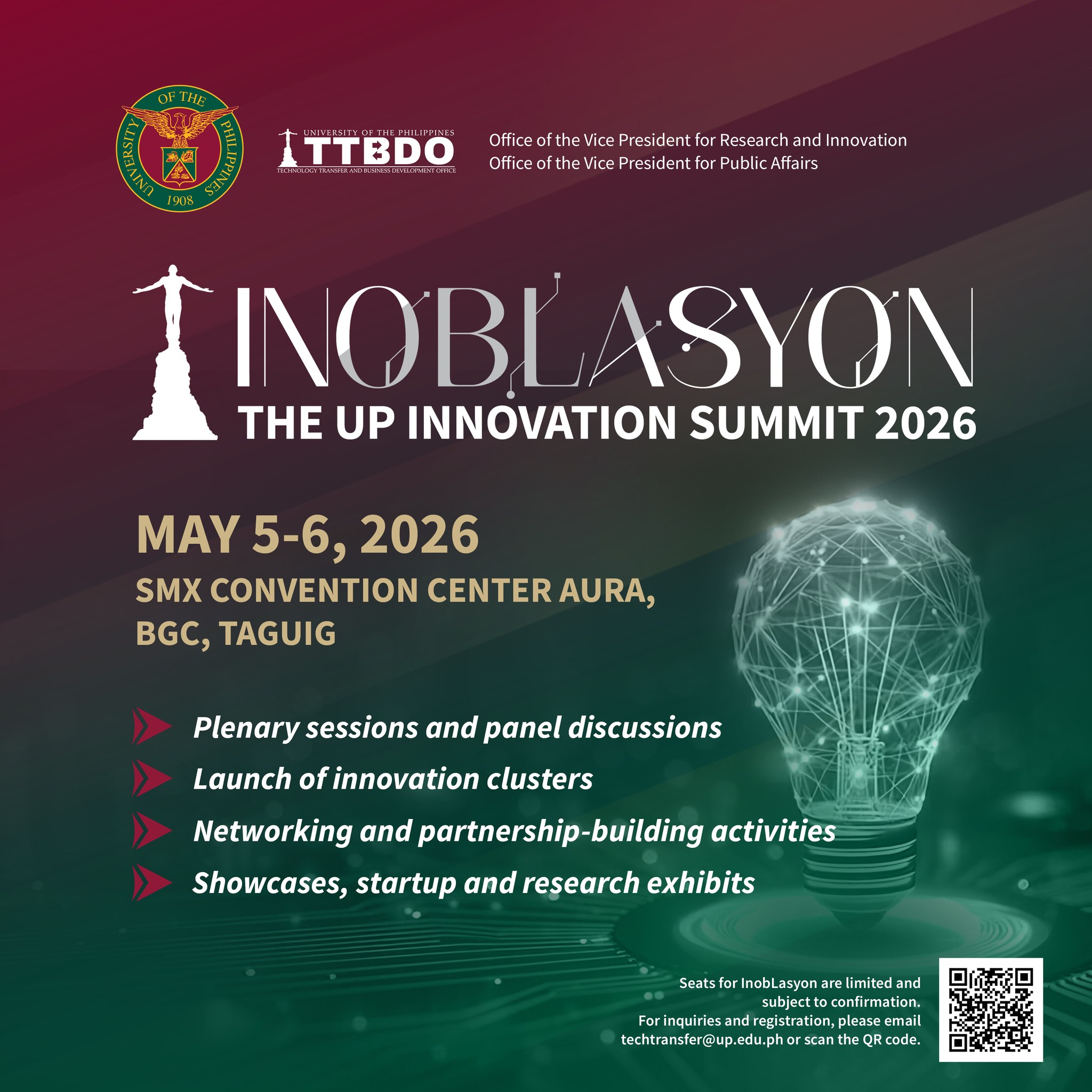
The "Inoblasyon: The UP Innovation Summit" on May 5-6 marks the formal launch of the UP System Office of the Vice President for Research and Innovation.

A sense of duty

Marciano is tasked to help position the university to gain more ground in research and innovation. “It is a duty and obligation to help out as much as you can,” he said.


He outlined three key priorities. 


  1. Client discovery: “Humayo’t tumuklas”

The first is client discovery, grounded in the idea of “pull” rather than “push,” said Marciano, in creating more impact. Instead of academics pushing what they know onto communities or industries, researchers must go out, listen, and co-create solutions.


In community engagement, he cautioned against assuming we already know the answers. Instead, we must ask: “Where should I be right now? Who are the people I need to talk to?”


Engagement fosters research that responds to real-world needs. It calls for a shift in culture, putting value in community involvement, lifelong learning, and meaningful impact alongside academic excellence.


Listening. Learning. Creating pull.


“Researchers can become ambassadors of innovation, incentivized to engage stakeholders, conduct genuine client discovery and to bring back those learnings to the university.” 


  1. Program Convergence Budgeting 

The second priority is using PCB, a Department of Budget and Management framework that encourages agencies to collaborate on shared national priorities such as agriculture and sustainable development in proposing their budgets for the National Expenditure Plan.


Marciano explained that UP’s inter- and transdisciplinary research, national reach, and public service mandates align directly with PCB’s design. While the university already works on many national priority areas, these efforts are often not organized as formally convergent programs. The PCB framework helps break down silos and aligns planning and budgeting across agencies. By institutionalizing the PCB framework, UP can possibly access NEP-backed, programmatic funding that complements traditional grants and embed its research, innovation, and capacity-building within large, multi-year national programs.  This way, Marciano added,  UP can enhance its position as a core innovation partner of agencies and a co-architect of development solutions.


 “We won’t be proposing in a silo,” he said. “We’re pulling together.”


  1. Strengthening core support structures

Marciano said the third priority focuses inward: improving UP’s absorptive capacity and internal systems.


Research depends not only on ideas but also on strong administrative support. Procurement and legal services are some of the indirect costs often absorbed by researchers. An ongoing initiative in his office involves studying the “true cost of doing research in UP.” This can lead to determining and allocating the proper resources for strengthening “shared services as core structures” that support research and innovation in UP more effectively and sustainably.

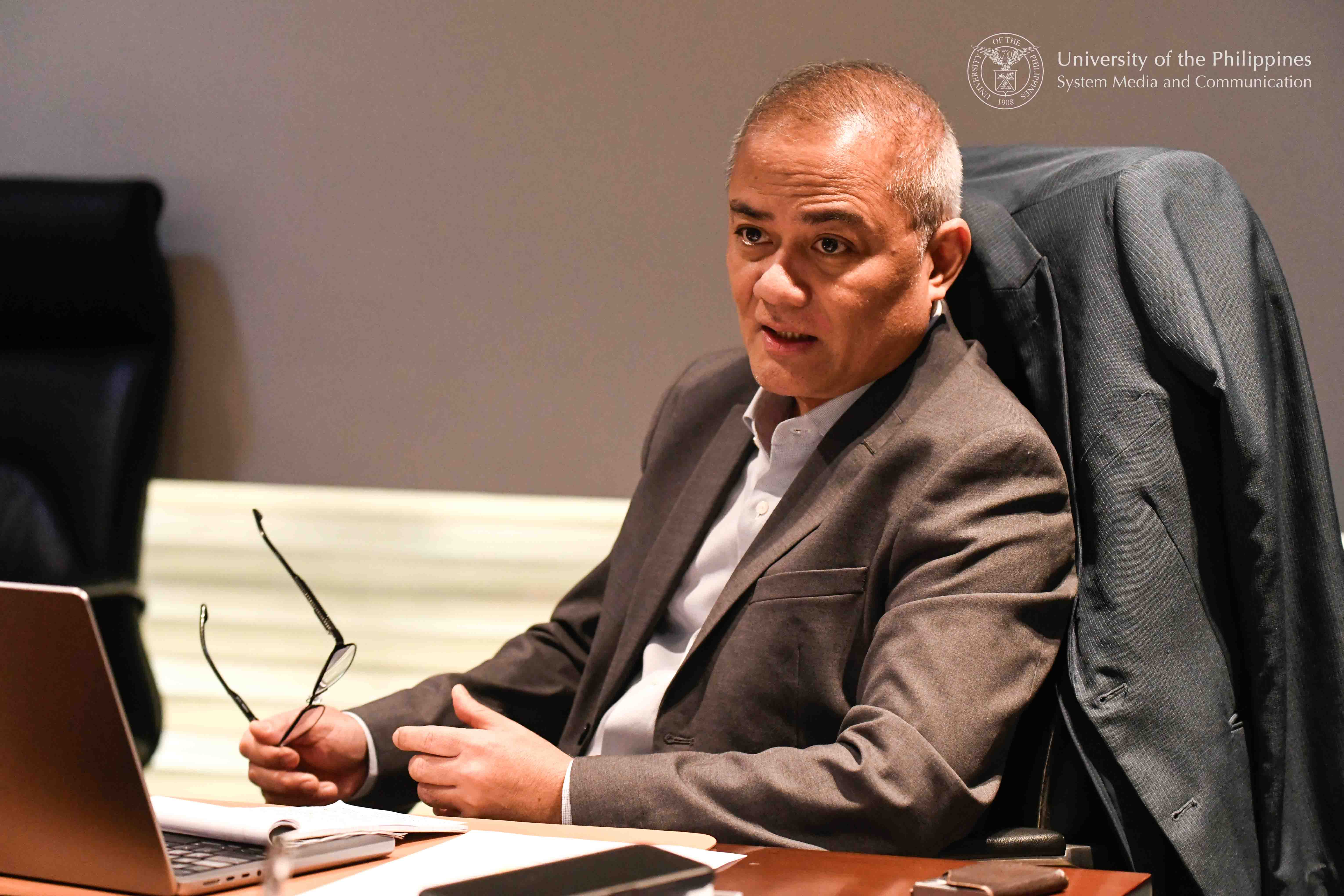
Dr. Joel Marciano Jr., UP Vice President for Research and Innovation, shares life lessons and unforgettable experiences that make his work interesting. Photo by Kevin Roque, UPS-MCO.

Adapting to the future

Marciano envisions OVPRI as a shared support hub, offering training, career paths for research administrators, and best practices across units. Compliance and proper fund management are essential, he added.


Together, client discovery, PCB, and core support structures aim to fuse research and innovation into a coherent, synergistic whole.


He cited interdisciplinary efforts such as those being done by the UP Resilience Institute and current initiatives in artificial intelligence as examples of engagement beyond campus. Listening to outside groups should shape research directions more, he explained.


Innovation, he reminded, is more than invention. It is about creating value for society.


It all started at UP for Marciano. Now, having built beyond its walls, he has returned, ready to build again.