



Photo by Jun Madrid, UPS-MCO.
The University of the Philippines Resilience Institute is eyeing the continued implementation and expansion of the Nationwide Operational Assessment of Hazards or NOAH with its ₱1 billion allocation recently released by the Department of Budget and Management.
In a press briefing Aug. 27, UPRI Executive Director Alfredo Mahar Francisco Lagmay presented the priority areas in the institute’s budget utilization plan, which will focus on strengthening flood management, hazard monitoring, and disaster risk reduction systems nationwide.
“The ₱1 billion allocation for UPRI will be measured by better information, transparency, evidence-based governance and decision-making, effective flood management, and reduced disaster risks and losses,” he stated.
Of the total allocation, ₱935 million will support research services, while ₱65 million will fund general management and supervision of NOAH’s implementation. The allocation is part of the UP System’s built-in appropriation under the 2026 General Appropriations Act.
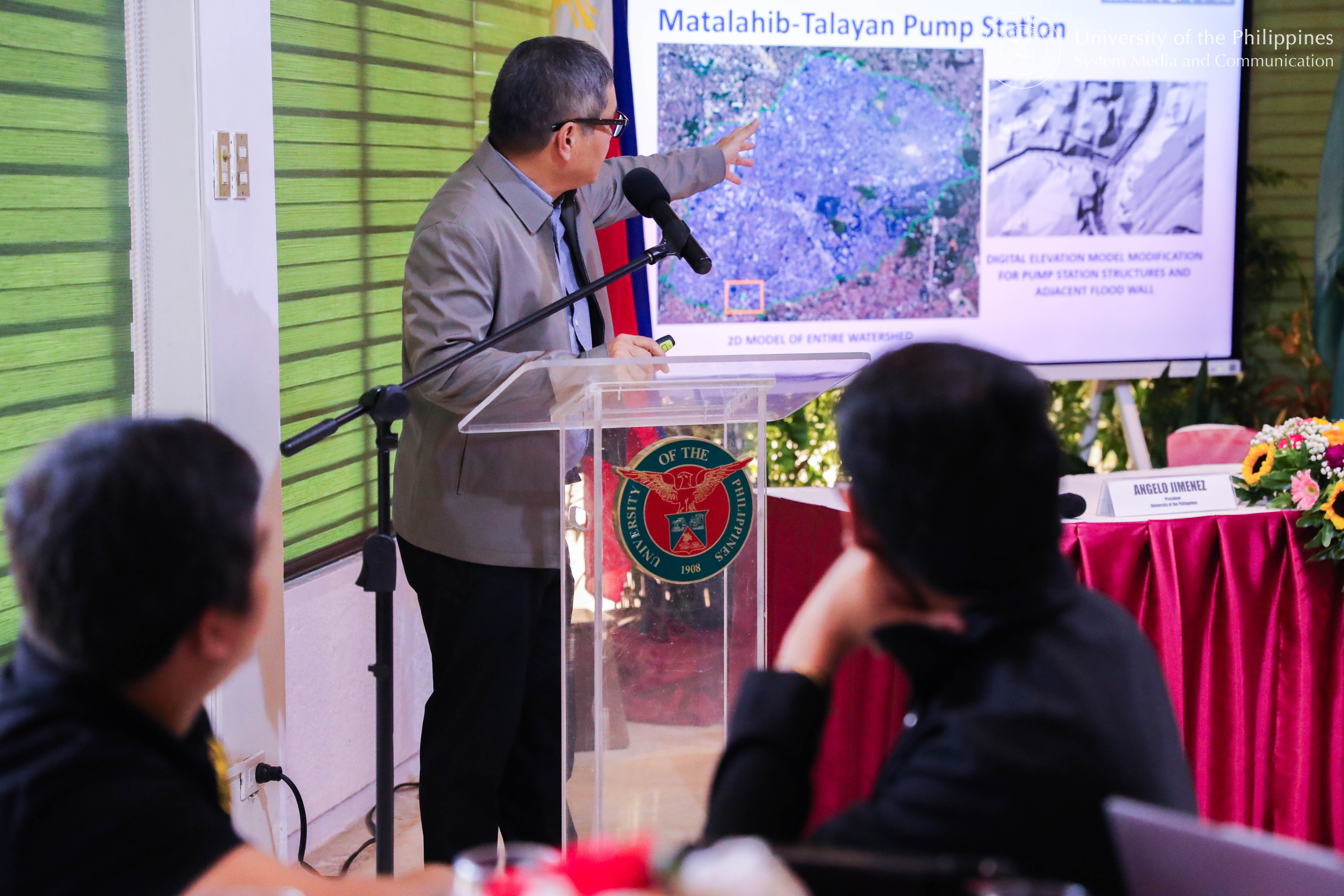
Photo by Jun Madrid, UPS-MCO.

Lagmay highlighted that UPRI’s budget will be used for high-resolution mapping of major river basins, hazard assessments, land-use planning, and Oplan Kontra Baha initiatives in coordination with the Department of Public Works and Highways, the Metropolitan Manila Development Authority, local government units, and private-sector partners.
The allocation will also support LiDAR drone topographic surveys, capacity-building programs with state universities and colleges, native tree mapping, sediment erosion assessments, mapping of hidden waterways, nature-based solutions, and the use of artificial intelligence and analytics for disaster risk management.
UP President Angelo Jimenez underscored that the funding earmarked for UPRI is “an investment in the power of research and innovation to serve the nation.”
“We do research because knowledge matters, and knowledge matters most when it can help us make better decisions, solve real problems, and improve the lives of our people,” Jimenez emphasized.
The UP president also expressed support for legislative efforts to institutionalize UPRI’s research and public service work through the proposed UP National Climate Resilience Institute.
Lagmay, meanwhile, hoped that the government’s funding for UPRI “will continue to transform scientific knowledge into practical action that protects lives and helps build safer, more resilient, and sustainable communities.”
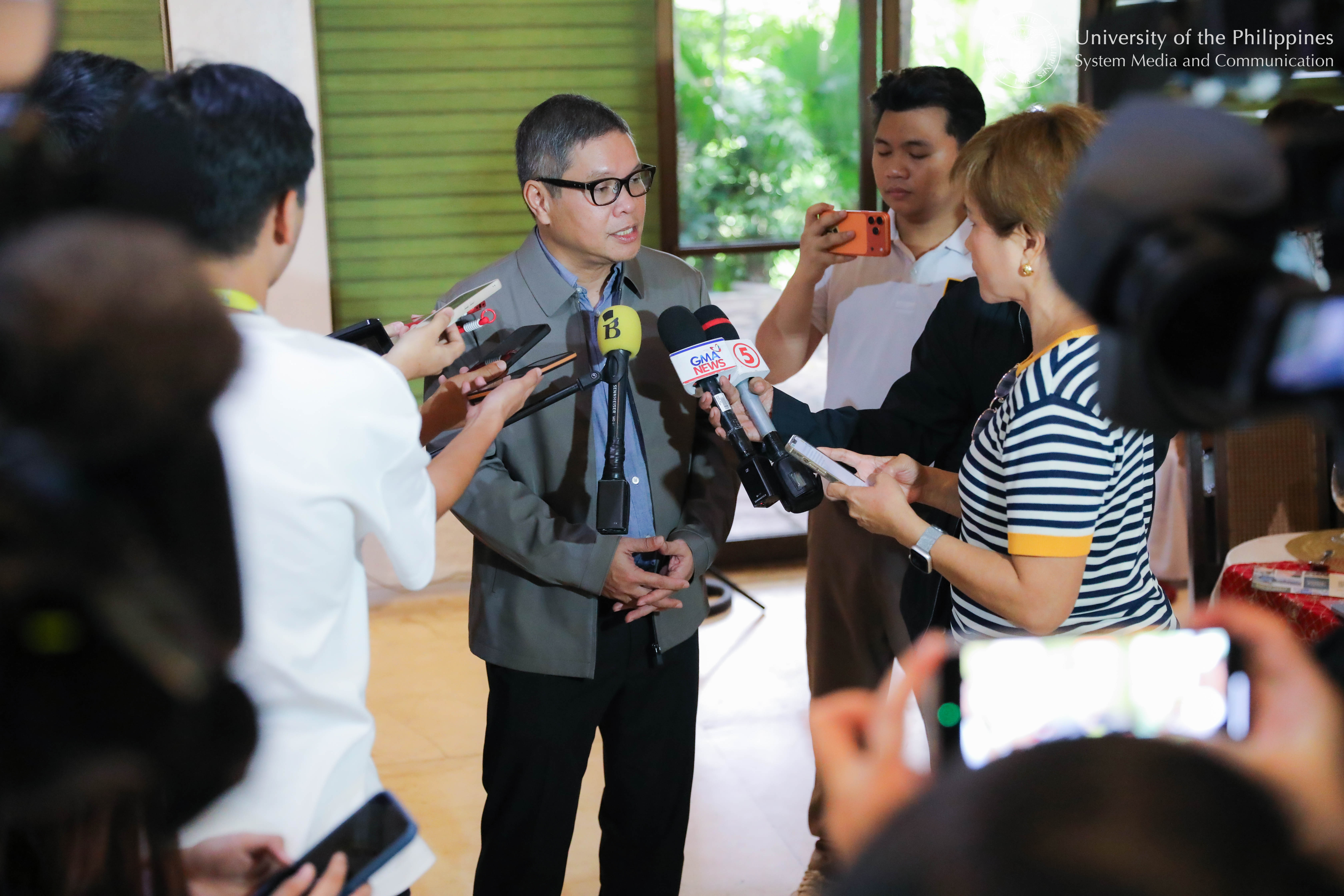
Photo by Jun Madrid, UPS-MCO.