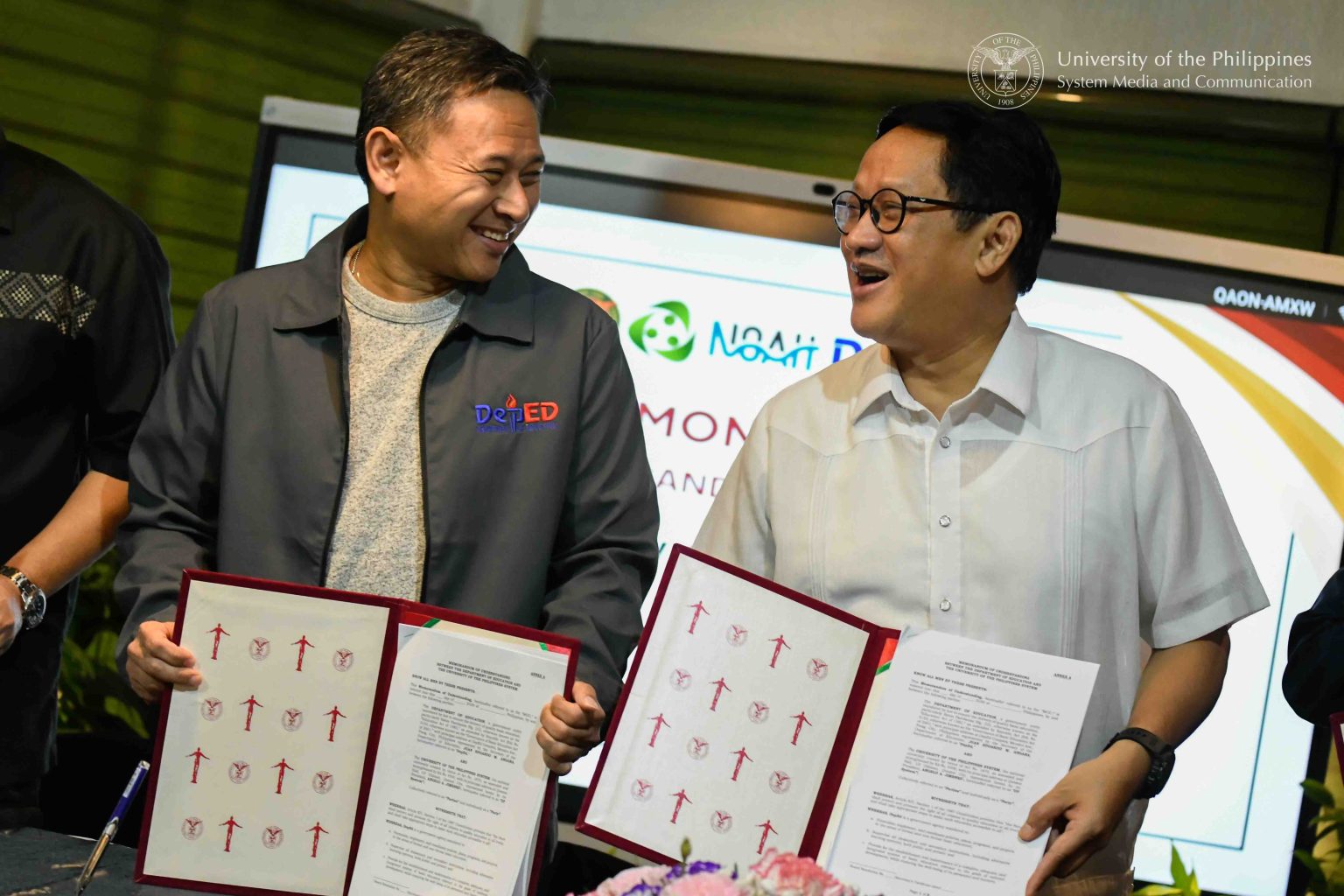
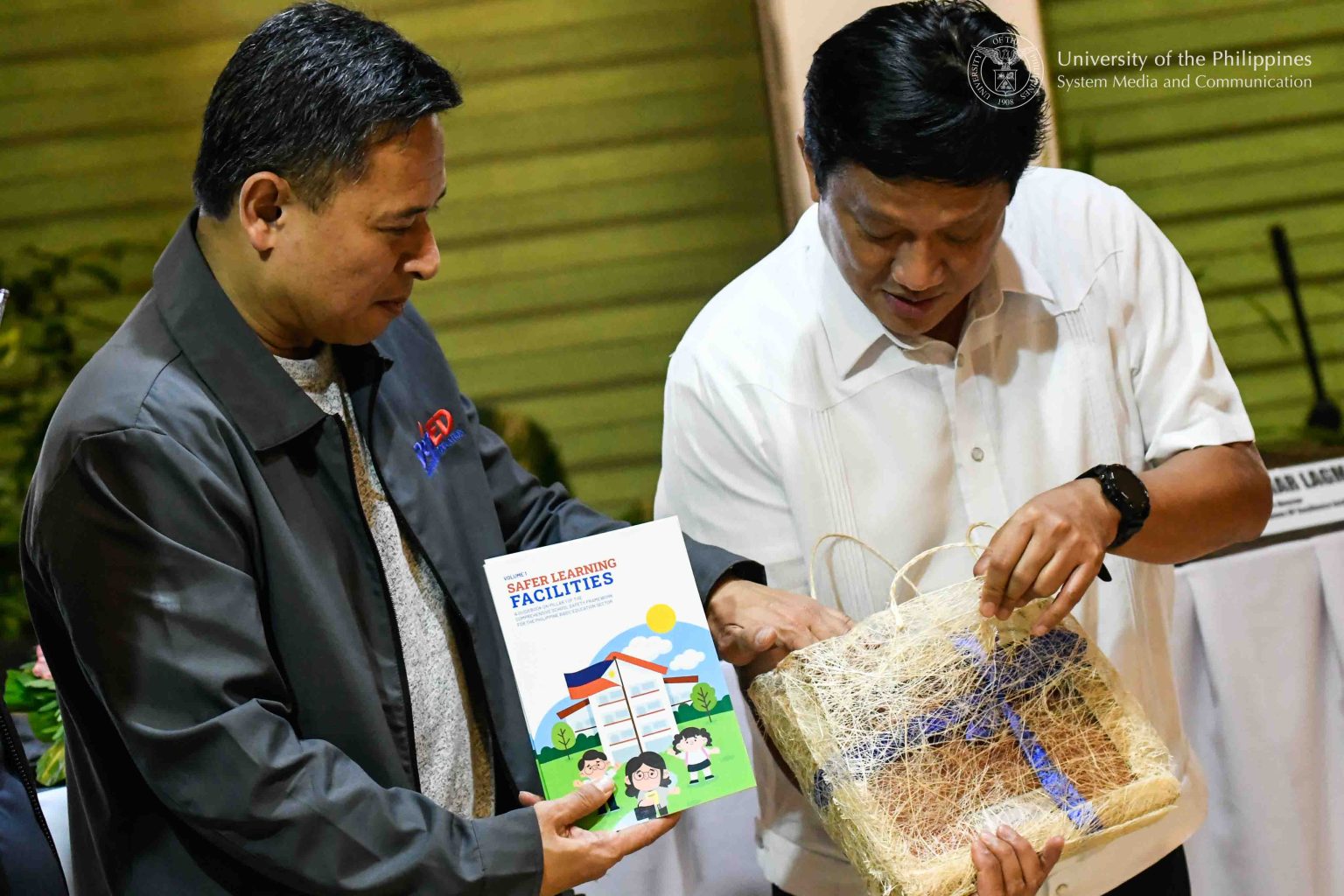
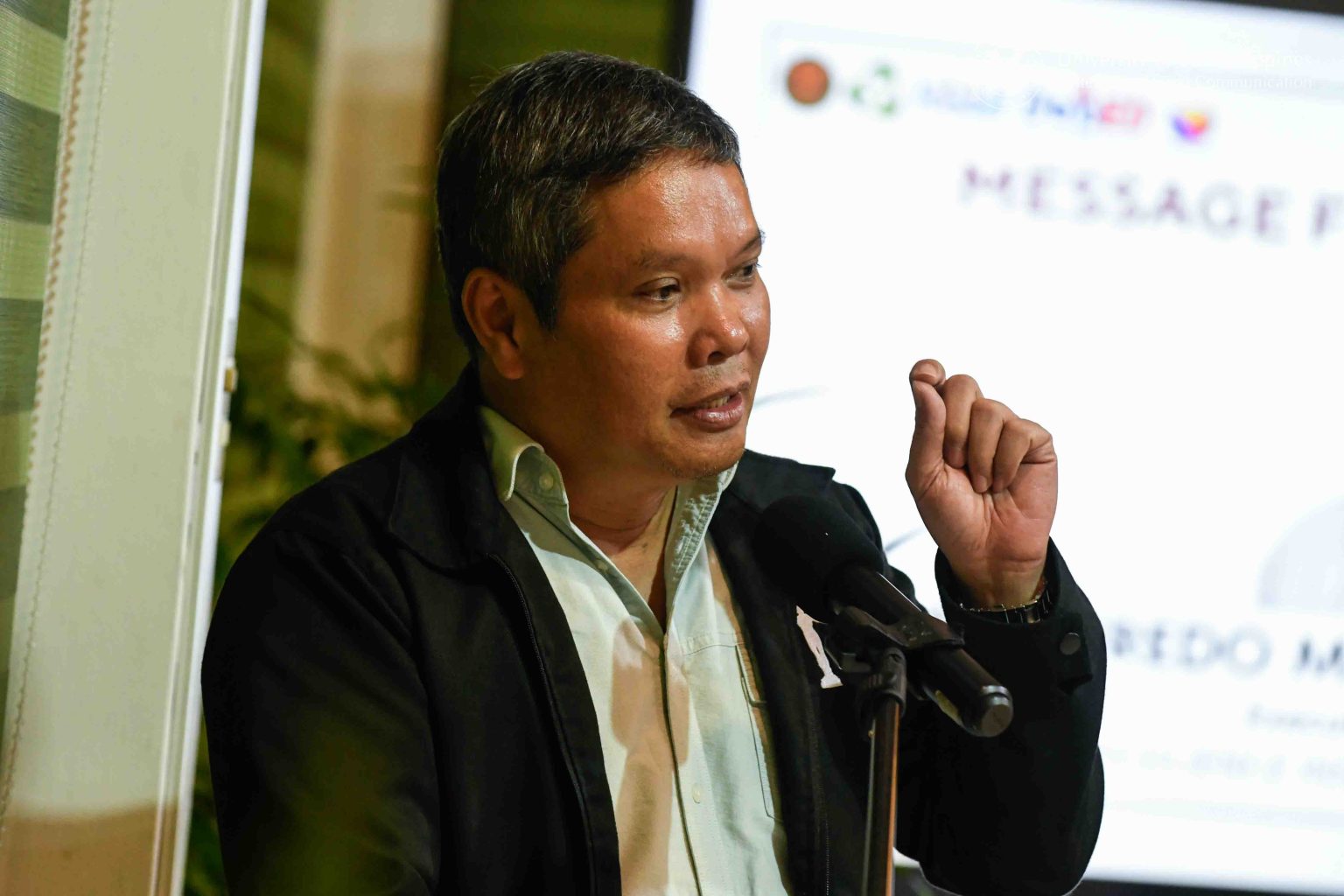
In pursuit of a safer, more disaster-resilient learning environment, the University of the Philippines signed a memorandum of understanding with the Department of Education Jan. 9 at the Executive House, UP Diliman.
The MOU seeks to establish a collaborative framework for knowledge sharing, research, and capacity building in disaster risk reduction and management within the public education sector. A key output of the partnership is the development of structured courses in disaster risk reduction, climate change adaptation and mitigation, and education in emergencies.
Citing the Philippines’ vulnerability to natural hazards, UP President Angelo Jimenez underscored the urgency for integrating disaster risk reduction and management into the country’s education system. “What we want to do is improve our responses through a culture of preparedness, through science.”
In response to Jimenez’s message, DepEd Secretary Juan Edgardo “Sonny” Angara concurred with the need “to build a culture of resiliency and a culture of knowledge informed by science.”
Jimenez and Angara led the MOU signing, witnessed by UP Resilience Institute Executive Director Alfredo Mahar Francisco Lagmay and DepEd Disaster Risk Reduction and Management Services Director Felino Castro V.
Under the partnership, UP, through the UPRI, shall provide scientific and technical expertise in hazard assessment, risk analytics, and capacity building. Specifically, UPRI is tasked with conducting training programs for DepEd personnel; assisting in installing hazard-detection tools in DepEd schools and offices; and developing localized hazard maps and risk assessment plans.
Prior to forging a partnership with DepEd, UP has been actively providing resilience education to the general public. UPRI, through UP Open University’s Massive Open Online Courses, has been offering micro-courses on the Fundamentals of Resilience since 2023. This free online course equips e-learners with key concepts in DRRM, CCAM, and community-based resilience building.