Delegates from across the University of the Philippines System attended the three-day UP Strategic Conference on Sustainable Development led by the UP-Centre International de Formation des Autorités et Leaders Philippines held Nov. 18 to 20 in Cubao, Quezon City. The conference, with the theme, “Sustainable Development as a Nexus of Transformation,” aimed to assess the preparedness and engagement of UP in contributing to the UN 2030 Agenda for Sustainable Development.
Keynote speakers, university officials, and UP delegates from across the country presented key academic, research, and extension initiatives related to the 17 Sustainable Development Goals. Discussions and workshops highlighted lessons and insights that will help university personnel align initiatives with the UP Strategic Plan 2023–2029 and the 2030 Agenda, foster collaboration and sharing of best practices, and advance the SDGs across the UP System.
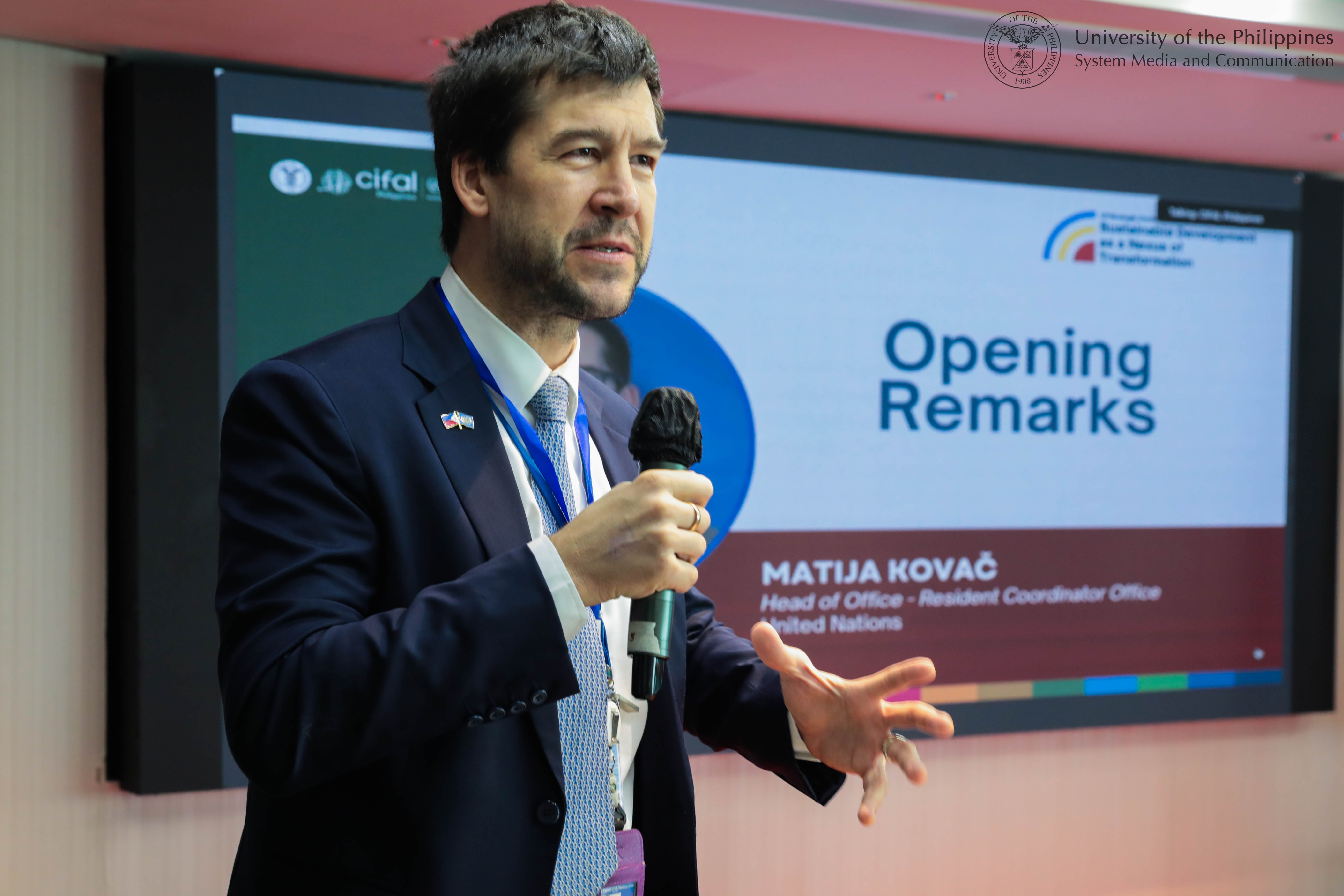
UP-CIFAL Philippines Director Michelle Palumbarit, UP President Angelo Jimenez, and UN Resident Coordinator Office head Matija Kovac welcomed the speakers and participants to the three-day conference.
Jimenez, in a video message, said “this conference is an opportunity for shared reflection and collaboration to see how the CUs work together for a better future.” He emphasized that “UP must strengthen its role in building a just, equitable, and sustainable society that leaves no Filipino behind.”
Kovac said “it is great to see that UP is keeping up the pace through teaching and preparing new generations of scholars” in support of the UN SDGs.
Messages of support
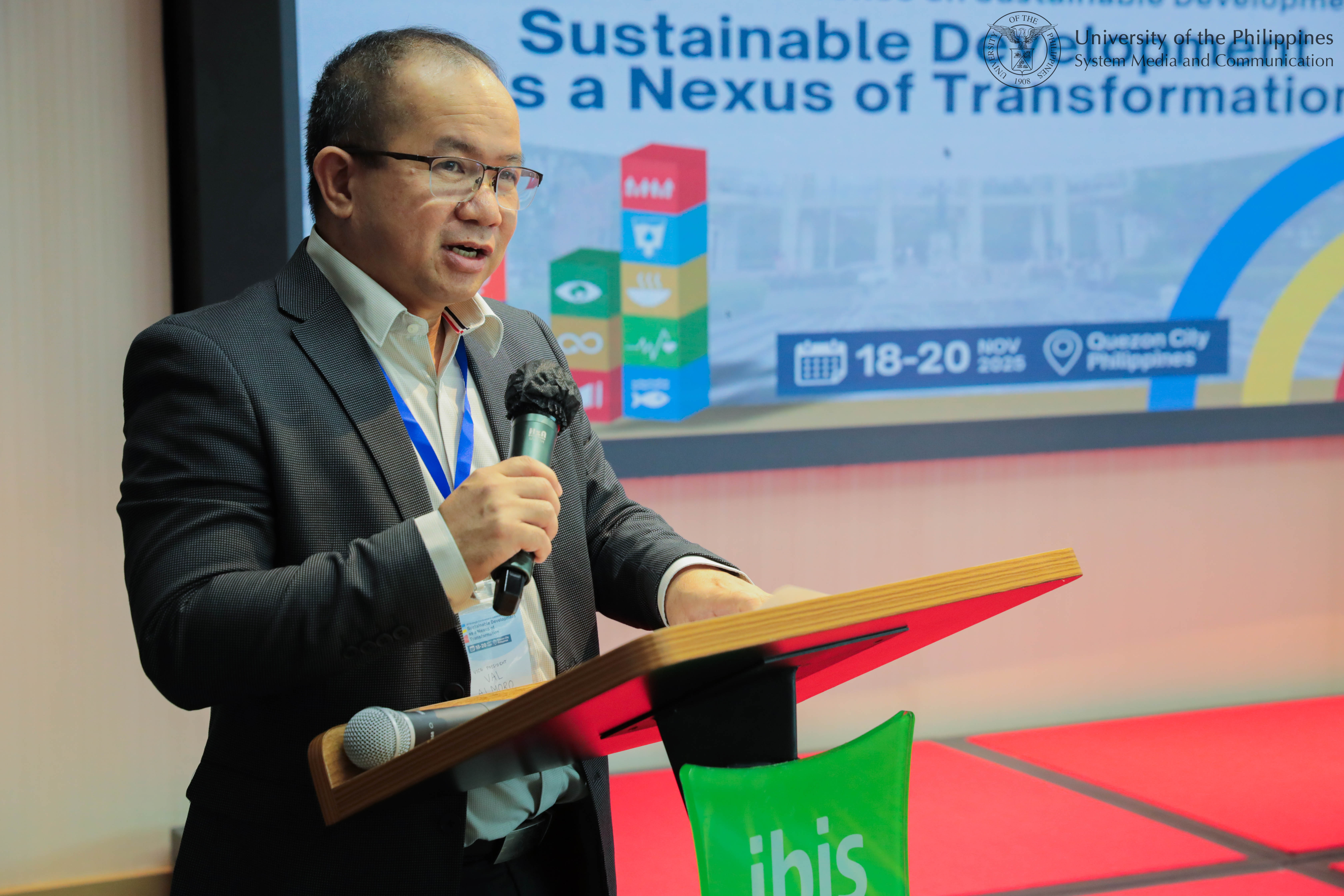
On behalf of UP Vice President for Research and Innovation Joel Marciano, Assistant VPRI Percival Almoro expressed support for the institutionalization of spaces for collaboration among the university’s mentors, students, and members of their respective communities.
UP VP for Public Affairs Marian Coquia-Regidor said “sustainability should be at the core of everything that we do, in the way we work and live.”
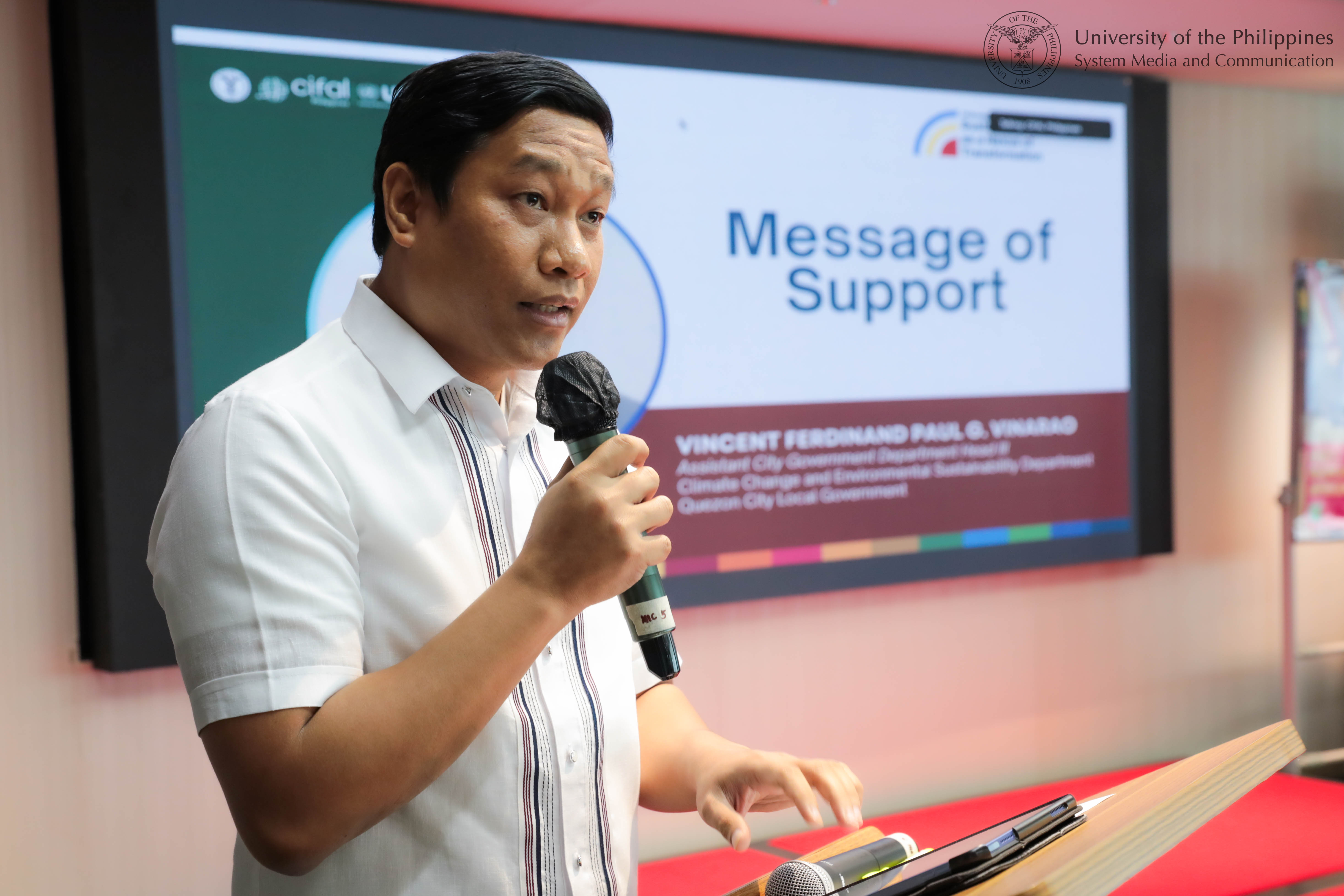
Vincent Ferdinand Paul Vinarao, assistant city government head of the Climate Change and Environmental Sustainability Department of Quezon City, highlighted “participatory, transparent and inclusive governance to ensure every decision is informed by diverse sectors and perspectives” in his message.
Baguio City Mayor Benjamin Magalong, in a video message, said sustainability requires collective action for a more humane society.
More photos from Day 1:


Conference discussions
As keynote speaker for the first day of the conference, Dr. Shepherd Urenje, an international education specialist, encouraged participants to reexamine the university’s current and future roles in shaping a sustainable society. His presentation prompted attendees to reimagine education toward “redesigning the pathways of learning” to enable young people to change the future of a volatile, uncertain, complex and ambiguous world. “The university is a catalyst for sustainable futures,” he said. He served as Programme Specialist in Education for Sustainable Development with the Swedish International Centre of Education for Sustainable Development.
UP AVP for Academic Affairs (Quality Assurance) Alyssa Peleo-Alampay, UP Visayas Chancellor Clement Camposano, and UP Baguio Chancellor Joel Addawe shared insights during the open forum.
Presentations by CU representatives
UP Visayas Graduate School Dean Rodelio Subade discussed “UPV’s trajectory through graduate studies.”
Associate Professor Paul Michael Hernandez, chair of the Department of Environmental and Occupational Health, College of Public Health, UP Manila presented “Championing Health and Wellness in UP Manila.”
Professor Giovanni Malapit of the Department of Physical Sciences, College of Science, UP Baguio shared insights on “Mentoring the next generation of scientists for sustainable development.”
Assistant Professor Remsce Pasahol, program chair of the Diploma in Land Use Planning, Faculty of Management and Development Studies, UP Open University talked about “Pamayanaan: An Urban Planning Studio for Co-Creating Sustainable Cities and Communities.”
Ugnayan ng Pahinungod Mindanao Director Michael Gatela presented “Advancing UP Goals Through Volunteerism and Collaborative Public Service.”
Associate Professor Christian Orozco of the UP Institute of Civil Engineering, UP Diliman presented “Sustainable Engineering Initiatives for Low-Carbon Construction and Environmental Protection.”
Photos from Day 2:


Day 2 of the conference highlighted the role of academic institutions in cultivating internal cultures that value foresight, collaborative actions, and community partnerships. Discussants said universities must design environments where sustainability is systemic. They also noted the need for UP to strengthen foundational literacy, extend academic extension or service programs, and continue working together with members of respective communities.
UP Los Baños Vice Chancellor for Research and Extension Nathaniel Bantayan, keynote speaker for Day 2, said “a whole-UP approach is needed” as the university is “actually doing all of the SDGs” in its projects across the nation.
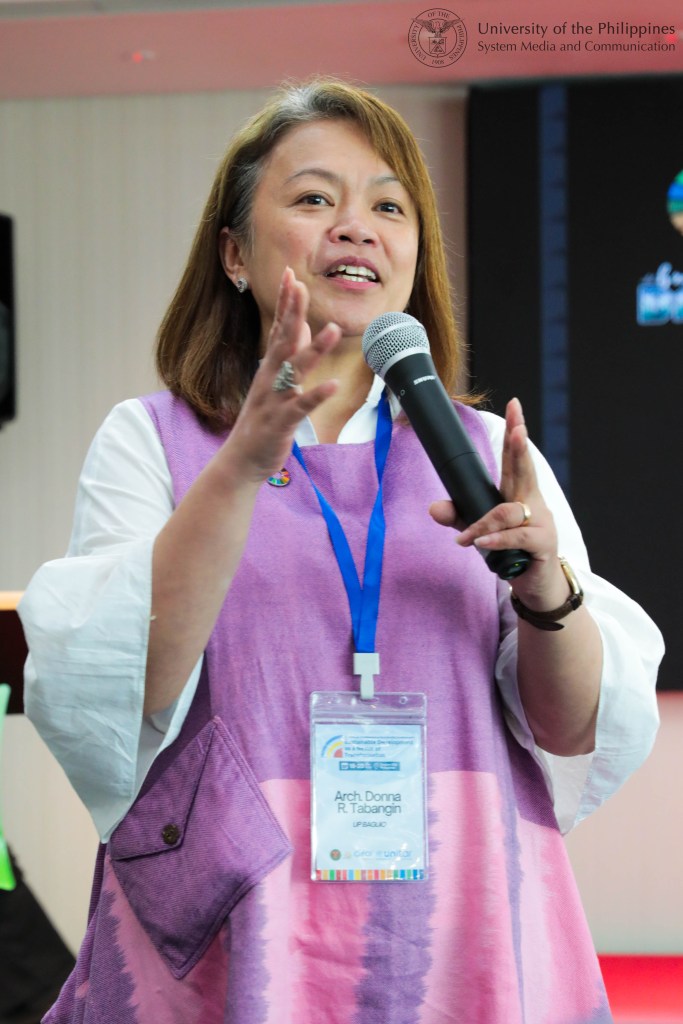
Architect Donna Tabangin, coordinator of Baguio City’s Planning, Development, and Sustainability Office, discussed the “SDG Voluntary Local Review of the Local Government of Baguio.”
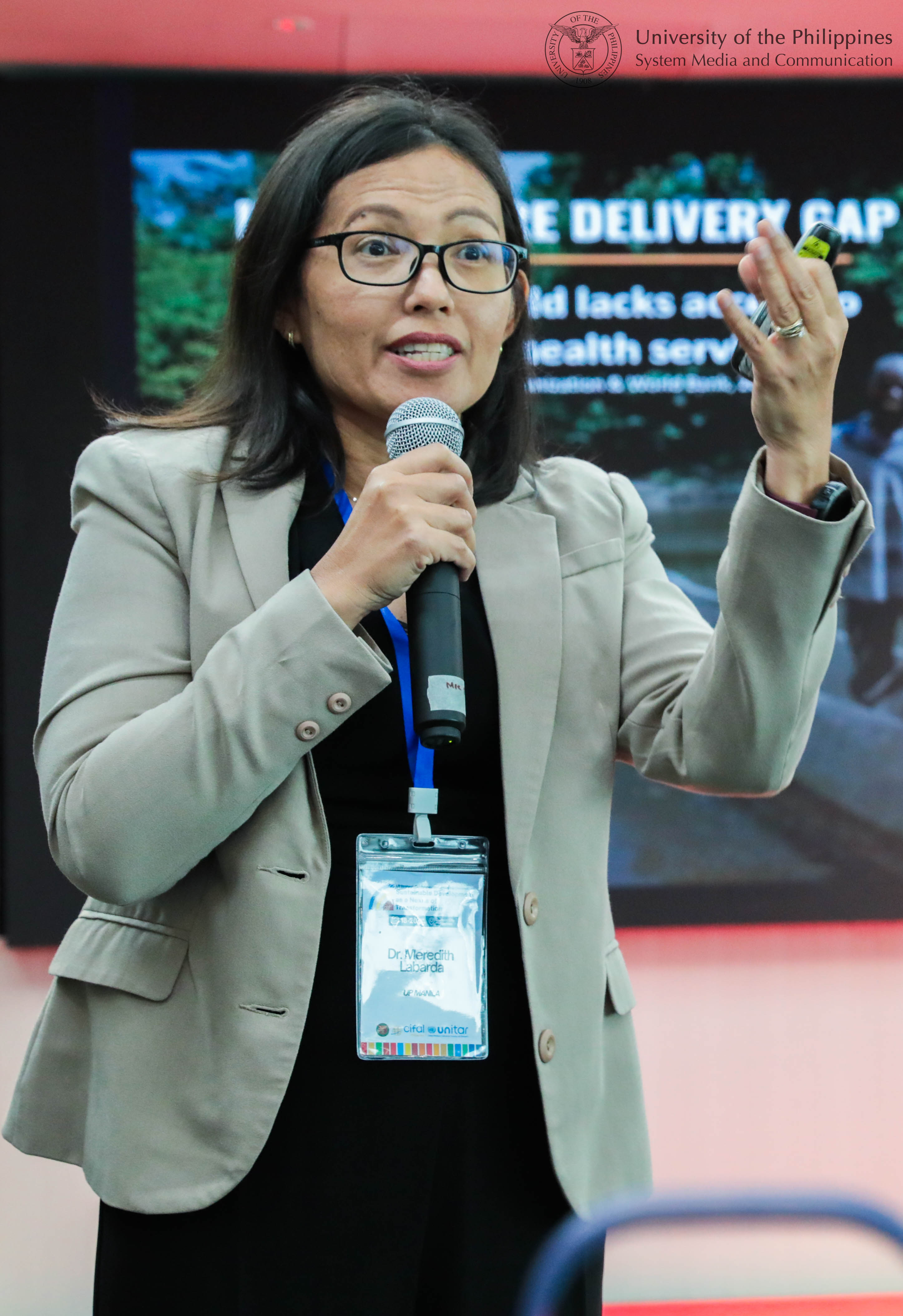
Professor Meredith Labarda of the Department of Medicine, UP Manila School of Health Sciences, presented “Water, sanitation, and social innovations in health: A qualitative exploration of gender and intersecting social stratifiers in a rural ram-pump project in the Philippines” and proposed that such projects be conducted in many more rural areas.
Assistant Professor Karl Villegas of UPOU FMDS presented “UPOU-EDC BINHI Native Forest Arboretum: A Living Laboratory for Climate Resilience and Ecosystem Restoration.”
Daphne Daño, instructor and information officer at UP Tacloban College, also presented their report “Advancing SDGs through teaching, research, and public service at UP Tacloban.”
UP Mindanao School of Management Dean Aurelia Gomez discussed “UP Mindanao’s engagement with communities in vulnerable areas: Pathway to improved livelihood & food security.”
UP Cebu Vice Chancellor for Academic Affairs Palmy Tudtud presented UP Cebu’s “SDG Report 2024-2025.”
Moving forward UP’s sustainability agenda
The third day of the event featured sessions that aimed to deepen the attendees’ commitment to sustainability and a workshop on the proposed roadmap and framework for the UP System.
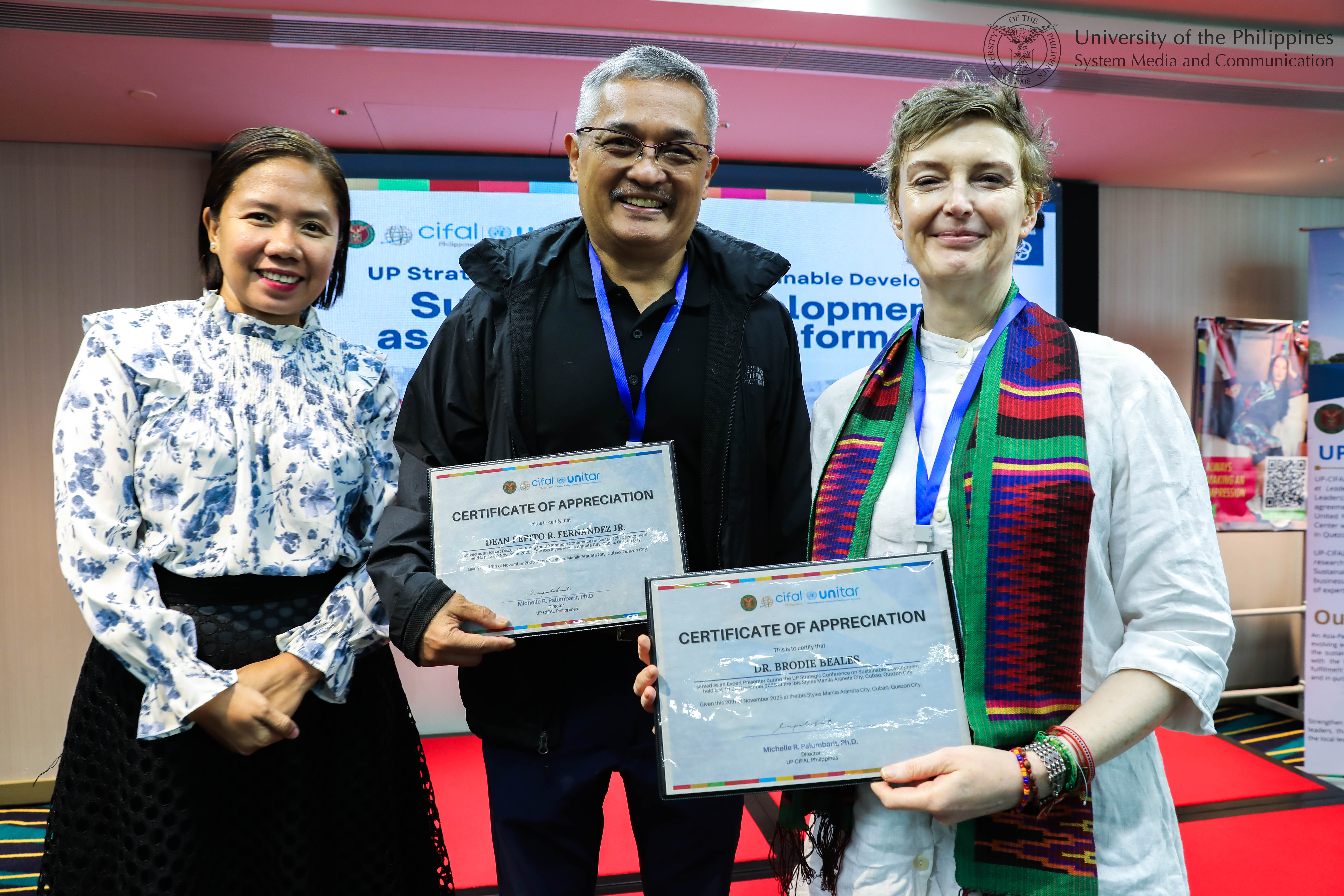
Dr. Brodie Beales, center director of CIFAL Newcastle, Australia, asked thought-provoking questions and helped conference participants gain fresh insights with her keynote presentation.
“What is education in a world on fire?” asked Beales, as she guided participants to reexamine their values and responsibilities as individuals seeking to create a sustainable society for the good of humanity. “Diversity is crucial. For this to succeed, we can’t leave anyone behind,” she said.
Professor Pepito Fernandez Jr., dean of the College of Arts and Sciences of UP Visayas said “institutions should shift from an elitist orientation.” He explained that institutional elitism can be resolved with meritocracy and promotion of honesty at the national level. He reminded attendees that passion for sustainability and a nationalist mindset, as well as pragmatism, are needed.
The discussion on UP’s SDG-related data sets by Lorenzo Baquiran, instructor at the School of Statistics in UP Diliman, gave recommendations such as coming up with a more systematic way of compiling data, to include lists of all CU activities and their beneficiaries, for UP to see its impact at a larger scale.
Beales and Urenje encouraged CU representatives to publish and widely-communicate their respective SDG-related initiatives for them to get more support from their communities. “Write about what you are doing,” Urenje said. “Reimagine yourselves as the builders of a new Philippines. You’ve got everything you need … The SDGs are the frame that helps us measure sustainability,” concluded Beales.
UP-CIFAL Philippines, the university’s research, training, and capacity-building hub for sustainable development, is one of the 33 global CIFAL centers affiliated with the UN Institute for Training and Research that promotes the SDGs through capacity building and research.
More photos from Day 3: