



Two social issues have been negatively impacted by the COVID-19 pandemic: food security and human migration. But while the pandemic has brought about new or has worsened existing challenges, the “next normal” may also bring with it new solutions and new ways of perceiving and tackling these issues.
The University of the Philippines–Centre International de Formation des Authorités et Leaders Philippines (UP-CIFAL Philippines) and the UN Institute for Training and Research (UNITAR) will be holding two webinars: the first on communities working to help address food security; and, the second on the new challenges to human migration during and after the pandemic, on 24 May at 9:00 a.m. (Manila Time) and 27 May at 12:00 p.m. (Manila Time), respectively.
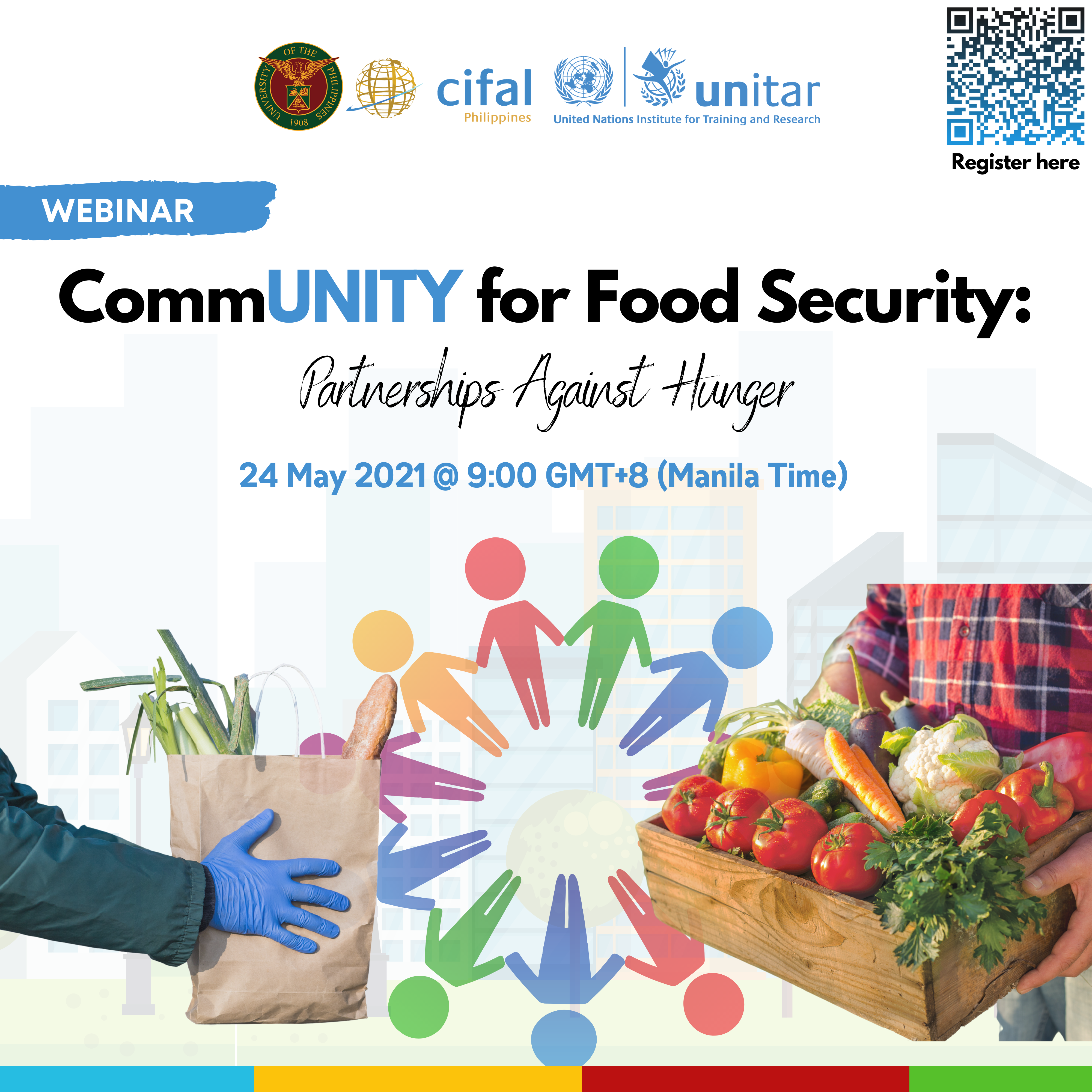
The first webinar is on “CommUNITY for Food Security: Partnerships Against Hunger”. After enduring stringent quarantines for over a year, with households living in dire poverty being forced to rely on food packs distributed by local governments and other concerned organizations, millions of Filipino households are now experiencing hunger due to lack of food to eat. However, new initiatives in addressing hunger are also emerging, such as the community-organized pantries that have sprung up all around the country since the first community pantry on Maginhawa Street, Diliman, Quezon City.
Through this webinar, UP-CIFAL Philippines aims to show how citizens can rise up to collaborate with local government in addressing food security issues, and how the Philippine experience can contribute to global action against hunger during the pandemic. The webinar also opens a venue for government officials, citizen groups, and even international organizations to discuss more sustainable efforts to fight hunger through partnerships.
Ultimately, the webinar aims to link the local government and citizen partnership to the promotion of the Sustainable Development Goals (SDG) 2 (Zero Hunger), 3 (Good Health and Well-Being), and 17 (Partnerships for the Goals). Mr. Emmanuel Hugh F. Velasco, Head of the Sustainable Development Affairs Unit of Quezon City, and Mr. Michael Adrian B. Non, representative for the community pantries in the Philippines, will serve as resource persons, while Ms. Brenda Barton, Representative and Country Director to the Philippines World Food Programme, will serve as reactor.
Register for this webinar here. Or click on the QR code in the event poster.
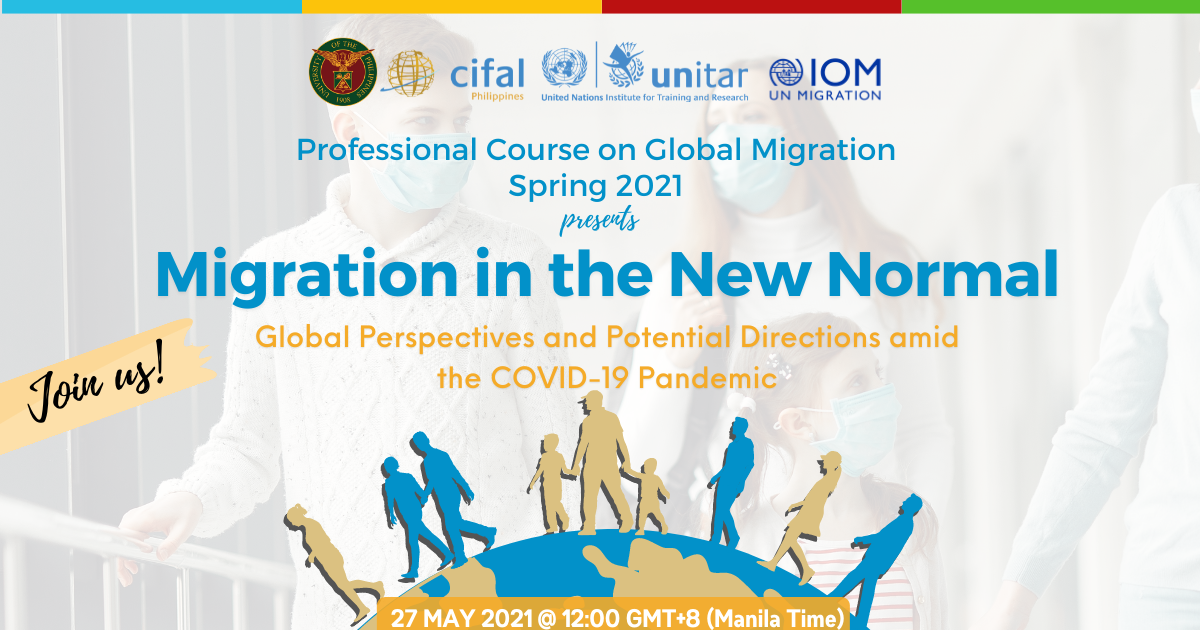
The second webinar, slated for 27 May, will focus on “Migration in the New Normal: Global Perspectives and Potential Directions Amid the COVID-19 Pandemic”.
The pandemic has not only created an unprecedented health crisis and disrupted economies around the globe, it has also forced governments to implement restrictions of movement inside and outside of countries’ borders that have severely impacted people’s lives. Migrants face new and existing challenges made worse, such as separation, loss of employment, and difficulties in re-entering their country of origin. Migrant women have become even more vulnerable, and governments and organizations struggle to maintain and implement inclusion and reintegration. All of these take a major toll on migrants and migration practitioners, adding additional health issues to address, on top of the many new challenges to overcome.
This webinar, which will discuss how the pandemic has affected migration, is divided into the sub-topics of: health, mental health and social protection; gender dimensions of migration; social inclusion and reintegration; and, the influence of media and communication. The webinar will target migration managers and practitioners, and members of academe and the general public who are interested in issues regarding migration.
Register for this webinar here. Or click on the QR code in the event poster.
