Three years after its establishment, the UP Resilience Institute has finally broken ground for the construction of its own building.
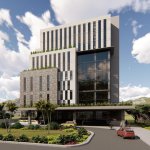

Three years after its establishment, the UP Resilience Institute has finally broken ground for the construction of its own building.
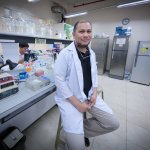
While news of giant clam poaching in the disputed Scarborough Shoal drew massive online outrage, it is far from the first wildlife exploitation story in our history. One serious challenge for local law enforcement in these cases has always been visually confirming the presence of our endemic species when specimens have been skinned, ground or similarly processed for the black market.
Luckily a team led by the UP Institute of Biology’s Ian Kendrich Fontanilla and the late Dean Perry Ong have locally pioneered a system called DNA barcoding, which utilizes the molecular fingerprint of genes to assist both scholarship and law enforcement in these tricky cases.

While the country relies on strong partnerships with foreign universities to launch satellites like Diwata-2, the ultimate goal has been to build them here. This 2019, a new graduate program track launched at the UP Electrical and Electronics Engineering Institute aims to train our country’s future crop of satellite builders in-house. The STeP-UP program expands the Institute’s Masters in Engineering program to include a track specializing in nanosatellite engineering. The program welcomed its first batch of scholars this year, and they plan to launch two cube satellites when they graduate—this time completely made and designed in the Philippines.
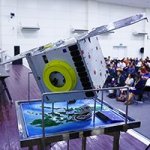
The University of the Philippines PHL-Microsat Team and the Department of Science and Technology (DOST) achieved another milestone on October 29, 2018, as Diwata-2, the second microsatellite built and designed by Filipinos was launched from the Tanegashima Space Center in Japan via the H-II F40 rocket.

The National Academy of Science and Technology (NAST) Philippines, the highest recognition body on science and technology in the country, is searching for nominees for the various NAST and DOST awards for 2019.

With the successful deployment of the Maya-1, the first ever U1 cube satellite (CubeSat) built by Filipinos from the International Space Station (ISS) on August 10, 2018, the people behind its success promised that the best was yet to come.

Aghambayan, a one-day science and technology and innovation festival, showcased UP-led, DOST-funded project. Highlighting the event were an exhibit, panel discussions and a conference with breakout sessions at the Jose Rizal Hall, Philippine International Convention Center, Pasay City on June 20.
Department of Science and Technology (DOST) – Japan Society for the Promotion of Science for the Promotion of Science (JSPS) Joint Research Program, first launched in 2004, is a bilateral exchange program jointly conducted by Filipino and Japanese researchers in accordance with their mutual agreement on international scientific collaboration.

Hailed by the Department of Science and Technology (DOST) as a showcase, the UP Cebu Business Incubator for Information Technology (UP CeBu inIT) hosted the first Philippine Technology Business Incubators (TBIs) Summit on November 24, 2017 at the Cebu Parklane International Hotel. The summit served as a venue for the TBIs around the country to share their experiences and lessons including how to start a network in order to further develop the TBIs. The event was made possible in partnership with the Philippine Council for Industry, Engineering and Emerging Technology Research and Development (PCIEERD) of the DOST.
The UP College of Medicine (then known as the Philippine Medical School) opens. It predates the opening of the University proper by 3 years.


